Meet the Cute, Rare and Remarkable Babies Born at the Smithsonian’s National Zoo This Spring
Get the stories behind the new arrivals.
:focal(700x467:701x468)/https://tf-cmsv2-smithsonianmag-media.s3.amazonaws.com/filer_public/1c/52/1c52e937-64ca-4399-ab3f-aad5eaa5faef/20260513-817a2968-001bk.jpg)
For the last few months, animal care staff at the Smithsonian’s National Zoo and Conservation Biology Institute have been wildly enthusiastic (and maybe a little sleep-deprived) as they tend to dozens of animal babies. But it’s all part of the bigger picture: each birth is tied to a conservation breeding program working to help further their species.
Dive into the stories behind the new arrivals and find out which babies you might spot on your next trip to the Zoo:
Wallaby
/https://tf-cmsv2-smithsonianmag-media.s3.amazonaws.com/filer_public/e0/90/e0902b93-3ac1-4482-9efe-fdfd855358ee/20260513-817a3135-003bk.jpg)
Location: Zoo - Small Mammal House
Parents pushing strollers up the Zoo’s Olmsted Walk might feel a little envious of Victoria, a 9-year-old Bennett’s wallaby, who spent the past several months carrying her newborn in a built-in pouch.
The baby, known as a joey, was born around January, although keepers aren’t able to pinpoint the exact date.
“Joeys first stick their heads out of the pouch around four to five months,” said keeper Esther Wray. “So, it’s sort of a guessing game.”
Wray described the six-time wallaby mom as a calm and confident parent who values her independence. “Victoria’s like, I don’t need any help from you, I’ve got this.”
Victoria and her joey are on view in their habitat behind the Small Mammal House.
Fun fact: Female wallabies can give birth to two joeys months apart and overlap time nursing. Mothers can produce milk for both developmental stages simultaneously — with different nutrient profiles for the older joey “at foot” and for the newborn safely in the pouch.
Bat-eared fox

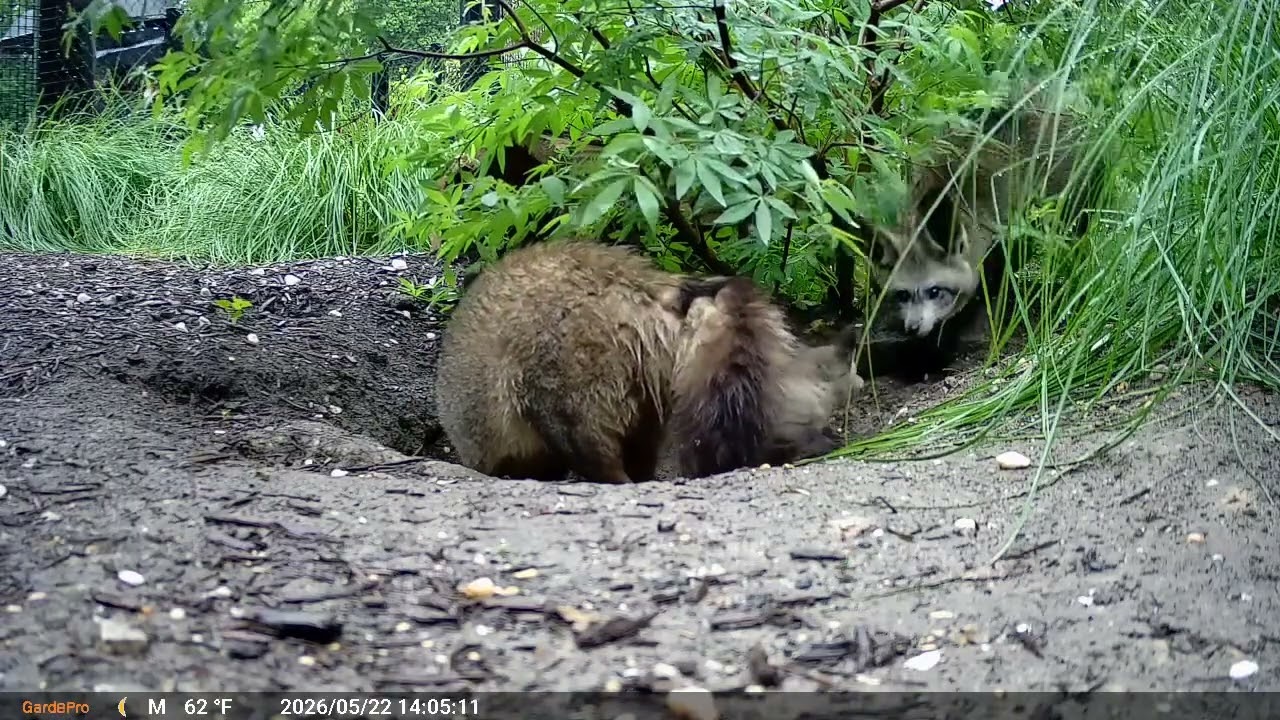
Location: Zoo - Great Cats
Keepers were thrilled to welcome the first litter of bat-eared foxes born at the Zoo in 75 years — even if they’ve hardly caught a glimpse of the babies.
Ever since mother Ziggy gave birth sometime around April 28, the elusive kits have been tucked away in a den dug by their parents. Bat-eared foxes are naturally secretive parents, keeping their kits underground and out of sight. Keepers aren’t sure how many kits are in the litter but have confirmed there are at least two.
Personality-wise, keeper Sydney Mayers says the 2-year-old mother, Ziggy, is “confident and bossy,” while 3-year-old father, Lando, is “cuddly and a little nervous” — complimentary traits that seem to make them good parents.
“Lando is quick to react to unexpected sounds, sometimes in an overly dramatic way, which means running halfway across the yard,” Mayers says. “But I think that's contributed to him being a good, protective dad.”
Sihek
/https://tf-cmsv2-smithsonianmag-media.s3.amazonaws.com/filer_public/bd/ec/bdec70ff-344d-44c9-ba18-93c3c578662c/20260430-817a9608-10rp.jpg)
Location: Front Royal, Va.
With only a few hundred sihek — also known as Guam kingfishers — left on Earth, each little chick brings hope for one of the world’s rarest bird species.
Two chicks hatched this spring at the Smithsonian Conservation Biology Institute, the Zoo's conservation science campus in Front Royal, Virginia. The chicks' parents, 5-year-old Antonio and 2-year-old Poki, are first timers and have never bred before.
Female Guam kingfishers can lay two clutches in a year, so the chicks are being hand-raised by staff, a husbandry practice that induces the birds to lay a second clutch and helps boost their annual egg production.
“This species isn’t always easy to breed in human care,” said curator Colleen Lynch. “But the space and privacy that we can offer in Front Royal does contribute to the success of the program.”
“We hope they will parent-rear their next chick, which would be another first for this pair,” added keeper Erica Royer.
Sihek have been extinct in the wild for decades, wiped out in Guam by invasive brown tree snakes. Today, a cooperative effort is working to rebuild the population. Smithsonian scientists have joined a project to release human-raised sihek on Palmyra Atoll, a protected snake-free Pacific region a few thousand miles away from the birds’ native island of Guam. Early results have been positive: the first wild sihek eggs were laid there in 2025.
Sloth bear
/https://tf-cmsv2-smithsonianmag-media.s3.amazonaws.com/filer_public/bb/df/bbdf5ba9-4974-4025-b932-6cbe4d7673e4/20260331-817a6935-07rp.jpg)
Location: Zoo - Asia Trail (off-exhibit)
Few animal moms are as devoted and protective as a mama bear. Sloth bear cubs Ozzy and Champa have been nurtured by their mother, Molly, behind the scenes at the Zoo’s Asia Trail since their birth in December.
Like their wild counterparts, the cubs have mastered the signature behavior of hitching rides on their mother’s back. At first, Molly wasn’t exactly thrilled when the cubs latched on to her fur, said keeper Stacey Tabellario. But just like you'd expect for a bear mother, she eventually let instinct take over.
Ozzy and Champa will make their public debut later this spring.
Redhead
/https://tf-cmsv2-smithsonianmag-media.s3.amazonaws.com/filer_public/94/59/94593a47-76f8-42de-a061-0f531ef4eb75/20260504-817a0246-001bk.jpg)
Location: Zoo - Bird House (off-exhibit)
It’s a tricky thing to hand-raise a duckling, said keeper Jen Ferraro. Baby ducks need warmth, water, and a constant supply of food, but too much hands-on interaction can cause the baby to imprint on its caretaker. Fortunately, Ferraro manages the balance well, having successfully raised four broods of redheads at the Zoo since 2023.
The year’s first adorable redhead duckling, a male named “Kevin,” hatched behind the scenes May 3. Kevin is thriving under the Bird House team’s delicate care. When he gets older, Ferraro says he’ll likely join the mixed-species flocks in the Bird House’s flamingo yard.
Prehensile-tailed porcupine
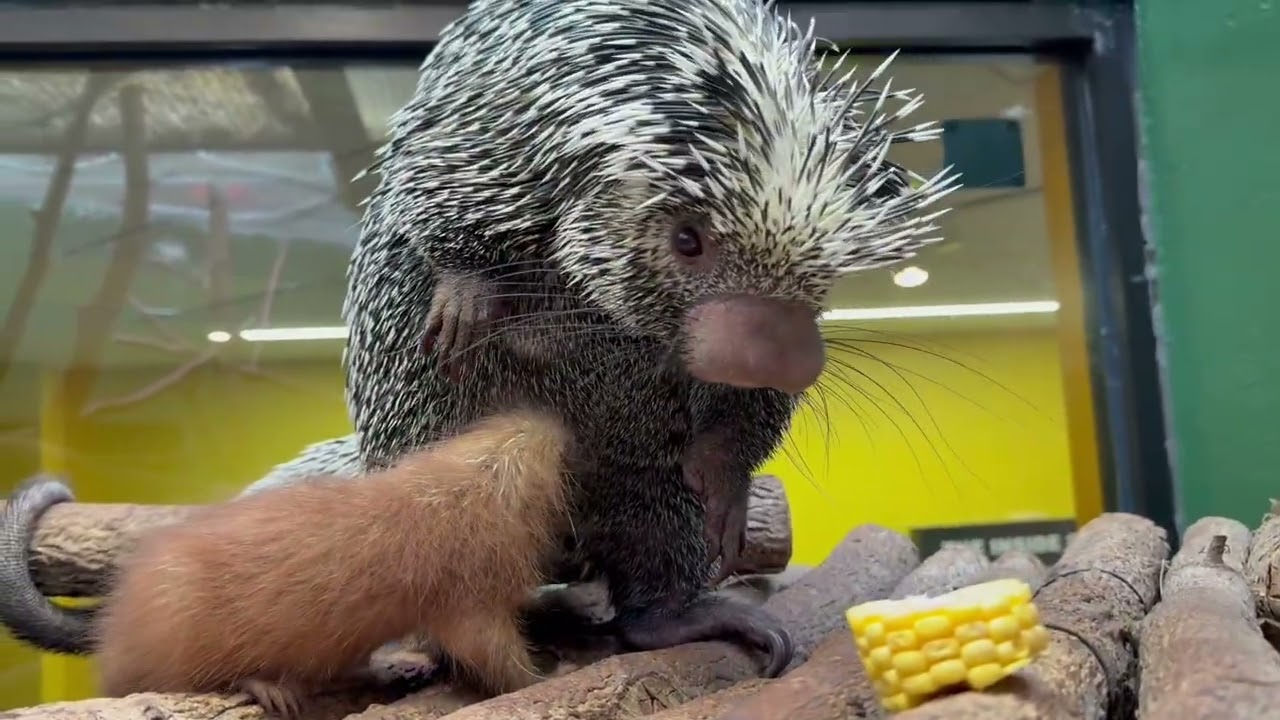
Location: Zoo - Small Mammal House
The morning of May 20, keepers arriving to work were delighted to find that an adorable baby porcupine, or porcupette, had been born overnight at the Small Mammal House.
Both the baby and mother, Beatrix, are healthy and doing well, said keeper Maria Montgomery. The baby, Beatrix, and father, Quilbur, can all be seen on exhibit.
“Porcupines are nocturnal, so you may not see a great deal of movement during the day,” said Montgomery. “But even when they’re sleeping, they’re adorable.”
Rhea
/https://tf-cmsv2-smithsonianmag-media.s3.amazonaws.com/filer_public/8d/d8/8dd81be4-95d8-4c78-bc07-ca384814112a/20260522-817a4029-006bk.jpg)
Location: Zoo - Bird House (off-exhibit)
When animal parents aren’t ready to raise their young, having staff at the ready can make all the difference. For more than a month, first-time greater rhea father Teddy dutifully watched over a brood of eggs — in rheas, males do the parenting — but Teddy didn’t quite know what to do when his offspring emerged on May 18.
Bird House staff stepped in for hand-raising duty. Today, the team is watching over a healthy, growing chick, which will likely head to another zoo to join a breeding program when it gets older.
Black-footed ferret
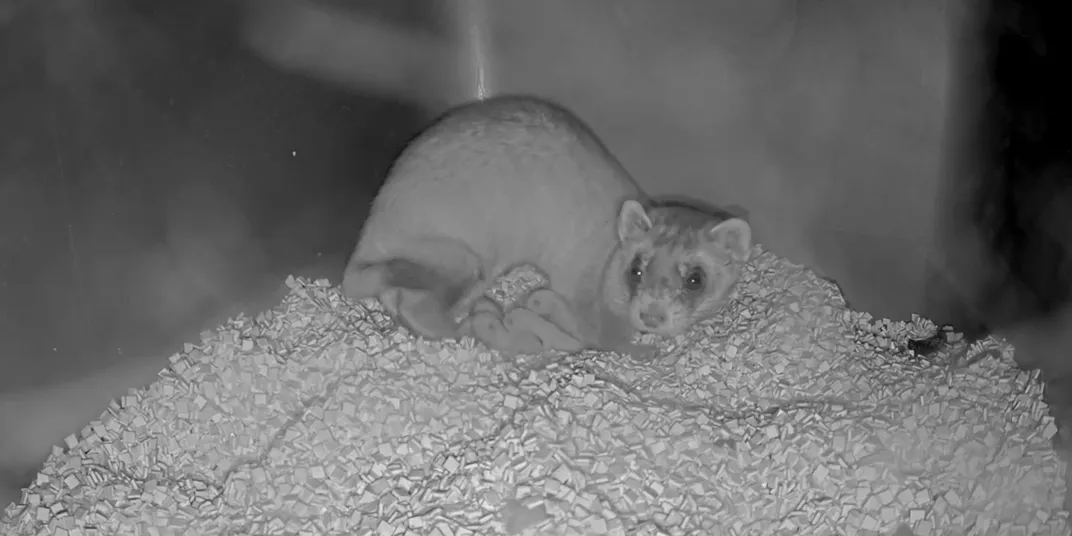
Location: Front Royal, Va.
As part of the Smithsonian’s longstanding effort to save this iconic North American species from extinction, black-footed ferret mother Mizuno gave birth to six healthy kits on May 11, the first litter to be born at the Zoo's Front Royal campus in 2026.
“Mizuno is a natural mom, and she is doing a great job raising this large litter,” said Adrienne Crosier, curator of carnivores at NZCBI. The team paired several other compatible ferrets this year and welcomed a second healthy litter on May 21.
Want to follow the fun? Watch Mizuno and her kits on the Black-footed Ferret Cam for a limited time.
Loggerhead Shrike
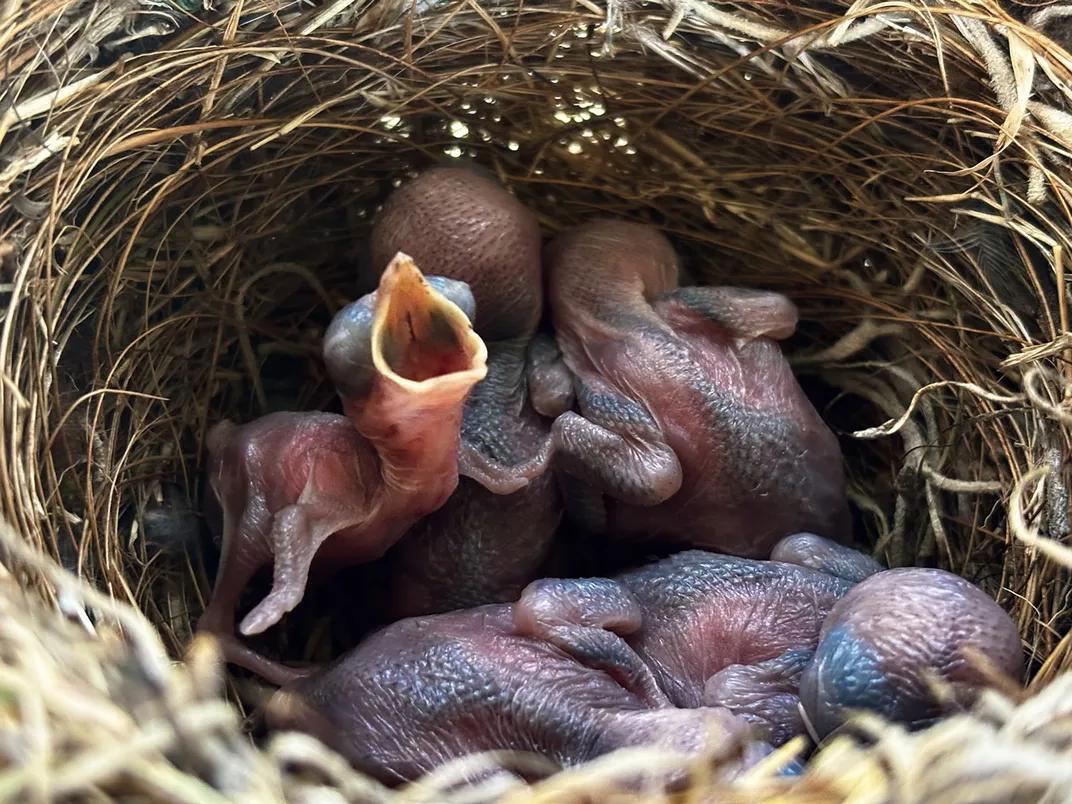
Location: Front Royal, Va.
In the last few decades, loggerhead shrike populations have declined by 76% across North America. Smithsonian staff are stepping in to help save the species before it's too late.
Since 2011, 332 loggerhead shrike chicks have been successfully hatched at the Smithsonian Conservation Biology Institute, part of a cooperative effort to boost flagging populations in Canada.
Curator Colleen Lynch said 2026 is shaping up to be another banner year for shrike hatchlings at the Front Royal campus. Several broods have already hatched this spring, including the group of chicks pictured above.
Whooping crane
/https://tf-cmsv2-smithsonianmag-media.s3.amazonaws.com/filer_public/cf/09/cf090536-e589-4b1a-926d-c1f7e248e2cb/20260430-817a9869-32rp.jpg)
Location: Front Royal, Va.
Sometimes, it takes a village to raise a chick. A single pair of whooping cranes hatched at the Front Royal science campus this spring, and the babies are being tended to by their parents — all four of them.
“Whooping cranes typically lay two eggs in a clutch, but they aren’t always successful in raising two chicks. That’s why we use foster families to ensure that both chicks survive,” explained curator Colleen Lynch. “Our clutch of two eggs was split: one egg stayed with its biological parents, Kenai and Sunflower, while the other egg was given to another pair, Goliath and Tehya, to raise.”
Goliath and Tehya haven’t laid fertile eggs yet, but Lynch said they’re proving themselves to be devoted foster parents in the meantime.
Northern pintail
/https://tf-cmsv2-smithsonianmag-media.s3.amazonaws.com/filer_public/0d/e1/0de1150e-c78c-46e0-b774-da3a336d9140/20260504-817a0376-006bk.jpg)
Location: Zoo - Bird House (off-exhibit)
Back at the Bird House, Northern pintail super-mom “Caroline” has been doing an excellent job raising her six ducklings, said keeper Jen Ferraro.
In fact, Ferraro pointed out that Caroline will frequently help raise chicks who aren’t even her own. That’s probably why this year’s clutch, hatched at the Bird House on April 28, are all thriving.
“She might be the best duck mom we’ve ever had,” said Ferraro.
Asian Elephant
/https://tf-cmsv2-smithsonianmag-media.s3.amazonaws.com/filer_public/9f/3d/9f3d38be-2ed4-413b-9b9e-7c94b1d49747/20260420-817a8136-08rp.jpg)
Location: Zoo - Elephant Trails
Of course, no spring baby roundup would be complete without Linh Mai.
The Zoo’s 3-month-old Asian elephant calf is thriving under the watchful eye of her attentive “aunties,” Swarna and Bozie. Now more than 600 pounds, Linh Mai still receives her bottle feedings from keepers, although she was recently spotted chewing on hay alongside the adults – a healthy milestone for the rapidly growing calf.
Want to see her? The Zoo’s indoor elephant habitat, the Elephant Community Center, opens daily at 9 a.m. Can’t make it to the Zoo? Watch the online Elephant Cam and see which members of the herd you’ll spot!
Want more animal care news? Sign up to receive the latest email updates and information on Zoo news, events, volunteer opportunities, and more.
Love animal babies? Your donation helps protect them in the wild through Smithsonian conservation and research programs. Learn more or make a donation.