

An August for Astrotourism: Chasing a Solar Eclipse in the Vineyards of Spain
On August 12, 2026, a total solar eclipse will pass over remote parts of Greenland and Iceland’s western edge before arcing across northern Spain. Two summer trips will put Smithsonian Journeys travelers right in the path of totality—which just happens to cover World Heritage sites, intriguing cities, and Spain’s beautiful wine country.
:focal(3000x2000:3001x2001)/https://tf-cmsv2-smithsonianmag-media.s3.amazonaws.com/filer_public/2f/c5/2fc50e22-e236-4d58-96f8-d91a72bb34c1/astronomy_total_solar_eclipse_with_clouds_dt_122398998.jpg)
Picture the scene: You’re at a winery in northern Spain tasting the local vintages and exploring the vineyards with new friends. It’s mid-August in Iberia, so naturally, the sun takes its time setting, drawing out the afternoon light long into the evening.
Gradually, the already magical atmosphere takes on a surreal quality. And then the lights go out. It’s the moment you’ve come for, even though you’ve already seen and done so much in Spain: For a few moments, the total solar eclipse has replaced the “golden hour” before sunset with an eerie darkness. A hush falls over the vineyards, the air is suddenly cooler, and spectacular wisps of the solar corona flicker and spark around the moon. When the moon moves away minutes later, the sun is plump and low in the sky. Sunset is your encore, along with a celebratory meal and delicious wines produced on the property.
/https://tf-cmsv2-smithsonianmag-media.s3.amazonaws.com/filer_public/ca/93/ca93277e-50e0-4a6f-9fd4-fc44c1f81299/spa_ribera_del_duero_vineyards_ist_2013041123.jpg)
A total solar eclipse is a rare and wondrous phenomenon, and this year, chances to see it are further limited by geography: it begins on the northern coast of Siberia, bisects the frozen wilds of northeastern Greenland, and traces Iceland’s western edge. Then it lingers over the Atlantic before finally traversing northern Spain. The cosmic show ends just beyond the Balearic Islands.
For every recent total eclipse, Smithsonian Journeys has staked out prime spots in the band of totality and built multi-faceted itineraries around the celestial event, whether in Texas Hill Country, Antarctica, or the Coral Sea. This year’s eclipse will be the first over Europe since 1999. As it sweeps across northern Spain before sunset, its shadow will fall on myriad World Heritage sites, cities rich in history and architecture, and the rolling vineyards of wine country—where Smithsonian Journeys travelers will be ready to witness the magic.
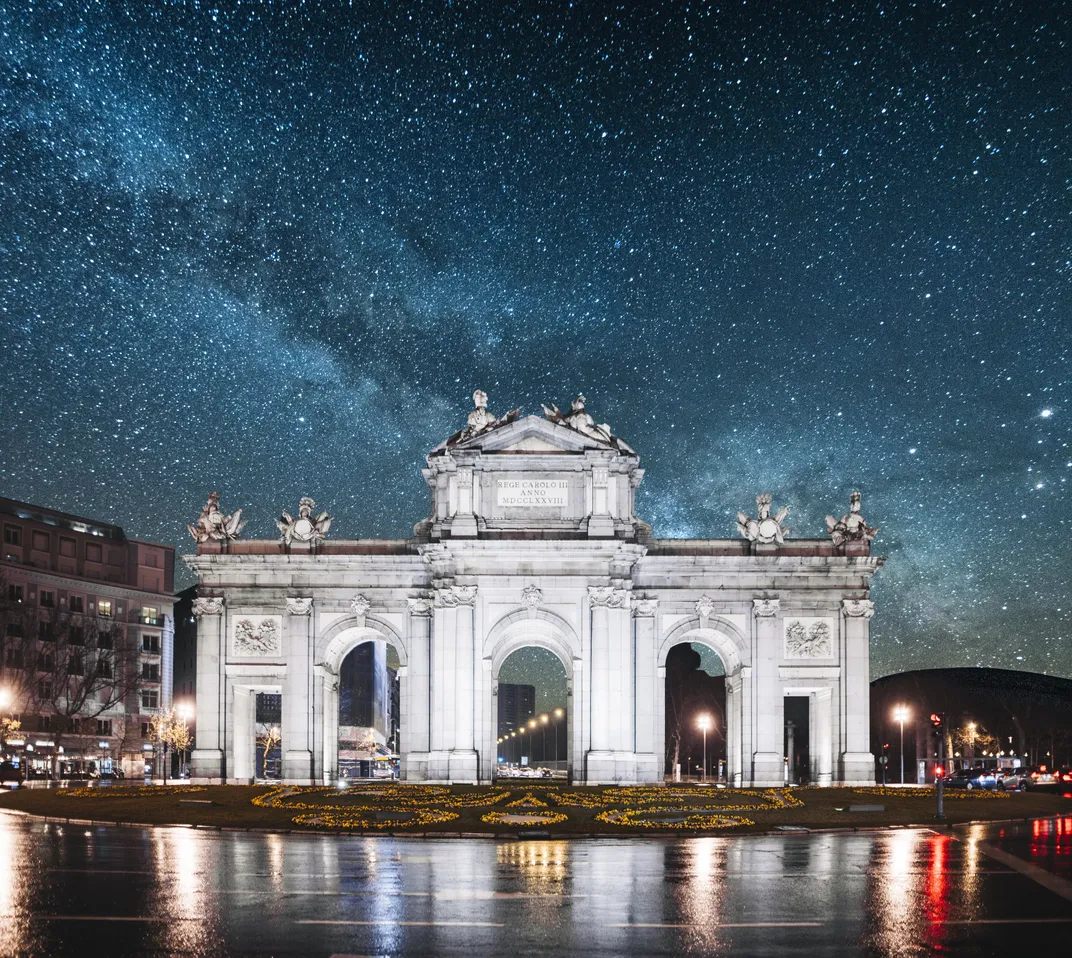
Some will have begun in Basque Country, making their way from Bilbao west along the Camino de Santiago pilgrimage route. They’ll visit pilgrimage cities and towns such as Burgos, León, and Frómista, and gain insight into how early humans and pilgrims used the stars to guide their way. They’ll sample pintxos (Basque tapas) in San Sebastian, ogle at architectural masterpieces by Antoni Gaudí and Frank Gehry, and cap off the adventure with a starry perspective on Madrid.
Others will begin in Madrid, going behind the scenes at the Royal Observatory and seeking out cosmic themes on a unique tour of the Prado Museum. Then they’ll head north to the storybook landscapes of Old Castile, visiting the World Heritage sites such as the Roman aqueduct of Segovia and the fortified city of Ávila and staying in vibrant Valladolid. A feast of traditional tapas and a stargazing party also await.
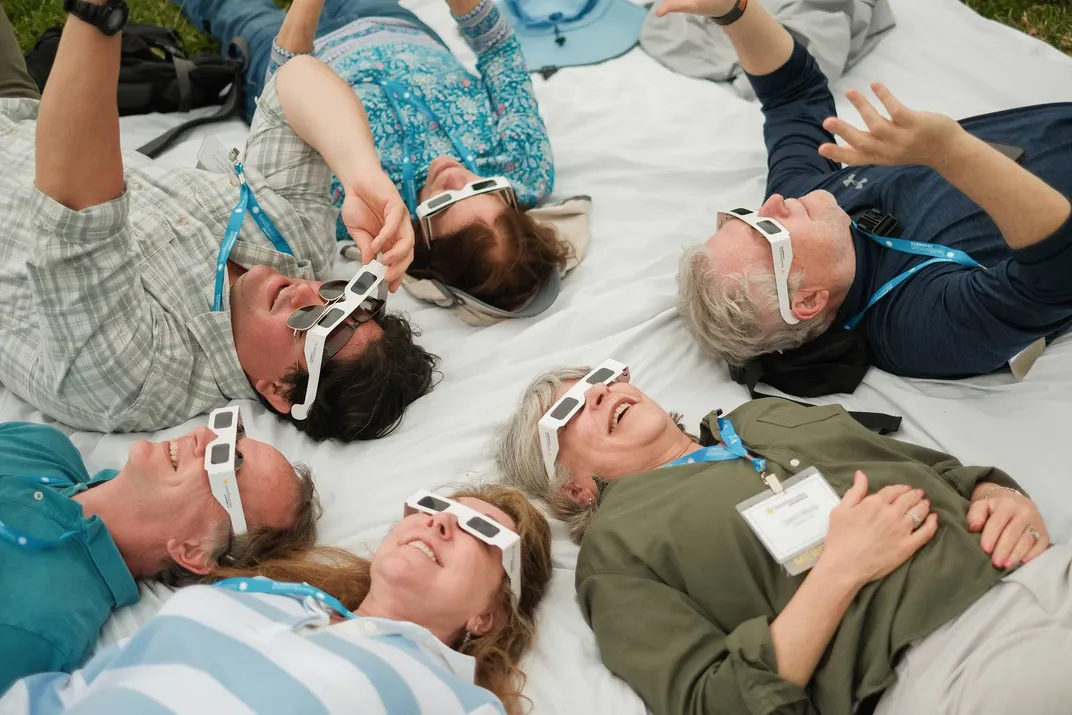
An astronomer or other scientist accompanies each journey, interpreting the science and mythology behind eclipses and all things celestial. These Smithsonian Journeys Experts are people like Jim Zimbelman, senior geologist emeritus for the Center for Earth and Planetary Studies at the National Air and Space Museum, or astrophysicist Michelle Thaller, who worked at the Goddard Space Flight Center and hosted an astronomy podcast on NPR.
On eclipse day, both itineraries culminate in private watch parties at renowned wineries in the path of totality. Along with wine tastings and vineyard tours, there’s a lively panel discussion with astronomy experts and a festive dinner—and of course the magic of the golden hour eclipse.
Astrotourism has rocketed in popularity recently, but eclipse-themed tours have been some Smithsonian Journeys' most popular trips since they were introduced years ago. For a lucky few, a handful of additional spaces are available on this summer's two Solar Eclipse Over Spain itineraries.
Visit www.smithsonianjourneys.org to learn more about traveling with Smithsonian Journeys—and to see where they'll experience totality next: the stars have aligned to offer total solar eclipses in 2027 and 2028 as well.
Please note: Eclipse viewing conditions are dependent on weather conditions.