
There's More to That
A Smithsonian magazine special report
The Remarkable, Amazing Stories of Route 66 Reflect the Twists and Turns of 100 Years of Americana
Among the first interstates, the beloved roadway that connected Chicago to Los Angeles still looms large in popular culture and our collective imagination
/https://tf-cmsv2-smithsonianmag-media.s3.amazonaws.com/accounts/headshot/adsheadshotcolor-edit.png)
:focal(1000x671:1001x672)/https://tf-cmsv2-smithsonianmag-media.s3.amazonaws.com/filer_public/af/14/af14d52b-0f99-4e7c-b856-01e0bcf476c3/smithmag-podcast-s04-ep26-route66-article.jpg)
The famed Route 66 has had many lives. It emerged in an era when cars were new but roads were dangerous and intended for horses. But there were those who imagined a highway that would connect the cities of the Midwest to the West Coast — and Route 66 was born.
During the Great Depression, the roadway helped migrants find their way to new jobs in the West. During World War II, it facilitated the transportation of munitions and armaments en route to the Pacific theater. Later, it became a busy thoroughfare for Americans wanting to explore their country. Storefronts, towns, gas stations, cafes and much more grew up along its edges. Then, as major interstates became the main byways for traveling Americans, Route 66 fell into obsolescence, becoming more a time capsule than roadway. Today, some of those roadside stops still exist, catering to tourists seeking a dose of unvarnished Americana.
This episode chronicles the origin of the federal interstate system and how Route 66 fits into that history — before the massive tangle of highways and roads we know today were paved and packed with traffic.
A transcript is below. To subscribe to “There’s More to That,” and to listen to past episodes about an interactive map commemorating the 250th anniversary of the United States, the ongoing fascination with the sinking of the ’Edmund Fitzgerald’ and the moving return of personal belongings to the Rosebud Sioux tribe, find us on Apple Podcasts, Spotify, iHeartRadio or wherever you get your podcasts.
Ari Daniel: Tell me about who Cyrus Avery was. What were his ambitions for highways?
Elana Scherr: This man loved roads, and he also really loved Oklahoma.
Daniel: Elana Scherr is a journalist with Car & Driver magazine, and she recently wrote a story for Smithsonian magazine about Route 66, the iconic road that turns 100 in November this year. Cyrus Avery was the man behind the highway.
Scherr: So in the teens, people are starting to want better roads for cars. And also people are traveling a little bit more across the country. And a lot of the country, the Midwest to the West, they wanted people to come visit. There weren’t enough tourists. People weren’t traveling through those areas. They went across the north. If they had to get across the country, they followed the railroads, and the rest of this was Wild West.
Daniel: Cy Avery was a businessman who owned an oil company, a gas station and other property in Oklahoma.
Scherr: When the government started talking about improving roads and started offering federal money to states that were willing to work on their road systems, Cy Avery and a group of other people in the Midwest got together and said, “This is a great part of the country. We should be given some of that money so that we can connect all of these highways that go from Chicago down to California and it should come diagonal across the country instead of only having highways that go across the top of the north and the bottom in the south.” And I guess they were convincing enough that they were approved for Route 66, and they got an official highway designation in 1926.
Daniel: So what were some of the challenges that Cyrus Avery and his team faced while trying to complete Route 66?
Scherr: The first challenge that Cy faced was just getting approval, because he wasn’t the only business owner who wanted the big, main highways to go past his town and his stuff. So there was a lot of meetings and letters and the 1920s equivalent of doing slideshow presentations.
Daniel: Early PowerPoint.
Scherr: Yeah, early PowerPoint. Steam-powered.
Daniel: Steam PowerPoint.
Scherr: So once he got approval and once they started to get the money, there was still challenges in figuring out the exact route and then getting it built. It’s not that easy to build a road, and what kind of paving to do? Do you have the equipment to do it? Do you have the worker power to do it? In the ’20s, we ran into the Depression. Some of this road building was a way of keeping people in work, which was good. You started to have people, but you didn’t necessarily have enough people to do it all at once. So it took a really long time to complete the roads.
Daniel: How did Cy end up promoting this Route 66?
Scherr: They took out ads in magazines. They put up billboards. They invited people to come and see what they were doing. But one of the funniest things that they did was that they ran a foot race—a human race, no cars. And it went from California to New York. So basically they set up a race that ran across the country, literally ran across the country, which seems just completely wild to me.
Daniel: Was that the Bunion Derby?
Scherr: That is the Bunion Derby. Well named.
Daniel: I mean, not many folks managed to run the thing unscathed, right?
Scherr: Less than half of the people who started it were able to finish it. And that was in 1928. So it was very soon after the approval of Route 66.
Daniel: And did this Bunion Derby succeed in creating a lot of press?
Scherr: There was somebody who won it. Andy Payne was the winner. He made it all the way across. He was an Oklahoma native, a member of the Cherokee Nation there. And he got home, he paid off his parents’ farm. He bought a car, which I think is very funny. And it wasn’t really a success from a promotional standpoint, but it is a standout example of how far they were willing to go to bring attention to the road.
Daniel: From Smithsonian magazine and PRX productions, this is “There’s More To That,” the show that’ll take you on a scenic cross-country road trip with the top down. I’m Ari Daniel. In this episode, we learn about the history and cultural significance of the iconic highway, Route 66, as it approaches its 100th birthday. From Chicago to Santa Monica, this road has meant so much to so many. Stay tuned.
Daniel: As this new Route 66 was getting underway and as Cy was attracting attention and money, how did the railroad magnates, the big carriage people respond? Did he earn a fair number of enemies by doing this?
Scherr: I know that later there was a lot of friction between trolleys and railroads and oil magnates and cars, but I think in the very beginning, nobody really knew how big cars were going to get. And it was just convenient for everyone to have alternate ways of transportation.
Daniel: Of course, cars did eventually become kind of a big thing.
Scherr: By the 1920s, cars were pretty popular. I mean, they’d already been around for 20 years or so at that point.
Daniel: But back then, cars and driving itself were entirely different than they are today.
Scherr: A lot of cars were still open-top convertibles, so you were really at the mercy of the weather. You didn’t have any of the fancy electronics that we have now for all-wheel drive and helping in case you’re in a skid. You didn’t even have very good headlights, so you couldn’t see very far ahead. And so cars were popular, but they were still a skill that you had to learn that was unusual. It wasn’t a super mainstream ability to be able to drive well.
Daniel: Is that how people were generally getting around?
Scherr: By the 1920s, people were generally getting around in cars, certainly in rural areas. They’re using trucks for transportation. They’re using cars in the city. I mean, people are still using trains and trolleys, but by the ’20s, people were using cars. You can think about the bootleggers and stuff in the ’20s, driving their cars around, carrying bootleg liquor in the back and that sort of thing.
Daniel: What cars were around in that decade? Because it wasn’t just the Model-T Ford, right? There were a few other makes and models.
Scherr: The 1920s had so many different cars that people could choose from.
Daniel: Really?
Scherr: Yeah. Oh my gosh. Almost all of the big ones that we know about existed by the ’20s. So there were Chevrolets, there were Dodges, there were obviously Fords, Cadillacs, Lincolns. And then there were all of these cars that we no longer have. There were still steam cars that were a little bit more popular earlier, but there were even some electric cars in the early 1900s. And then there were a ton of different car companies based in Indianapolis, so there were a lot of American sports cars. So you could have had a Marmon Wasp, you could have a Duesenberg, and then there were also European brands by then, Bugattis and things like that.
Daniel: How easy was it to drive long distances on roads at that point?
Scherr: Driving long distances was a challenge in so many different ways. There’s no GPS. People had physical maps, so you needed to know how to read a map. And then you weren’t even sure that the maps were accurate because the roads changed a lot and the conditions changed a lot. They weren’t all paved even. It was more like if you’ve ever gone on a road trip out in the desert and you’re driving along and you make a turn and then the road just turns to dirt and you’re like, “Am I supposed to be doing this? Is this just a cow path?” So to drive across the country, you needed the skill to read a map. You needed to be able to drive in a lot of different road conditions, a lot of different weathers, and you needed to be able to fix your car or find someone who could fix your car, because they broke a lot. They needed pretty regular maintenance, but people did it. People took road trips in the ’20s, and they ventured across all of those roads. They had races across the country and back. People were excited about driving even though it was very difficult.
Daniel: The road conditions were pretty bad, right?
Scherr: Yeah. Not only were there potholes and unsealed roads, maybe part of it would be brick and then it would just be dirt, or maybe it would be like wooden boards butted up against each other and then it would be sand. If it rained really hard, it would get washed out and you might be driving along and all of a sudden there’s a crevasse and you have to turn around and go back. Even when the roads were in good condition, you’ll remember that cars are still fairly new, and the roads were based off of roads that people were taking horses on.
So the roads are really narrow and they might have really tight turns because it was just, “Oh, there was a rock here or there was a tree here, so we just went around it.” And now you’re in a car and you’re going three times the speed and there’s not enough room to make that turn. If you look at old newspaper articles from the ’20s and earlier, you see a lot of stories of car crashes. They use the phrase “turn turtle” a lot, which means that the car just turned over on its back because someone tried to make a turn too fast and they just flipped the car over. It was very common.
Daniel: Wow. I mean, it’s really something to think about a period in history, I mean, most of humanity, we didn’t have cars. And so these new machines show up and there’s not the kind of infrastructure that we just take for granted today where you can get anywhere to anywhere using roads that are in fairly good condition. It’s really something to imagine this pre-sophisticated-road world.
Scherr: Yes. And everything that we consider to be a standard of a road trip, like a fuel stop, like, “Oh, we’ll just stop at the next gas station.” Yeah. Well, there weren’t that many gas stations. A lot of times you got gas in the jar at a drug store to put into your automobile and there weren’t necessarily fuel gauges. So you had a little tank on the back and you hopefully knew about your mileage, but you might need to stop and check it with a stick.
Daniel: A dipstick.
Scherr: Yeah, a fuel-checking dipstick.
Daniel: Tell me about the businesses that developed along Route 66 that became a roadside economy.
Scherr: We’re so nostalgic about roads like Route 66 now with their little motels and their neon signs, and we think of them as so small and so cute, but at the time they were high-tech and modern and glamorous. This was a time where neon was fairly new. And so if you’re driving along on a road and it’s lit up with neon signs and these modern motels where you just drive in instead of walking up to a fancy lobby, getting the bellmen and all of that stuff, this seemed like the future to people. And so business owners were eager to set up there. There were all kinds of hotels, tons of different restaurants, gas stations and attractions, too. Over the years, people would build evermore wild things to encourage people to stop there. Somebody built a water park that looks like a giant whale, the very famous tepee-shaped hotels that are like in the movie Cars. And then there were also a lot of national parks that were nearby. There were hotels and tours of, say, like the Grand Canyon, because that isn’t very far off of where 66 goes.
Daniel: Tell me about some of the historical events that Route 66 played a role in after it was completed.
Scherr: So, this road has seen everything that’s happened in America from the 20th century on, basically. It was built as the Depression was hitting. And so it saw the westward migration of all of these people from this exact area, the Midwest to California, in pursuit of jobs. In some ways, it made their transport easier, although it was still a terrible journey. If you can imagine packing up your whole family and all of your stuff in a jalopy and heading out on this road and you don’t really have the money to stay in the fancy motels. So you see all the neon lights and you’re just hoping that when you get to California, there’s going to be a job there. John Steinbeck very famously wrote about it and called it “The Mother Road” in his novel The Grapes of Wrath, which is about traveling to California during the Depression.
And then once the Depression ended, World War II started. So that was, again, transport, but this time it was troops using it to transport big trucks and equipment and people to California, to Texas, to get on boats or to go to training. And after World War II, we’ve got people coming back from war, and now you’ve got people starting families, right? Soldiers are coming back, they’re rejoining their families or they’re getting married, they’re having kids and they’ve got a taste for adrenaline and for adventure. They’ve been in Europe, they’ve been in Asia, they want to see more, they want to eat interesting foods. They like cars. They’ve been driving a lot, trucks and Jeeps. And so there’s a lot of travel where people are taking their family on trips, or they’re getting married and they’re going on a honeymoon, and it’s this romantic journey to go across the country.
And again, they can see all of these natural wonders of America on this trip because if you take Route 66, you go from a big city, Chicago, and then you go through the bread basket of all of the places where we grow food ,and you see these golden fields, endless rows of corn, and then into the desert—which is so exotic to somebody who lives on the East Coast or in the Midwest—the big cactuses that look like cartoons out of the Roadrunner cartoons and Grand Canyon. And then you hit the mountains, and then you end at the ocean on the Pacific Coast. It could not be more romantic.
Daniel: You really cover so much ground. So is that why Route 66 became so popular for road trips? Can you talk about the kinds of vacations that Americans were taking and why they chose to use that route?
Scherr: I think that Route 66 became popular for that exact reason because you got to see so much and you were in control of your own rhythm, right? You could stop anywhere along the way and there was something to do, there was something to eat, there was a place to park your car, you could stay in the motel, you could stay at a campground. People were getting really into camping. You have all those cute little travel trailers and station wagons and things. So it was a really good road to use for all of the new interests that Americans were getting into in the ’50s and ’60s.
Daniel: Elana, tell me about the sundown towns and the Green Book. Who wasn’t able to travel Route 66 as easily and why was that?
Scherr: Yeah. I mean, here we are talking about romance and freedom and you get to see America and nobody’s telling you what to do, but of course that’s never true for everyone. American history always has people who are not able to experience the same freedoms as the ruling class. And for Black travelers, it was not the same experience. Probably the listeners have heard of the Green Book, which was a publication that was put together by Black travelers for Black travelers and it would say, “Okay, this hotel will let you stay here.” Or, “This gas station is owned by a Black person or by someone who is friendly to Black travelers.” Or, “This town is so unfriendly that you should not stop here. Make sure you go around it or make sure you get through it during the day.” And those were known as sundown towns for the very literal reason that you did not want to be there after sundown. It was not safe. They would not be good to you.
Daniel: Elana, why did the road begin to fall out of use?
Scherr: Route 66 was a victim of its own success. So many people were traveling it and so many people were traveling in general that it went from being this fun road trip to just being a traffic jam. If you’ve ever been stuck on the freeway in rush hour, imagine that except it’s just a two-lane road and then the hotels are all full because there’s too many people traveling and some of the older sections aren’t being super well maintained, so they’re getting potholes and stuff in them again. The neon’s flickering out, everything’s looking kind of old and janky. And at the same time, they had started building what we now consider a normal interstate. It overlapped with Route 66. I mean, they started working on those in the ’50s. So by the ’70s, even by the ’60s, there are already alternate routes that are way faster, way more efficient.
And Route 66 started to feel old fashioned, out of date, not fun, not safe.
Daniel: Yeah. The road still looms so large in the popular imagination. I wonder if you can just talk me through a few of the movies where Route 66 is featured.
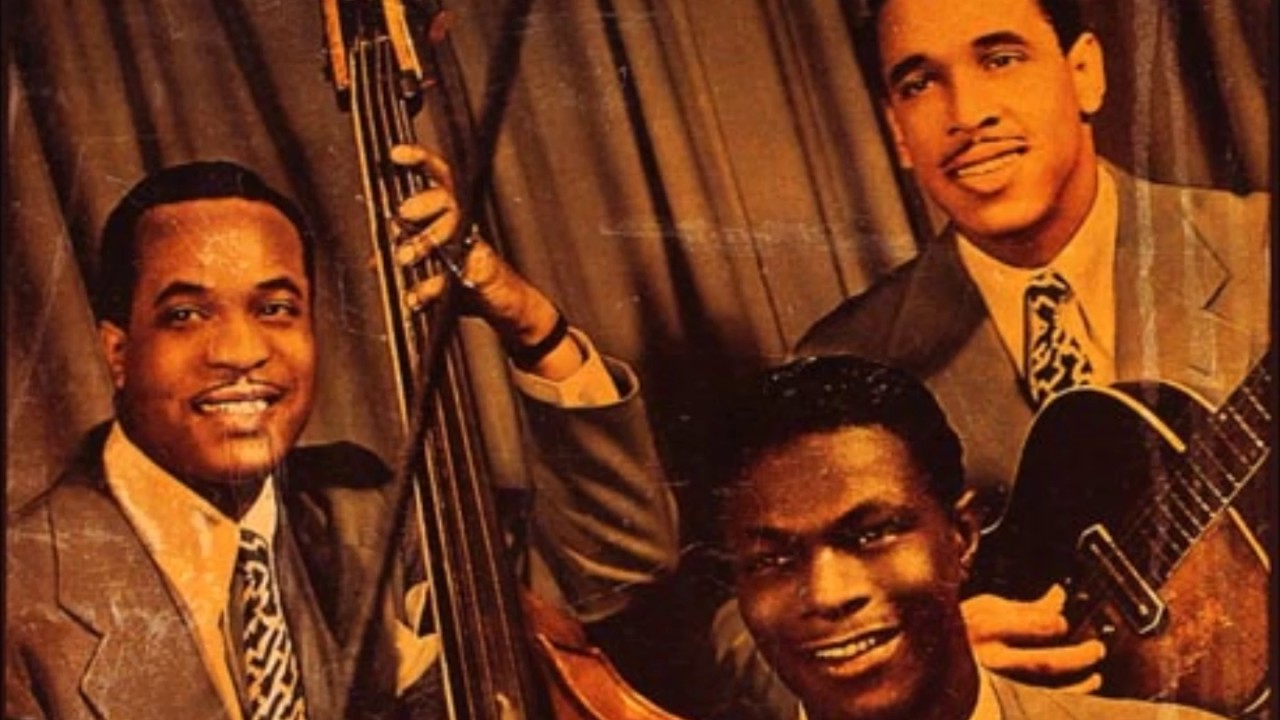
Scherr: Route 66 made it into the mainstream almost immediately. There’s that very, very famous song by Nat King Cole about “Get your kicks on Route 66,” which has been covered a million times.

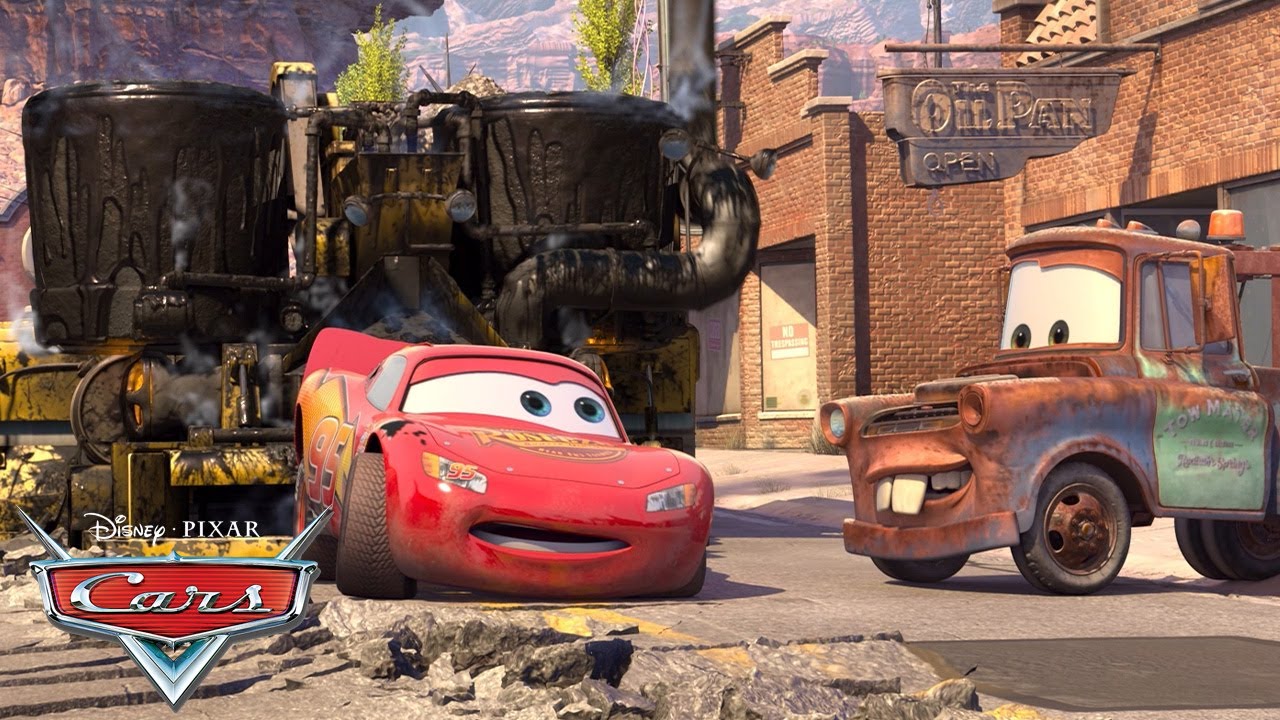
Scherr: And I think people just liked the name of it, because there was a TV show in the early ’60s called Route 66, which didn’t even take place on Route 66, but it was about two guys in a Corvette sort of traveling the country. And so from the very beginning of TV and movies, Route 66 was there. I think at this point, the most famous Route 66 movie is Pixar’s Cars, because it is really about the romance of it, the decline of it, and it uses imagery from the real road. There are places that you can go that look exactly like they do in that cartoon.
Daniel: Elana, why do you think Route 66 has maintained its legacy in the wider culture?
Scherr: It’s really interesting trying to figure out why this road, of all of the many roads that have existed in America, has not just stayed in the national consciousness, but is a tourist destination internationally. And people come to America specifically to drive this road. I have been on trips on it and run into people from Germany, from France, from Japan, all in the same little section in the middle of nowhere in the desert.
Daniel: Perhaps more international tourists than American ones.
Scherr: That’s very possible. It had a couple of things going for it. One is that it did have families who had businesses along it who felt that there was a reason to keep those businesses going and to fix the neon when it buzzed out or to repaint the motel and keep its funny little shapes or its themes of the past. So it didn’t get totally modernized the way that, like, a section of I-10 or something would. And it fell into disuse at the exact right time to just freeze there. And then, when people started noticing it again in the ’90s or so, it was already old enough to give us that nostalgia joy. And so people started to be interested in restoring it and repairing it and buying sections of it and bringing them back to their glory. Sometimes there’s a kind of safety in being ignored for a little while for an antique or for a section of road because if nobody sees any money to be made, they don’t bother to tear down what’s there. And then maybe somebody can come back in and bring it back.
And it’s very interesting to see how different places make hay out of that. There’s places like Oklahoma City, Route 66 used to be the main drag and then it got bypassed. But what used to be the main drag in Oklahoma City is now like a Little Saigon, they call it, like a Vietnamese town. And they have a ton of really great restaurants and Vietnamese grocery stores because in the ’70s, a lot of Vietnamese immigrants came to Oklahoma City because it was affordable and they set up in these buildings that had been emptied out ’cause nobody was interested in being on Route 66 anymore. So it was affordable. And now it’s this thriving community in a totally different way than when it started.
Daniel: There’s another story of resurrection on Route 66, one that Elana included in her article for Smithsonian. It’s about the town of Amboy in Southern California. What condition was Amboy in when your dad bought it?
Kyle Okura: It looked like a literal ghost town.
Daniel: This is Kyle Okura. His father was Albert Okura, a Japanese American and proud founder of a successful Mexican-style rotisserie chicken fast-food chain in Southern California called Juan Pollo.
Okura: My dad was the type of person who always did things outside the box.
Daniel: It was 2005 when Albert decided his next venture would be to purchase a once-thriving little town along Route 66 called Amboy. Kyle was 12 or 13 at the time.
Okura: And I remember he comes into the room and he says, “Hey, Kyle, I’m going to buy a town.” And I said, “What do you mean by a town?” And he goes, “Yeah, I’m going to buy a town.” And I said, “What does that mean? Why?”
Daniel: That was my next question. Why?
Okura: He pretty much just said, “Who else do you know owns a town?” And that was enough explanation for me at that time. And we all went up there, and I just remember being so far away. It’s a roadside Route 66 gas station, all these empty, abandoned buildings. Everything was defunct. So when he bought it originally, I had no indication of the significance of the place that I was at.
Daniel: Was there something about being on Route 66 that appealed to your dad?
Okura: He really believed in the American dream. The reason why he was able to even acquire the town of Amboy is because in the ’90s he bought a building, which was the original site of the very first McDonald’s in San Bernardino. And even though the original building was torn down, he bought the site on E Street. And so the new building that was erected there, he actually used that as the Juan Pollo office, and he created a museum for McDonald’s. That was on Route 66 as well. In his efforts to preserve that type of history and to also promote it on Route 66, he used that as his proof that he would do the same with Amboy. And he promised the widow of the original owners that he’s going to restore the place, and he just jumped on that opportunity to purchase the town.
There were no businesses. There were no people living there anymore. There was a lot of debris and clutter of trash. Just, it looked like no one had been there for decades. The gas station was defunct. We couldn’t sell gas. So he pretty much hit the reset button on it. And it wasn’t until 2008, so three years later, that he was able to get the gas station up and running. We got like ’70s-style refurbished pumps. We have literal mechanical gas pumps that our gas attendants have to fill the gas for them. It’s not electronic at all.
Daniel: What does that mean? Like a hand-lever pump?
Okura: Yeah, you have to turn a key to unlock it and it has mechanical gears in there. And we still do that today. I think it’s part of the experience for all the people coming to Amboy is like, “Oh my gosh, they fill up our gas just like the old days.” Back in the old days, there used to be a thriving population in Amboy, so in the ’50s and ’60s, when all of these boom towns along Route 66 were very much thriving.
Daniel: Amboy once had its own school and a church and a number of businesses, but perhaps the most popular establishment there in its heyday was Roy’s Motel and Cafe. It had a series of cottages that visitors could stay in, and it boasted one of Route 66’s largest neon signs.
Okura: In 1959 is when they erected the giant Roy’s Motel and Cafe neon sign still there today, 50 foot.
Daniel: What made it such an iconic part of Route 66?
Okura: Its size. When we turn on those lights from the east, you can see it from I think it’s 2½ to 5 miles away. You can already see the neon sign off in the distance. It’s like a beacon telling you, “Hey, you’re almost here. You’re almost at Amboy.”
Daniel: The town of Amboy and Roy’s Motel and Cafe experienced a few good decades.
Okura: It boomed all the way up until the early ’70s. I believe ’73 is when they opened the Interstate 40. And the original owners had been quoted to say that their business went boom to bust seemingly overnight. And now we actually restored it. Since 2019, we took the original neon tubes, we gave it a repaint and we turn on those neon lights every night.
Daniel: What sorts of challenges to restoring the town surfaced when your family began the work?
Okura: Number one is just finding the people that want to work out there consistently. It took us forever to even get internet up there. With these mechanical style pumps, there’s a lot of maintenance involved. The weather, I mean, gosh, in July, August, it gets up to 125. And I’ve worked out in Amboy when it was in the 120s, and that’s a different type of heat. It’s absolutely insane. We’ve had locust swarms. We’ve had flooding where the whole …
Daniel: Oh my God.
Okura: Yeah. And especially when it rains a lot, you’ll get these roads washed out where sometimes employees can’t get home because when those washes come through, they come through violently in the desert. And sometimes the whole electricity for the town will go out. So if you can imagine the electricity goes out and it’s 120 degrees, I mean, you have to have employees that are extremely resilient and want to be there.
Daniel: To bring the town back as a functional tourist destination again, Kyle’s biggest obstacle is something most desert cities and towns struggle with: water.
Okura: We do have wells there, but our water table underneath us is extremely salty. So we’ve had different ways of trying to combat that. That’s the number one thing that’s stopping me from opening up those cottages for vacancy and short-term rentals and reopening the cafe.
Daniel: Kyle really wants this town to work. He’s doing it for his dad, who died in 2023, and he’s also doing it out of a larger desire to preserve Route 66.
Okura: As I get older, I start realizing myself the significance of Amboy. It’s growing on me, and not from just my family’s sake, but everyone else. And it’s from the experiences that I get to witness when we have these amazing people that come through and we hear their stories of why do they want to visit this place. And that’s given me my own sense of real purpose.
Daniel: What sorts of visitors do you get passing through Amboy?
Okura: There’s two types of visitors. You get the mandatory traffic that comes through. These are the people coming to and from Palm Springs, Vegas. And then we also have the ones that are really coming down Route 66, starting from Chicago. And we’re one of the last stops as they’re heading toward Santa Monica. But you’ll see people from all over the world, and it’s amazing. I remember one time, 120 degree weather, I saw this German guy, and he was on one of those low-pedal bikes. They tow a little thing behind them. And then they have a little shade. And this guy is literally pedaling all of Route 66, barely spoke English. And then he comes up to me with a literal map and he’s like, “Cafe? Cafe?” And he’s pointing on a map. I’m like, “Bro, it’s right there. You found it.” I was like, “It’s right here.”
Daniel: It isn’t a functional cafe anymore, though Kyle hopes to open it again someday. For now, only the gas station is up and running in Amboy, but the historic significance of the place is still a draw.
Okura: Even pre-Covid, we would get tons and tons of different international tour buses from all different kinds of countries: Dutch buses, Chinese buses, a lot of Germans and Brazil. And you’ll also get random convoys of different activities. Sometimes there’s a ton of bikers and a group heading off on a road trip, or you’ll see people heading off with their boats to the Laughlin River Run. Sometimes you’ll see a whole convoy of supercars that are passing through. So you’ll never know what you’re going to see. And this year is actually the 100th year anniversary of Route 66, so it should be a really big year for us.
Daniel: What are you all doing to celebrate the 100th anniversary?
Okura: We’re throwing our next car show. It’s the second annual. We’re expecting over 400 vehicles, and this year we really went all in. We have a stage with three different bands playing this time, vendors. I’m handling all the catering.
Daniel: Oh, wow. Amazing.
Scherr: Oh my gosh, there are so many celebrations. And I just think it’s so cute to have a birthday for a road.
Daniel: This is automotive journalist Elana Scherr again.
Scherr: I know there are a lot of car clubs who are doing drives. So if you have interest in any particular kind of car, you can probably find a club that’s going to be doing a Route 66 drive. There’s going to be celebrations in Oklahoma. There’s going to be celebrations in Texas. There’s going to be stuff in Chicago. It should be a really great year. To take yourself out there, if you’ve never been before, any little section of it that has a business left on it or a restaurant or something, you can be sure that they’re going to have at least one party that you’re invited to.
Daniel: Elana, what remains of Route 66 today?
Scherr: If you plan to do a Route 66 drive, you do need to learn a little bit about reading a map. You cannot just put Route 66 into a GPS and have it take you all along the way, because not all of it exists anymore. Some of it has been eaten up by main highways, so you sort of have to be able to find the little sections that exist and then the highways that connect them together. There are some pretty long sections: New Mexico, Arizona and California, I think have some of the longest unbroken sections that still have things to do on them. But there are also a lot of websites that will give you kind of turn-by-turn directions. And so it’s good to have a buddy. It’s a very hard trip to take by yourself, because you really need someone to say like, “Oh, I just checked this and actually this section is closed right now. So we have to go around it, and this is the best way to do it.” But if you’re not in a hurry, you can still drive quite a lot of it.
Daniel: To read Elana’s article about the 100th anniversary of Route 66, you can visit smithsonianmag.com. We’ll put a link in our show notes.
And that concludes our second season of “There’s More To That.” Thank you so much for listening. And I hope you enjoyed learning about topics as varied as fruits from the Renaissance, untold stories of the American Revolution, the sex lives of dinosaurs—that was a fun one, baseball returning to a Japanese internment camp, the splendor of the aurora borealis, and so much more. If you missed any of these episodes, check them out.
We hope to be back with you in the months to come, but until then you can read more incredible stories from the journalists at Smithsonian magazine in print and online at smithsonianmag.com.
“There’s More to That” is a production of Smithsonian magazine and PRX productions.
From the magazine, our team is me, Debra Rosenberg and Brian Wolly. From PRX, our team is Ali Budner, Cleo Levin, Genevieve Sponsler, Sandra Lopez-Monsalve and Edwin Ochoa. The executive producer of PRX Productions is Jocelyn Gonzales.
Our episode artwork is by Emily Lankiewicz. Fact-checking by Stephanie Abramson. I’m Ari Daniel. Thank you for listening.
Daniel: Do you know how to do your own car repair?
Scherr: I do. That’s not a requirement for the job that I have, but that is how I got started. My husband and I are very into classic cars, so we’ve got quite a lot of projects. I have a 1915 Touring Dodge.
Daniel: You have a 1915 car?
Scherr: Yeah, I have a car from 1915. It has wooden wheels, has an open-top, a four-cylinder engine, three-speed manual.
Daniel: Does your 1915 car still run? Can you drive it?
Scherr: Oh yeah, yeah, absolutely. The longest trip I’ve taken in it was a hundred miles.
Daniel: Wow.
Scherr: Round trip.
Daniel: And what do people say?
Scherr: Well, I’m in Los Angeles, so sometimes people don’t notice because they’re busy in their modern cars.
Daniel: Waymos.
Scherr: They’re on their phone or whatever. But for the most part, people get very excited to see it and they have a lot of questions about it. Little kids really like it, so it’s fun to let little kids sit in it if we’re at a car show or something like that. But driving it does give me a lot of respect for people who took real road trips in them, because you’ve got to pay a lot of attention and there’s a lot more to do in it than there is in a modern car.
/https://tf-cmsv2-smithsonianmag-media.s3.amazonaws.com/accounts/headshot/adsheadshotcolor-edit.png)
Planning Your Next Trip?
Explore great travel deals
A Note to our Readers Smithsonian magazine participates in affiliate link advertising programs. If you purchase an item through these links, we receive a commission.