
America’s Thanksgiving Parade in Detroit Is Celebrating 100 Years of Elaborate Floats, Papier-Mâché ‘Big Heads’ and a Distinguished Clown Corps
A new exhibition at the Detroit Historical Society looks back at 100 years of the city’s Thanksgiving Day parade, which is tied with New York City for the country’s second-oldest

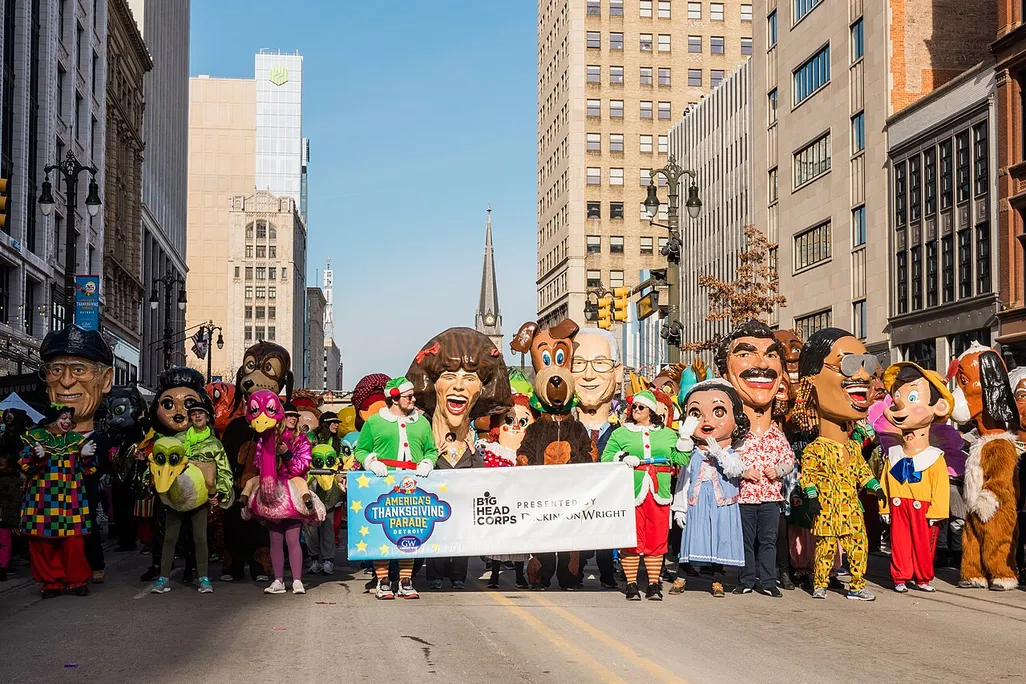
For festive Detroiters, this year’s Thanksgiving Day is cause for a larger celebration than usual. On Thursday morning, the city will host its 100th annual America’s Thanksgiving Parade, marking a major milestone for what is already one of the oldest holiday traditions in the nation.
Founded in 1924, the yearly procession (minus two cancellations due to World War II, in 1943 and 1944) has sent floats, larger-than-life balloons and popular recurring characters down Woodward Avenue in downtown Detroit. This year’s procession will include 33 floats, five giant balloons and seven marching bands, as well as the city’s beloved Big Heads and Distinguished Clown Corps.
Just across town, a second spectacle is also getting in on the fun. Now on display at the Detroit Historical Society, which itself is celebrating its centennial, a new exhibition, “This is 100: America's Thanksgiving Parade,” is honoring the cherished parade with a display of historic footage, props and well-known artifacts. Visitors to the installation will have the opportunity to walk through an interactive timeline of the parade’s benchmark moments, try on famous costumes and even sit on the gilded throne of the only person who has featured in the event since the beginning: Santa Claus.
“Santa has been a part of our parade every single year since 1924,” Rebecca Salminen-Witt, the museum’s chief strategy and marketing officer, tells WDIV’s Jay Scott Smith. “Back in the day, the parade ended right in front of Hudson’s [department store]. Santa would exit his sleigh, he would go upstairs to the 12th floor of Hudson’s and he would open Toy Land for all the children.”
The exhibit features standout pieces from the world’s largest collection of papier-mâché heads, better known as “the Big Heads” in Detroit, which have been worn by performers since the parade’s beginning. Standing between two and four feet tall and weighing between five pounds and 50 pounds, the first masks arrived from the Carnival of Viareggio in Italy and immediately gained notoriety for their eerie look, the Detroit News’ Francis X. Donnelly reports.
Over the decades, some 300 new masks were made in caricature of celebrities with connections to Detroit, including Aretha Franklin, Bob Seger, Stevie Wonder, Gordie Howe, Barry Sanders and Sparky Anderson. About half of these feature in the parade each year, while the others are kept in a warehouse with other retired parade paraphernalia.
“Members of the Big Head Corps pay $300 apiece and pick out what Big Head costume they want to be,” Tony Michaels, president of the Parade Company, which organizes the event, tells MLive’s Edward Pevos and Santino Mattioli. “We have a breakfast for them and they march as a team down Woodward Avenue. This year the new Big Head is Jeff Daniels.”
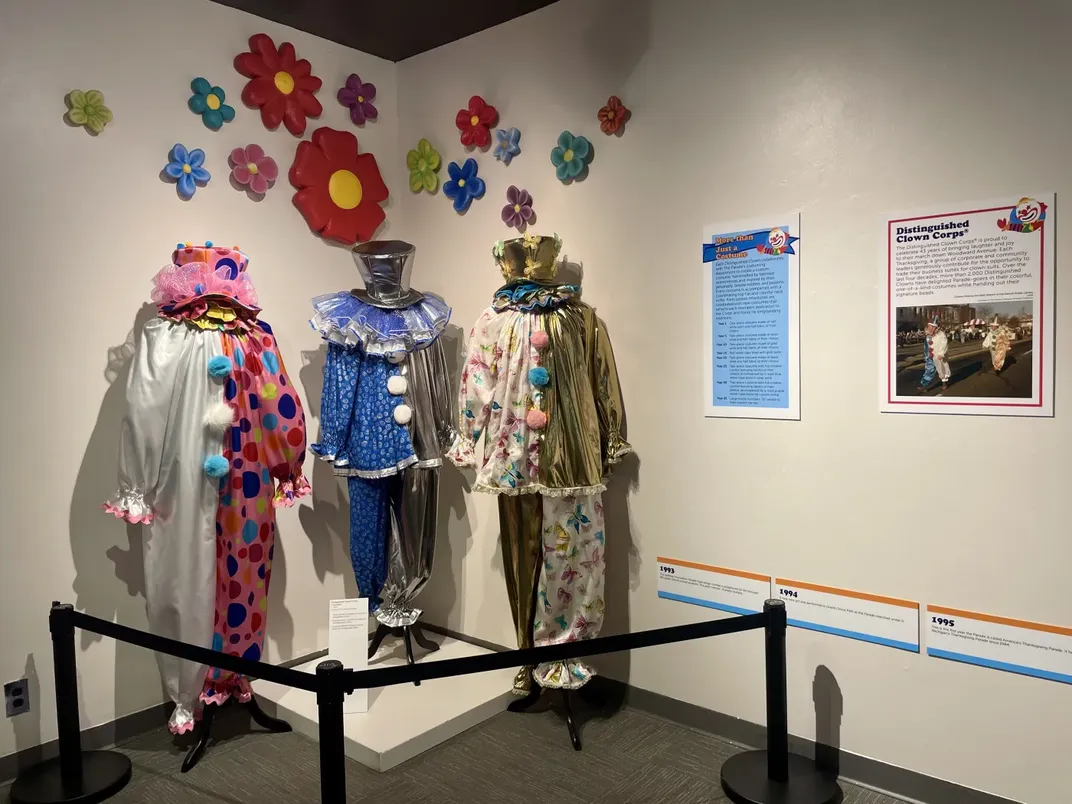
The installation also features several costumes worn by past members of the Distinguished Clown Corps, a group of community and business leaders who march in the parade in clown attire. With each consecutive year they march, members of the Distinguished Clown Corps earn ever-more-detailed colors, patterns and accoutrements.
“The first five years, [the costume] has to be white,” Lena Antoon, a professor at Wayne State University, told CBS Detroit’s Sandra McNeill in 2023, her eighth year as a distinguished clown. “And then it’s the pattern of your choice.”
The exhibit traces the story of the parade through factoids and trivia from its long history. In 1934, the Detroit Lions played their first annual Thanksgiving Day football game. The parade was televised for the first time in 1947, though it wasn’t until 1966 that the broadcast was in color. Lassie (the TV dog) was the parade’s grand marshal in 1964, and in 1976, the lit candles from a birthday cake float, made to commemorate the parade’s 50th anniversary, set several small fires along the route. In 1985, a Detroit Free Press article reported that “Santa buckled up in his sleigh because of Michigan’s new seat belt law,” per Midbrow’s Erica Hobbs.
Did you know? Thanksgiving and football
“Both Thanksgiving and football emerged in the 1860s as efforts to reunite a fractured nation in the aftermath of the Civil War,” Smithsonian magazine’s Gabby Shell writes. “In the nearly two centuries since, the rituals have evolved in tandem, expanding along with the growing nation and adopting its increasingly consumerist character.”
“It really starts out [featuring] like Mother Goose and storybook characters … and then you slowly see pop culture introduced into the parade, where there’s a Donald Duck float or there’s flying saucers and space-inspired things in the 1960s,” Jeremy Dimick, the exhibit’s curator, tells Hobbs for the Detroit News. “It really just becomes a sign of the times into what’s going on in culture; when you look back at it in its totality, it tells the whole history of the city almost through this lens of the parade.”
Detroit’s parade is tied with New York City’s Macy’s Thanksgiving Day Parade as the second-oldest in the country. Philadelphia’s Thanksgiving parade, which began in 1920, holds the title of the oldest.
“This is 100: America's Thanksgiving Parade” is on view at the Detroit Historical Society through January 3, 2027.
