
/https://tf-cmsv2-smithsonianmag-media.s3.amazonaws.com/filer_public/2e/67/2e67cdc1-8133-464c-ac76-db1b501455ba/opener.jpg)
Did Thomas Jefferson Father Sally Hemings’ Children? After More Than a Decade of Research, the Answer Is Finally Firmly in Hand
A lock of hair, advances in genetic science and a community of descendants all contributed to solving an American mystery
:focal(1697x1954:1698x1955)/https://tf-cmsv2-smithsonianmag-media.s3.amazonaws.com/filer_public/2e/67/2e67cdc1-8133-464c-ac76-db1b501455ba/opener.jpg)
It was a rather dreary October afternoon in 2011 when I turned to my computer to watch a rough cut of Jefferson’s Secret Bible, a documentary for the Smithsonian cable television channel. I was the Under Secretary of the Smithsonian Institution, and the film was about the conservation of a precious artifact, a book known as the “Jefferson Bible” that would soon go on display at the National Museum of American History. After his retirement to Monticello, Thomas Jefferson had carefully cut out selected passages from Greek, Latin, French and English versions of the Bible, then pasted them in four parallel columns on loose sheets of paper and had them bound into a volume.
I watched the re-enactor who played America’s third president use a small razor-sharp penknife to select his chosen biblical passages by candlelight. As I imagined trying to accomplish the task myself, I thought, “I’d probably cut myself over and over again.” That was when another, much bigger thought dawned on me. I emailed Harry Rubenstein, the curator at the museum leading the project: “Given all of that cutting and pasting Jefferson did on the Bible—have we ever looked for any possible transfer of biological material from which we could extract DNA?”
His response was swift: “We found a couple of hairs in the book.”
I told Rubenstein what I’d realized. If we had Jefferson’s hair and scientists could find a way to sequence his DNA, we might be able to solve one of the most enduring mysteries in American history: Did Thomas Jefferson have children with the enslaved Sally Hemings?
Jefferson and his beloved wife, Martha Wayles Skelton Jefferson, had six children, but only two—Martha and Maria—survived past early childhood. When his wife became fatally ill, Jefferson is said to have promised her he’d never remarry. She died in 1782, at the age of 33.
Rumors about his involvement with an enslaved woman in his household became a public controversy in Jefferson’s day, driven by presidential election politics. Jefferson called slavery an “abomination” and a “moral and political depravity.” In the Declaration of Independence, he’d proclaimed “that all men are created equal, that they are endowed by their Creator with certain unalienable Rights, that among these are Life, Liberty and the pursuit of Happiness.” Although he envisioned slavery’s eventual elimination, some 600 enslaved people were integral to the operations of Monticello and his other properties. Abolitionists had already attacked Jefferson for this hypocrisy, but allegations about his relationship with Hemings took this criticism to a new level.
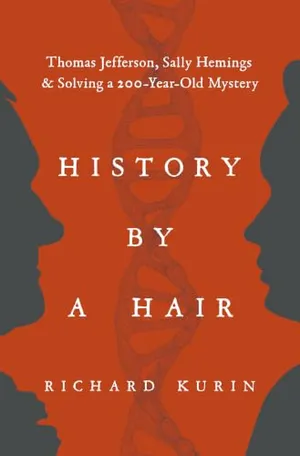
History by a Hair: Thomas Jefferson, Sally Hemings & Solving a 200-Year-Old Mystery
The definitive account of how a discarded strand of hair found in Thomas Jefferson’s Bible led to a sweeping, multi-year genomic investigation, drawing on technological advances in DNA to finally resolve a 200-year national controversy.
/https://tf-cmsv2-smithsonianmag-media.s3.amazonaws.com/filer_public/8b/2e/8b2e6442-be03-444e-9118-d0bd55e572a7/webclara_casdise_fisher__thomas_jefferson_smithsonian_magazine-2c7963d93493b552371a5a48fda3b365.jpg)
Hemings had been born into the household of Jefferson’s late wife and was said to be the daughter of Martha’s father, John Wayles, and one of the enslaved women in his household. According to Isaac Granger Jefferson, a blacksmith enslaved at Monticello, “Sally Hemings’ mother, Betty [Elizabeth Hemings], was a bright mulatto woman, and Sally mightier near White: She was the youngest child. Folks said that these Hemingses was old Mr. Wayles’ children. Sally was very handsome: long straight hair down her back.” Jefferson himself left behind no record of his relationship with Hemings, but in his Farm Book—an extensive collection of handwritten notes and records—he noted that Hemings had given birth to six children, four of whom survived infancy. Beverly was born in 1798, Harriet in 1801, Madison in 1805 and Eston in 1808.
A few years before his death, Jefferson allowed Beverly and Harriet to leave the property, and he later granted freedom to Madison and Eston in his will. He never officially freed Hemings herself, but his daughter Martha (by then his only surviving child) apparently gave Hemings a form of unofficial freedom that enabled her to live with her sons Madison and Eston in Charlottesville, Virginia, just a few miles from Monticello. After Hemings died in 1835, Madison moved his family to southern Ohio, where he worked as a carpenter and farmer. In March 1873, Madison recalled his life for an account in the Pike County Republican titled “Life Among the Lowly” (a phrase that was also an alternate title for the novel Uncle Tom’s Cabin). He reported that he and his siblings were Jefferson’s children, adding that Jefferson had been “undemonstrative” to the Hemings children but “uniformly kind to all about him.”
Historians would debate Madison’s account for the next century, but there was no physical evidence until 1998, when the pre-eminent scientific journal Nature published a research report. The paper’s principal author, Eugene Foster, had been unable to access Jefferson’s remains or analyze his DNA. Instead, he focused on the Y chromosome that is passed down from fathers to sons. He obtained DNA samples from living male-line descendants of Thomas Jefferson’s paternal uncle (because Thomas Jefferson had no sons with Martha who survived infancy), as well as others thought to be descendants of Sally Hemings. A descendant of Sally Hemings through her son Eston had the same Y chromosome type as the Jefferson males—meaning his ancestor was a Jefferson. That finding, coupled with evidence provided by historian Annette Gordon-Reed, led Foster and many other scholars to conclude that Thomas Jefferson was the father of Sally Hemings’ children.
/https://tf-cmsv2-smithsonianmag-media.s3.amazonaws.com/filer_public/97/8f/978f55cc-a2e6-44aa-98e7-9a0db5143584/1927-40-1_gold_locket.jpg)
As expected, Foster’s study kicked up fresh debate. One letter to Nature questioned why Foster did not consider Thomas Jefferson’s brother Randolph or one of his nephews or cousins as the possible father of Eston Hemings, given that all of those men shared the same Jefferson-type Y chromosome. Another noted: “Any male ancestor in Thomas Jefferson’s line, White or Black, could have fathered Eston Hemings. ... It is possible that Thomas Jefferson’s father, grandfather or paternal uncles fathered a male slave whose line later impregnated another slave, in this case Sally Hemings.” Another major journal, Science, echoed the uncertainty with an article titled “Which Jefferson Was the Father?”
Because Foster and his team didn’t have Thomas Jefferson’s actual DNA, their analysis could not determine with scientific certainty which Jefferson had been Eston’s father.
But now, if we could obtain Thomas Jefferson’s DNA from a Bible hair, a more thorough analysis and more certain conclusion might finally be possible. That would not only solve a longstanding mystery of American history but also provide closure to Jefferson and Hemings descendants who had faced generations of contention over the denial and affirmation of the relationship.
Following my exchange with Rubenstein, I enlisted the help of Rob Fleischer, head of the Center for Conservation and Evolutionary Genetics at the Smithsonian Conservation Biology Institute, who specializes in DNA research. Fleischer’s inspection of the hairs from the Jefferson Bible found they had no follicles, the root structures that contain living cells. Hair shafts, which are mostly made of dead keratin, contain only trace amounts of DNA, and much of that was likely to have been degraded and contaminated over the past 200 years. Recovering enough of the hair’s genetic code to compare with that of living descendants would be a major feat. Fleischer told me that scientists had succeeded in obtaining mitochondrial DNA from rootless hair. Mitochondrial DNA, or mtDNA, comes not from the cell nucleus, but from other cellular structures. It codes for only a small fraction of one’s genes, but it is passed on by mothers to their offspring and hence cannot determine paternity. To determine Jefferson’s paternity, we’d have to extract and sequence autosomal DNA from the chromosomes in the nuclei of the hair shaft cells. No one at the time had succeeded in doing anything comparable to what we envisioned. But if we succeeded, we could compare Jefferson’s genetic profile with those of Hemings’ living descendants. And unlike Foster, we would not be limited to male-line relatives. If the Hemings descendants had at least as much DNA in common with Jefferson as his descendants through his wife, Martha, that would be strong evidence of his paternity of Hemings’ children.
To lead this innovative work, Fleischer reached out to evolutionary molecular biologist Beth Shapiro. A Rhodes scholar, MacArthur Foundation “genius grant” awardee and former Smithsonian intern, Shapiro specializes in sequencing and interpreting ancient DNA. We learned that she was moving to the University of California, Santa Cruz, to help run a new paleogenomics lab with her husband, Ed Green, who had played a major role in sequencing the Neanderthal genome and would go on to lead the DNA analysis at the heart of our project.
/https://tf-cmsv2-smithsonianmag-media.s3.amazonaws.com/filer_public/8a/8b/8a8b5901-4aac-4fe5-a3aa-a393ba9c9050/h_1004666670.jpg)
We sent the Jefferson Bible hairs to Shapiro and Green, who processed and sequenced them. They managed to discern a mitochondrial DNA type, but they recovered only some partial sequences of nuclear DNA that mapped to the human genome. This was kind of like getting a small match on a partial fingerprint—it could be quite significant or nothing at all. We couldn’t even be sure the hair was Jefferson’s. Clearly we needed more definitive results.
Given that the Bible hair DNA was quite degraded, getting other samples might help. I knew of a wooden reliquary in the National Museum of American History that purportedly contained locks of hair from the first 14 U.S. presidents, George Washington to Franklin Pierce. The collection had been assembled around 1850 by John Varden, the Smithsonian’s first curator. Personally, I was skeptical that the hairs were really from these presidents. I searched the Smithsonian’s archives and could not find any historical evidence of Varden’s collection effort. I even cynically imagined Varden sweeping up hair from a barbershop floor and then merely labeling samples “George Washington,” “John Adams” and so on.
Still, who knew? I called Rubenstein to see if we could remove some strands of supposed Jefferson hair from the Varden reliquary case. I strongly suspected that I was the first person in more than 150 years to ask such a thing. Rubenstein arranged for Fleischer to join him at the museum’s conservation lab to inspect the reliquary. Fleischer put on gloves and carefully, with tweezers, separated some of the hair strands, clipped a snippet and secured his sample in a plastic bag so it could be processed for sequencing.
After running that hair through their sequencer, the Santa Cruz team reported that it was too poorly preserved to yield the detailed genomic information we needed. They were, however, able to determine that the hair from the reliquary did not have the same mitochondrial DNA type as the strands from the Jefferson Bible.
Meanwhile, I met with Leslie Greene Bowman, then the president of the Thomas Jefferson Foundation at Monticello. Bowman informed me that Monticello had several locks of presumed Thomas Jefferson hair in its collections. Monticello had never thought about doing any research on them, because the prevailing belief was that you could not extract DNA from old, rootless hair. When I explained that we were working with scientists at the University of California, Santa Cruz, she was willing to cooperate but asked for a research plan. How would this evidence help us discover whether Thomas Jefferson, his brother Randolph or some other male Jefferson relative had been the father of Sally Hemings’ children?
I brought the question to the scientific team that now included grad student Sam Vohr, a computational biologist in the Santa Cruz lab. All of the Jefferson men would share the same Y chromosome, but not the rest of their autosomal DNA—that is, DNA from the nucleus’s other 22 pairs of chromosomes. Jefferson and his brother would be expected to share roughly 50 percent of their autosomal DNA. Unless two siblings are identical twins, they will inherit different genetic material from each parent.
This recombination occurs generation after generation. While any one person can be expected to inherit about 25 percent of their DNA from each of their four grandparents, they won’t have the same 25 percent as their first cousins do. Different grandchildren will also share slightly larger or smaller amounts of DNA with one another. In the next generation, each great-grandchild will inherit about 12.5 percent of their genetic material from each great-grandparent. After four generations this average will be 6.25 percent; after five generations, 3.125 percent. The inherited autosomal DNA that any two distant cousins share will vary more widely over the generations. On average, shared DNA will continue to halve in each subsequent generation; in most cases, it will, over time, dissipate entirely. By the tenth generation, any one descendant will have DNA inherited from only a fraction of their 1,024 ancestors.
/https://tf-cmsv2-smithsonianmag-media.s3.amazonaws.com/filer_public/f1/93/f193cd1e-f8d4-45bb-aa20-f809fafea00c/ann_miller_thomas_jefferson_smithsonian_magazine_20250520-mcfadden-joshua_pub2026_07.jpg)
/https://tf-cmsv2-smithsonianmag-media.s3.amazonaws.com/filer_public/0e/79/0e797e65-f26e-45bd-91b4-77ba14ef5853/david_miller_thomas_jefferson_smithsonian_magazine_20250520-mcfadden-joshua_pub2026_06.jpg)
Assuming we could recover enough of Jefferson’s autosomal DNA from the Monticello hairs, we could collect DNA from living fifth-generation descendants of Hemings and see whether they had the roughly 3.125 percent match we expected to find. We would also gather DNA from fifth-generation descendants of Jefferson and his wife, Martha. This would give us a standard for comparison—that is, we would expect Hemings’ fifth-generation descendants to have roughly the same amount of Jefferson’s DNA as Martha’s did if they were also descended from Jefferson.
If Hemings’ children had been fathered by another male Jefferson—a brother, an uncle, or a nephew—the descendants would still share some of Thomas Jefferson’s DNA, because the men in question were all related to him through a common ancestor, but the match would be much less than 3.125 percent. What if we could find only more distant descendants, not fifth-generation ones? Shapiro told me that would make our task much more difficult. With many fifth-generation descendants already advanced in age, it was clear to me that we had to do this research now if we hoped to answer the paternity question.
On June 4, 2013, staff from Monticello brought the locks of hair to the Smithsonian. We gathered in the paper conservation lab at the National Museum of American History, where conservator Janice Stagnitto Ellis met me; Fleischer; Shapiro; my special projects head, Joanne Flores; and Monticello staff.
The lab was a large, open space full of what looked like operating tables, replete with high-powered microscopes, magnifying lamps, headgear and other equipment. This was where conservators, led by Ellis, did their painstaking work to repair, preserve and restore precious documents of American history, including the Jefferson Bible.
It occurred to me that this was a poignant moment when science met history. There was a long American tradition of gifting locks of hair as a form of remembrance. Jefferson kept a plaited lock of Martha’s hair in his inscribed watch key. His daughter, too, kept a lock of her mother’s hair.
Laid on the table was a tiny yellowing paper packet from Monticello. A simple handwritten label noted: “Thomas Jefferson’s hair cut July 4th at 4 o’clock p.m. He died at 1 p.m. on that day 1826. This hair was cut by Nicholas P. Trist, grandson in law of Thomas Jefferson.” Reading that inscription, I felt an almost sacred proximity to the founding father. That sense of connection grew as Ellis opened the packet to reveal a lush lock of sandy-colored hair neatly tied with an orange thread.
/https://tf-cmsv2-smithsonianmag-media.s3.amazonaws.com/filer_public/b4/53/b453e2ad-393b-464d-b690-177e008799a3/monticello_hair_images_tjfm_photographer_copy-1_edit.jpg)
Next she brought out a small, round, gold-and-crystal locket, maybe an inch in diameter, containing another coiled lock. There was also a lock tied with a pink thread and pinned to a torn piece of paper. Written in pencil was the simple annotation “Thomas Jefferson’s Hair.”
The fanciest object was a small gold brooch in the shape of a crescent, set with dark cut stones, with a lock of hair sealed in glass. Perhaps most heart-rending were the two lengths of plaited hair, each made up of two bands, one lighter and one darker, respectively tied with green and yellow thread. The inscription on the packet read: “Hair of Thomas Jefferson and his wife Martha Wayles. Left me in the little dressing case by Ellen Wayles Harrison. The hair was in a blank paper when it came to me, but I think grandmama must have begun to weave her father’s and mother’s hair together, or perhaps Mr. Jefferson himself did it, the hair is unmistakably his and hers! M.J.T. Burke Alexandria, Va. June 19, 1900.” Here was a family keepsake that had been meaningful to several generations of the family: Thomas and Martha’s great-granddaughter Martha Jefferson Trist Burke had written the annotation.
Ellis and Fleischer put on gloves, head coverings and lab coats. Under the gaze of a high-powered microscope, they separated out strands of hair, using tweezers to select those that had less obvious visual damage. They took clippings from each of the labeled artifacts, except the sealed brooch; it was a Jefferson family jewel, and I didn’t want to risk damaging it. One set of strands from each lock went to Shapiro to take back to her lab in Santa Cruz. Fleischer retained a sample from each for the Smithsonian.
Hopeful that we’d obtain more of Jefferson’s DNA from the Monticello hairs than we had from the Bible and reliquary hairs, we turned to Jane Ailes, an experienced family history researcher, to identify and locate living fifth-generation Jefferson and Hemings descendants for us to sample. Ailes would do the research and make the first contacts, I would follow up, and then Flores and I would visit to collect the DNA samples.
Our first visit was to David Miller, whose mother, Sarah Coachman Shine Miller, was a fifth-generation descendant of Thomas and Martha Wayles Jefferson through their daughter Maria Eppes. David was aware of his Jefferson ancestry; it had always been part of his family’s identity. David thoughtfully invited his uncle James Munnerlyn Shine to join us at his home in Jacksonville, Florida, so we could collect DNA samples from both his mother and her brother.
When we arrived at the Millers’ home in a suburban gated community, David and his wife, Jerry, both in their mid-60s, greeted us graciously and introduced us to a dozen or so members of their extended family. All the adults had taken the day off from work. Laid out in the dining area was a sumptuous luncheon buffet. Jerry had researched foods served to Thomas Jefferson’s guests at Monticello. The offerings included bean soup with ham, apple pie and ice cream.
As we settled in the large family room, I recounted the story of the Bible hairs to a rapt audience. I explained that our project wasn’t about judging Jefferson, who had charted so many paths for American independence, scholarship and religious freedom. I invoked Jefferson’s own words about the pursuit of knowledge, never fearing “to follow truth wherever it may lead.” This statement resonated with the words of the Smithsonian’s English founder, James Smithson, who left his fortune to America for “the increase and diffusion of knowledge.”
David’s mother, Sarah, a World War II veteran, was not in good health, but she and her brother gave informed consent and provided their DNA. After the meal, we looked at photo albums documenting the family’s history and examined other documents, including Civil War correspondence sent by their ancestors. Our visit was warm and familial, and we thanked the Millers for their cooperation.
From Jacksonville, we drove about an hour to Cladie Ruth Griffin Dees’ home in the tiny town of Waldo. Ruth, in her early 90s, had long been involved in community service and was second cousin to Sarah Miller, though the two didn’t know each other. It struck me that descendants of this illustrious family were just like other Americans. They fell out of touch over the generations, went their own ways and landed in a variety of circumstances. Ruth was attentive as we explained our project, and she provided us with a DNA sample.
The next day, Flores and I drove across the state to Tallahassee, where we met Betty and Nick Eppes at their home in a wooded area of the city. They, too, were unaware of Nick’s cousins in Jacksonville. Betty told us Nick had boasted of being a descendant of Thomas Jefferson while they were dating. I asked if that had helped their romance, and they both laughed. We described our endeavor, and Nick agreed to provide a saliva sample. Then we all went out to a pleasant dinner.
When Flores and I returned to Washington, we decided to have the New York Genome Center, an independent academic organization, sequence the samples. Compared with the complicated work needed at Santa Cruz to prepare and sequence degraded DNA from historic rootless hair, well-preserved contemporary saliva samples are easy to process. The results would come back in roughly two months.
In March 2015, Ailes reported that three fifth-generation Hemings descendants had passed away in the previous six months. I felt like sand was running down in an hourglass—we had to collect DNA before it was too late. Ailes suggested contacting several descendants of Madison Hemings, including Ellen Hodnett, a former schoolteacher and principal in Los Angeles, and Dorothy Mae Young McKnight, a homemaker who lived near Columbus, Ohio.
Flores and I headed to Los Angeles to meet with Ellen and her sister, Robin Roberts (not the “Good Morning America” host by the same name). They were descended from Madison Hemings’ daughter Ellen, who’d married A.J. Roberts, migrated to California and given birth to the first African American member of that state’s legislature. In Ellen Hodnett’s garden, I answered questions from both sisters and gained their consent for saliva samples. These, too, went to the New York Genome Center for processing and sequencing.
/https://tf-cmsv2-smithsonianmag-media.s3.amazonaws.com/filer_public/ad/53/ad533af4-a939-457b-a657-908f84d4f848/roberts-2.png)
Eston Hemings did not have nearly as many known descendants as Madison did. While Madison’s family kept the Hemings surname and remained within the Black community, Eston’s family decided to pass as White, adopting the last name Jefferson. But one of Eston’s great-great-granddaughters, Julia Jefferson Westerinen, had pieced together her ancestry with the help of author Fawn Brodie, who wrote an explosive 1974 book called Thomas Jefferson: An Intimate History. In the 1998 Foster study, Julia’s brother, John Weeks Jefferson, had been the Hemings descendant found to possess the Jefferson family Y chromosome. After the study came out, Julia had appeared on a historic episode of “The Oprah Winfrey Show” alongside other Hemings and Jefferson descendants. Both siblings would be easy to locate.
As we collected DNA samples, the Santa Cruz team had been trying to coax enough nuclear DNA from the Bible and Monticello hair samples to generate a genomic profile. They were able to find only short sequences of DNA from the Bible hairs, and very little from the Monticello hairs. Disappointingly, the Monticello samples proved to be quite degraded and had high levels of fungal and bacterial contamination. Still, the Santa Cruz lab had obtained at least some usable DNA from the Bible hairs, which had been kept in cooler and more sterile conditions within the pages of the book. Now the team was experimenting with different means of recovering more DNA from the Bible hairs, as they were at this point the source we’d have to rely upon.
Since we had sequenced mtDNA from the Bible hair, we figured we’d better test our assumption that those hairs had really belonged to Thomas Jefferson. To do so, we’d have to find a living descendant of Thomas Jefferson’s mother or grandmother through a female line. It took several months, but Ailes located Janet McWilliams, whose ancestor was Jane Randolph, Thomas Jefferson’s mother, in a line of seven generations of mothers and daughters. Flores and I visited Janet and her husband in Ocala, Florida, in June 2015. She had no idea she was related to Thomas Jefferson, but she was excited to participate and provided a DNA sample.
Weeks later, we got the shocking results: Janet’s mitochondrial DNA did not match the Jefferson Bible hairs! Either she wasn’t a true biological descendant of Jefferson’s mother, or the Bible hair wasn’t Jefferson’s. The devastating mismatch stalled the project for more than a year. We worried we’d hit a dead end. What could we do?
We eventually decided to go back to Monticello to see if there were other locks of hair we hadn’t sampled years before. Monticello staff researched their collection and identified several packets of hair that had not been sampled. It took more time to arrange a loan and for Fleischer to identify strands of hair from these packets to send to the Santa Cruz lab for DNA processing and sequencing.
On May 18, 2017, we heard from Shapiro. “Hi team TJ! We got a mitochondrial match!!!” her email began. The mtDNA from one of the latest historical Monticello hair samples—also clipped by Trist on the day of Jefferson’s death, in 1826—matched Janet McWilliams’ mtDNA. “These are the very preliminary results that we JUST got about ten minutes ago. But I had to share with you guys!” After more than six years of finding hairs; identifying descendants; and collecting, sequencing and analyzing DNA, we finally had strong genetic evidence that the new Monticello hair, not the Bible hair, was Jefferson’s.
From that point on, our efforts moved forward with great energy and purpose. Shapiro, Green and their team kept working on the hair from Jefferson’s deathbed, using every tool at their disposal to get more genomic data from it. Fleischer continued to collaborate with Monticello to get more viable hair to fuel the work. Ailes identified more descendants. Flores and I followed up on those leads, meeting the people and collecting DNA samples from Eston’s descendants Julia Westerinen and her brother, John Weeks Jefferson.
Julia was now a widow living in Boca Raton, Florida, and when we arrived at her condo, she greeted us with wide-open arms. “Don’t I look like Thomas Jefferson?” she exclaimed. “I think it’s the nose.” Having never really concentrated on Thomas Jefferson’s nose, I was unsure, but it was a heck of a welcome.
Julia was proud of her connection to Hemings, who she thought must have been very intelligent to keep up with Jefferson. She added with a smile that discovering her kinship with Hemings had “made me more interesting than I already thought I was.” Julia’s four children, pictured below, learned about their ancestry as teenagers.
When Julia attended her first Jefferson family reunion at Monticello in 1999, following the Oprah show, she learned that her father and uncles, who had identified as White, had made a conscious decision to hide their family’s African American heritage from their children. They were so concerned about discrimination that they even discouraged their children from playing with or associating with Black children. Learning the truth about her family stirred something inside Julia. She was “literally thrilled about it,” as her son Arthur told me. Even though her heritage had been intentionally withheld from her as a child, he added, “she was the one to shout it out from the highest mountaintops when she found out.”
/https://tf-cmsv2-smithsonianmag-media.s3.amazonaws.com/filer_public/90/2f/902fc4e6-f064-4947-b1a7-cdd3d80c33bf/william_jefferson_westerinen_thomas_jefferson_smithsonian_maga-2668f5d2b2d4d5da76db26bd071a594a.jpg)
/https://tf-cmsv2-smithsonianmag-media.s3.amazonaws.com/filer_public/d7/1a/d71a9678-ba7a-4625-9b8e-d0c5c01f008c/art_westerinen_thomas_jefferson_smithsonian_magazine_20250315-mcfadden-joshua_pub2026_03.jpg)
/https://tf-cmsv2-smithsonianmag-media.s3.amazonaws.com/filer_public/fa/18/fa18e63c-1151-415e-936f-ca834af2db00/dorothy_jane_westerinen_thomas_jefferson_smithsonian_magazine_-080f21008b26cd888a33ef1d4dfce8c7.jpg)
/https://tf-cmsv2-smithsonianmag-media.s3.amazonaws.com/filer_public/68/22/6822f2c2-79e9-44f0-ada6-db1e3e733db3/james_marshall_westerinen_thomas_jefferson_smithsonian_magazin-effd5ebcd2177375b41da64d5c700a6b.jpg)
/https://tf-cmsv2-smithsonianmag-media.s3.amazonaws.com/filer_public/29/33/2933ea72-d047-4152-8962-7cc0106bad02/23hbh.jpg)
By 2019, the technical approach the Santa Cruz paleo-genomics lab was taking to solve the Jefferson paternity mystery was being applied to criminal cold cases. The New York Times broke a story about Green titled “Why This Scientist Keeps Receiving Packages of Serial Killers’ Hair,” with a subtitle noting, “Getting sufficient DNA out of a rootless hair has long been considered impossible. A scientist, better known for work with ancient fossils, has figured it out.”
Still, our endeavor to get DNA from centuries-old hair was even more challenging. Around this time, Shapiro emailed with great news. She and Green had continued to work on the Monticello hair samples in their possession, and another grad student, Joshua Kapp, applied a new preparation approach that allowed them to generate 764,010,795 bases, or almost 25 percent of Thomas Jefferson’s genome. As she put it: “This is AMAZING.”
We now had enough of Jefferson’s DNA to run comparisons with both his known descendants through his wife, and those who might be his descendants through Sally Hemings. Vohr, one of the lab’s computational biologists, sent a report that was stunning in its technical detail. The samples we’d collected from descendants of Jefferson and Martha’s daughter Maria had close to the expected 3.125 percent of shared DNA with their forebear. But an Eston Hemings descendant—John Weeks Jefferson—shared an eye-popping 4.2 percent of his DNA with Thomas Jefferson. This was on the very high side of what you would expect from a fifth-generation descendant, and significantly higher than the descendants of Jefferson’s wife. Our data strongly indicated that Thomas Jefferson was the father of Sally Hemings’ son Eston Hemings.
But we were still unsure about Madison Hemings. The few Madison descendants we’d tested so far shared some of Jefferson’s DNA, but the levels were low enough in those cases that they could have been descendants of Jefferson’s brother Randolph—we couldn’t tell.
/https://tf-cmsv2-smithsonianmag-media.s3.amazonaws.com/filer_public/f3/78/f3785846-627a-44d5-a3f9-bee3f90006ed/emily_westerinen_thomas_jefferson_smithsonian_magazine_20250315-mcfadden-joshua_pub2026_05.jpg)
We collected DNA samples from two of Randolph Jefferson’s descendants, but we needed something more definitive. That quest propelled us on a three-year search for Randolph Jefferson’s remains and his DNA. Unfortunately, that search, conducted during the Covid-19 pandemic, was unsuccessful. We pivoted, thinking that perhaps sampling more Madison Hemings descendants might bear fruit. In early 2024, I contacted Dorothy Mae Young McKnight, or Dottie, who was one of Madison’s descendants. I met Dottie and her loving children at her home outside Columbus, Ohio. Dottie’s family had identified as White since the 1930s. Dottie was now in her 90s and contemplative about her family’s history. She remembered her grandmother Emma—Madison Hemings’ granddaughter—who had never talked about either Sally Hemings or Thomas Jefferson. Dottie provided her DNA.
I reached out to others descended from Madison Hemings’ daughter Harriet, including siblings Buddy Lee and Patricia Walker and their cousin Clara Lee-Nutt. I met each of them and their family members in their homes and obtained DNA samples.
By this time, the Santa Cruz team had vastly improved its methods for sequencing Thomas Jefferson’s DNA—recovering over half of his genome—so that comparisons with living descendants could be even more precise.
Dottie was in home hospice when I booked a flight to Columbus. I had brought video equipment to record our interview and hoped to give her the DNA results in person. I thought I’d have those results well before I left, but after some delay they came in an email from Green and Vohr, who had run the analysis, as I waited at baggage claim in Columbus. I scrolled down and read the figures, centimorgans, segments, chromosomal charts and percentages of DNA with shaking hands and a lump in my throat. It was like watching breaking news. I had to read the chart twice to make sure I got it right.
Sitting with Dottie in her living room a few hours later, I was able to tell her that she shared 3.5 percent of her DNA with Thomas Jefferson. Coupled with the other results, this was compelling evidence that she was indeed the direct descendant of the third president and Sally Hemings. Dottie reflected upon the legacies of both, hoping that recognition of their relationship, as complicated and trying as it was for many descendants, might encourage greater respect within the larger American family. We hugged, I hoped not for the last time.
/https://tf-cmsv2-smithsonianmag-media.s3.amazonaws.com/filer_public/f3/40/f340367c-c8f5-48a7-bf55-785f17074163/dorothy.png)
Returning to Washington that Friday, I emailed Clara Lee-Nutt, who lived with her husband, Pete Nutt, in Maryland, an hour and a half from my home. “I don’t know your schedule but was wondering if I can stop by your home for a visit so I can bring you up to date on the DNA analysis,” I wrote.
Clara responded: “I am home Saturday and Sunday. Please do not keep us in suspense. Do I share any of Jefferson’s DNA at all? On edge of seat.”
Unlike Eston’s family, Madison’s, from which Clara descended, had remained largely within the Black community. When I first collected Clara’s DNA, she told me that her father and her uncles used to tease her about her freckles and rhetorically ask her where they came from. Everyone in the family, including Clara, knew about their Jefferson heritage. But her elders warned her that in their time, if a Black person claimed to be descended from America’s third president, “you’d get lynched.”
As a 12-year-old in Pittsburgh in the 1970s, Clara took a school trip to Monticello. With high expectations, she got “dressed up” with her Afro puffs hairstyle and wore a blue polyester double-knit suit with open-toe platform shoes. “Of course I looked totally presidential,” she recalled to me, laughing, at one of our sessions. Her group entered the section of the mansion with Jefferson’s bedroom and library, and Clara asked the tour guide, “Where did Sally Hemings sleep?”
The guide whirled around and said emphatically: “There’s no reason to believe that woman has ever set foot in this house.”
When Clara shared this painful memory with me, it was clearly still potent. “That’s not what I was expecting,” she added. “And it cut. I remember the sigh from my classmates, and then I just stopped walking.” When she got back to the bus, Clara sat in the back and cried, thinking, “‘I’m done with this Jefferson stuff. I’m done with Sally.’ It was like they put nails in my dad’s coffin.”
In spite of such experiences, Clara was proud of her Hemings heritage and vigorous in her belief that she was descended from Jefferson, passing her conviction on to her sons, David and Zachary. I knew how much was at stake for her. When I received her anxious email, I responded immediately: “Dear dear Clara, first slide back in your seat. No anxiety at all is necessary.”
/https://tf-cmsv2-smithsonianmag-media.s3.amazonaws.com/filer_public/f1/ca/f1cab967-bf18-4c4d-89c7-c082466ad2d1/zachary_lee_fisher_thomas_jefferson_smithsonian_magazine_20250608-mcfadden-joshua_pub2026_08.jpg)
/https://tf-cmsv2-smithsonianmag-media.s3.amazonaws.com/filer_public/82/92/829273b4-edc8-4aa0-a140-b1356373d924/david_fisher_thomas_jefferson_smithsonian_magazine_20250608-mcfadden-joshua_pub2026_10.jpg)
“That will be fine,” she wrote, “but I already fell out of my chair!”
The next morning, my wife, Allyn, and I drove to see Clara and Pete. The consummate host, Clara served us fresh lemonade on her balcony overlooking the C&O Canal. It was a sunny morning and, for me, an emotional one as I delivered the news. I showed Clara a printout of a DNA chart and told her that she shared a whopping 5 percent of her DNA with Thomas Jefferson. “Clara, you have an extraordinary amount of Thomas Jefferson’s DNA,” I explained. “More than anyone else we sampled. This is overwhelming evidence that you are indeed the great-great-great-granddaughter of Thomas Jefferson and Sally Hemings.”
Relief spread from her face throughout her entire body as her shoulders sank and her head tilted toward the floor. She dropped her gaze to the ground as she absorbed this information. Her husband chimed in: “I told you Richard wasn’t going to drive all the way up here this morning to disappoint you!” I watched a quiet, confident smile spread across her face.
Clara’s cousin Buddy also had an extraordinary amount of Jefferson’s DNA—about 4.5 percent—and her cousin Patricia 3.7 percent. Additional computations, simulations and scientific reviews over the next year added yet more precision to our figures and confirmed our results.
After almost 15 years of research, we now know with great certainty that the man who defined our national quest for freedom bore his own children into slavery. Our findings do not in any way negate the aspirations expressed by Jefferson in the Declaration of Independence, nor his numerous contributions to our nation’s founding. Rather, our findings show us that despite the travails of a divided past, we are nonetheless all part of the same, albeit complicated, American family.
Adapted from History by a Hair: Thomas Jefferson, Sally Hemings & Solving a 200-Year-Old Mystery by Richard Kurin, published by Crown, an imprint of Crown Publishing Group, a division of Penguin Random House LLC. Copyright © 2026 by the Smithsonian Institution.
/https://tf-cmsv2-smithsonianmag-media.s3.amazonaws.com/accounts/headshot/kurin.png)