
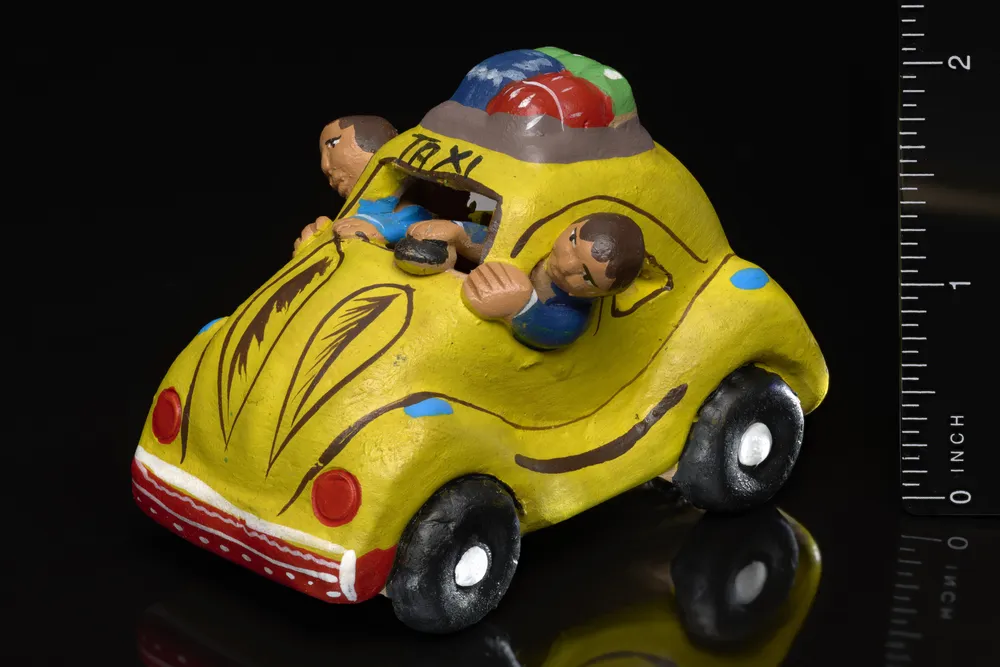
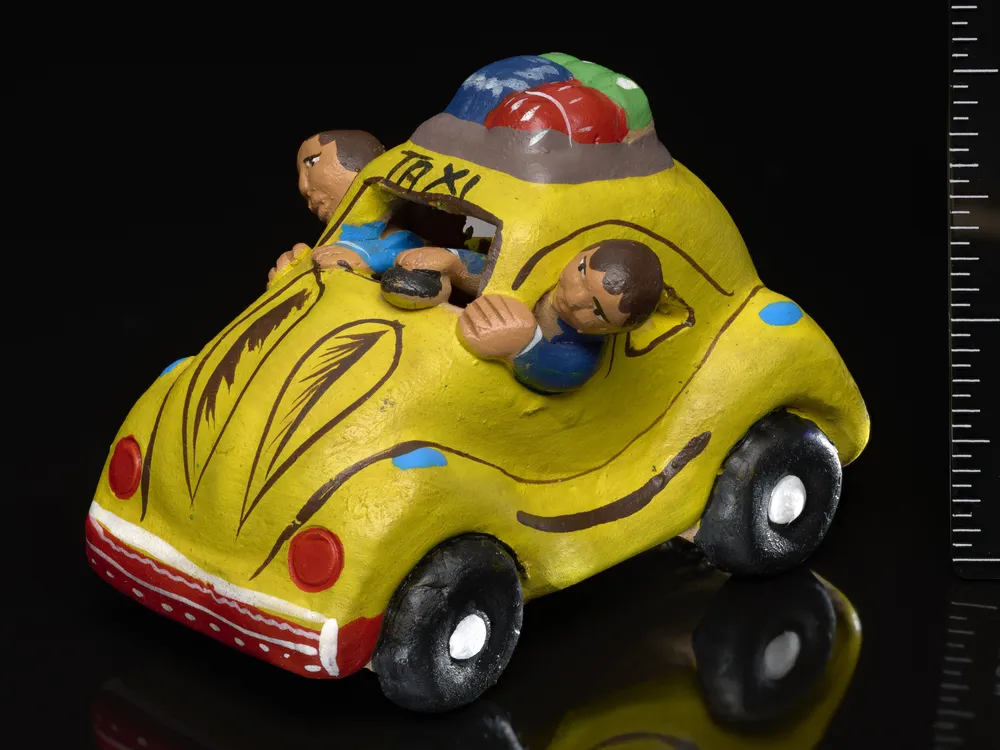
This New Exhibition Features a Tiny Taxi, a Pint-Size Cookstove and More Than 300 Other Marvelous Miniatures Made by Indigenous Artists
“Mighty Miniatures” at the National Museum of the American Indian in New York showcases works that highlight the skill and artistry of Native peoples from across North, Central and South America and Hawaii

Rosemary Lonewolf has fond memories of sitting at the kitchen table with her dad and grandpa. The three artists would each work on their respective pottery piece, perhaps polishing an almost finished one or designing what would be carved into clay, as they chatted.
Lonewolf, who is a member of the Santa Clara Pueblo (Tewa) tribe and based at their reservation in New Mexico, remembers a conversation when she was about 20 during which her grandpa, Camilio Tafoya, commented on spaceships. He said, “One of these days, they’re going to poke a hole in the sky,” recalls Lonewolf, who is also known by her Tewa name, Apple Blossom.
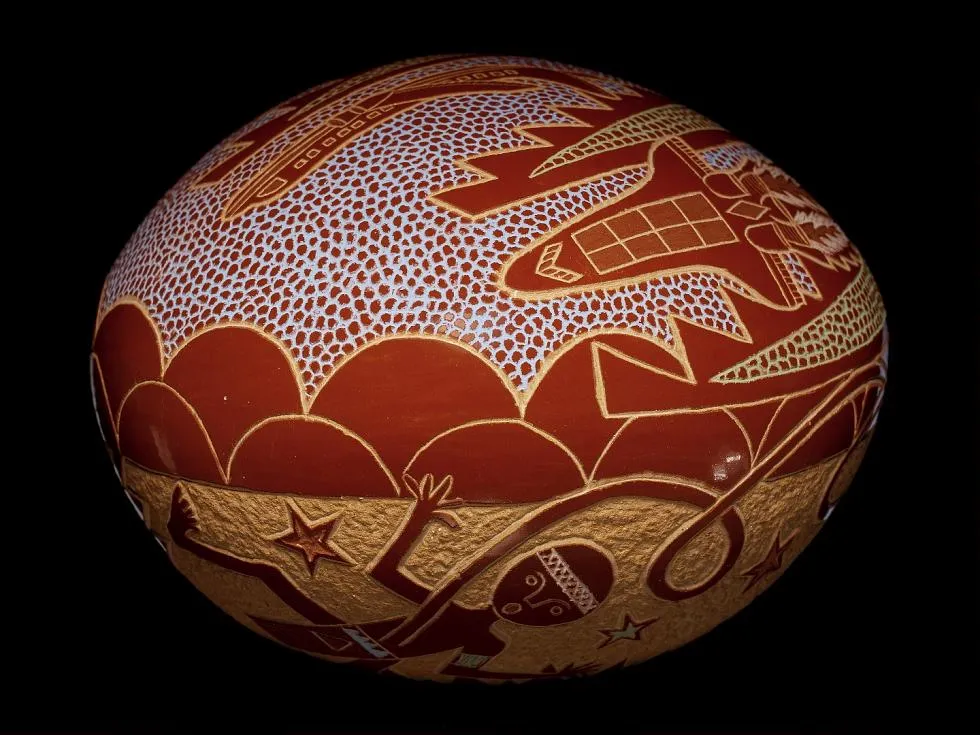
His statement, made in the mid-1970s, stuck with her. Over a decade later, it inspired her to create a round, palm-size seed jar called Wings, Machines and Other Flying Things, featuring carvings of a space shuttle, an airplane, a bird, a butterfly and other airborne items. The piece also includes a Pueblo spacewalker, who sparks a conversation.
“If Native Americans went to the moon, how would we handle that?” Lonewolf says. According to her culture, the land belongs to everyone, so no one can own it. “To go and put your nation’s flag in the ground [on the moon] and claim it for your nation is foreign.”
Lonewolf’s thought-provoking piece is one of more than 300 artworks showcased in the “Mighty Miniatures” exhibition at the Smithsonian’s National Museum of the American Indian in New York. On display from November 21, 2026, to August 20, 2027, the exhibition highlights mesmerizing tiny objects from the museum’s vast collection, including dolls, baskets, animals and homes, crafted by Indigenous artists.
“I really wanted to curate an exhibition that would bring joy, especially Indigenous joy,” says museum curator Anya Montiel, who is of Tohono O’odham descent.
Did you know? Opposite end of the size spectrum
Lonewolf also designs large-scale structures for public art, including the Isaac Pedestrian Bridge in Phoenix, which resembles parts of a scarlet macaw—a bird prized by Pueblo peoples.
The might of miniatures
The idea for “Mighty Miniatures” struck Montiel around 2022. As she combed through the museum’s inventory of roughly 825,000 objects at its storage facility in Suitland, Maryland, to check that they were in their proper places, she regularly came across remarkably tiny items.
“I would stop what I was doing, and then go to another co-worker and say, ‘Oh, my gosh, look at this,’” Montiel says. Other staff would do the same.
The collection database revealed that the museum had more than 1,300 miniatures from North, Central and South America and Hawaii.
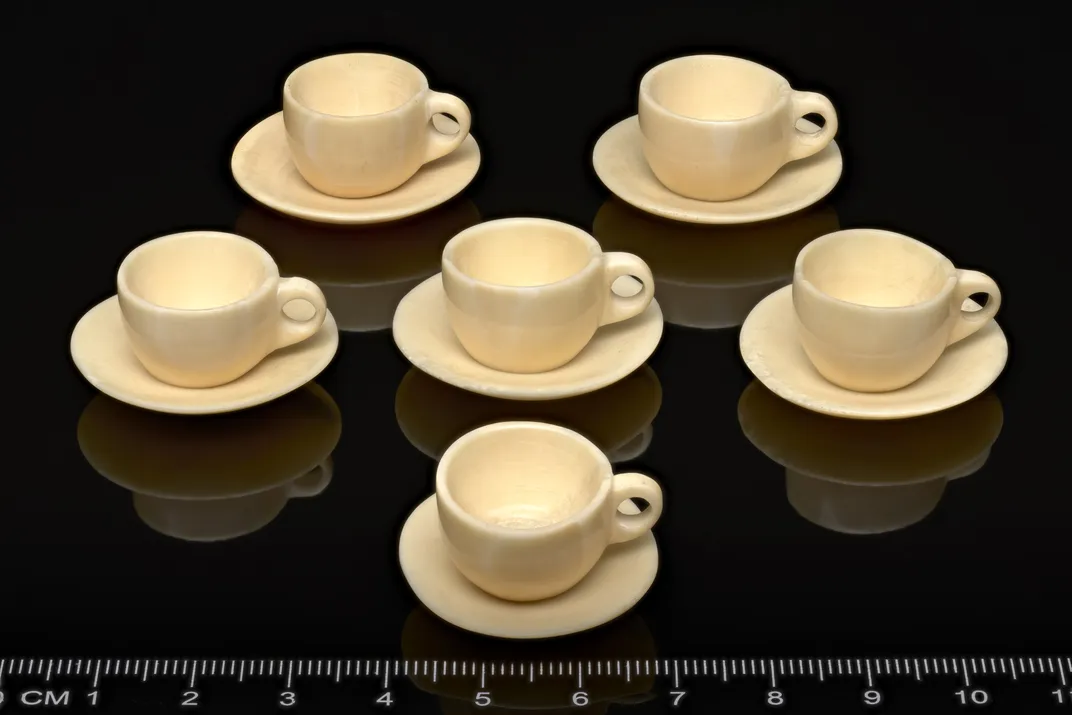
One part of the exhibition introduces visitors to objects at the small scale, placing minuscule models next to their full-size equivalents. Another area highlights play, showing how dolls and small versions of objects like cradleboards, traditional baby carriers, are teaching tools for children, helping them to imagine themselves as adults.
Toys “are a way to transfer Indigenous knowledge from one generation to another,” Montiel says.
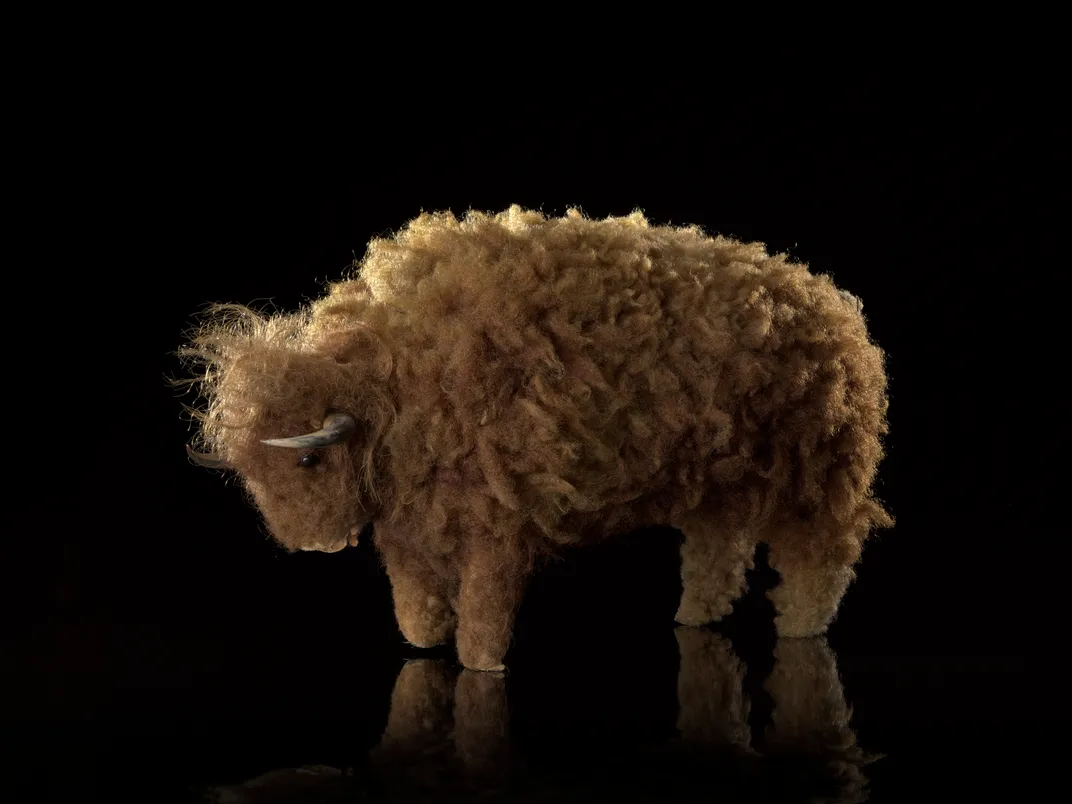
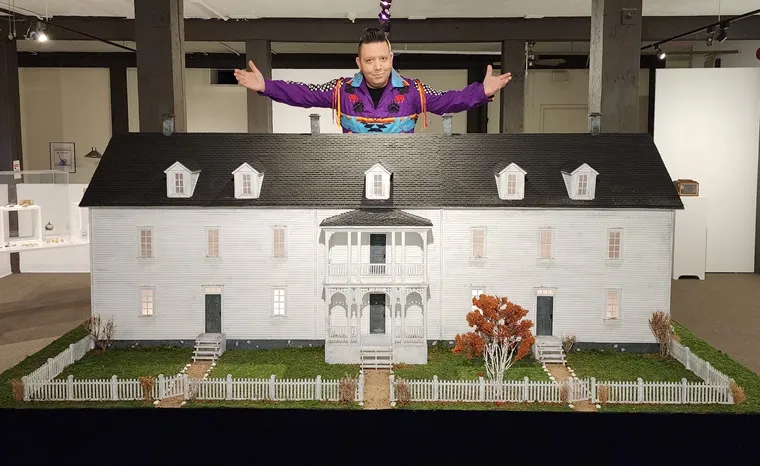
Watercraft and architecture are highlighted in two other sections. The first features objects including little canoes, kayaks and Hawaiian seafaring outriggers. The other is meant to show the diversity of Indigenous peoples’ homes.
“I want people to know that Native people don’t just live in tepees,” Montiel says. “We do have a tepee, but we have hogans, we have Pueblo adobe buildings, we have one from Alaska. We also have a home from South America, from the Amazon.”
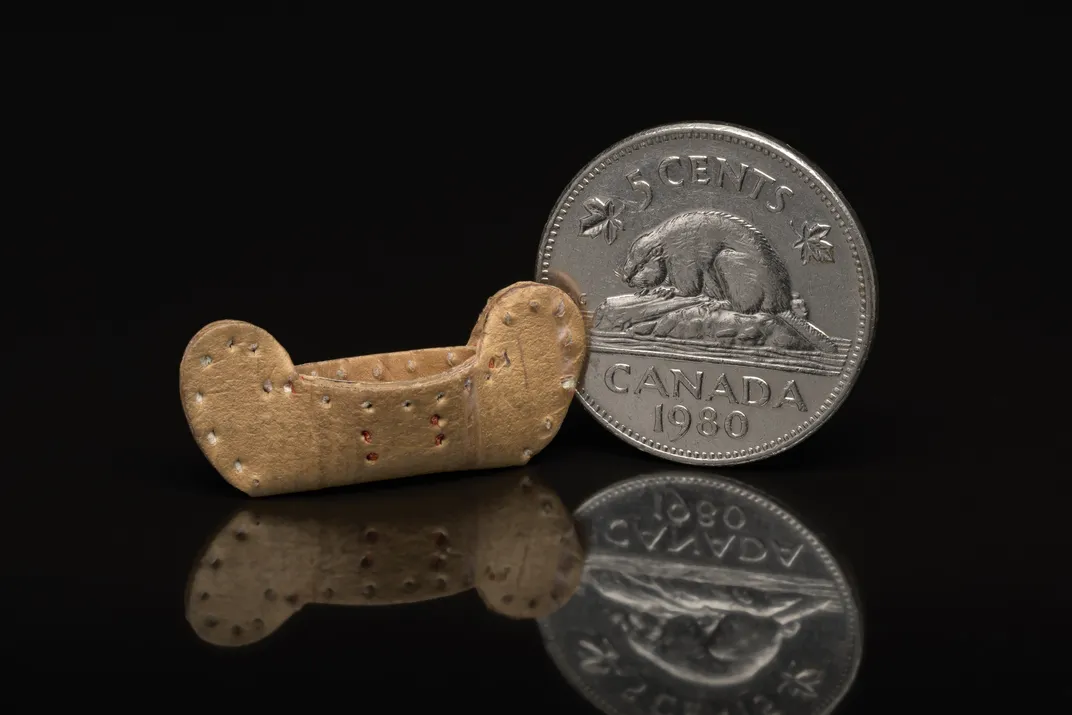
Another section helps visitors understand why some Indigenous artists create miniatures: tourism. It features shrunken-down versions of objects that would otherwise be too big for a traveler to transport. And an additional area displays some of the most intricate, tiniest works in the exhibition to showcase artistic skill. For instance, one of the objects there is a Pomo miniature basket measuring just 0.1 by 0.1 inches.
Montiel wants visitors to marvel at the pieces here and ask how such tiny recreations could’ve been made. “It really is gathering these works where you have these Indigenous artists who specialize in miniatures, and they are testing themselves on: ‘How small can I make something and it still look like a pot?’”
One of Montiel’s favorite featured works is a model of an old cookstove made of woven beach ryegrass and sealskin, likely created by a Yup’ik artist in Alaska more than 100 years ago.
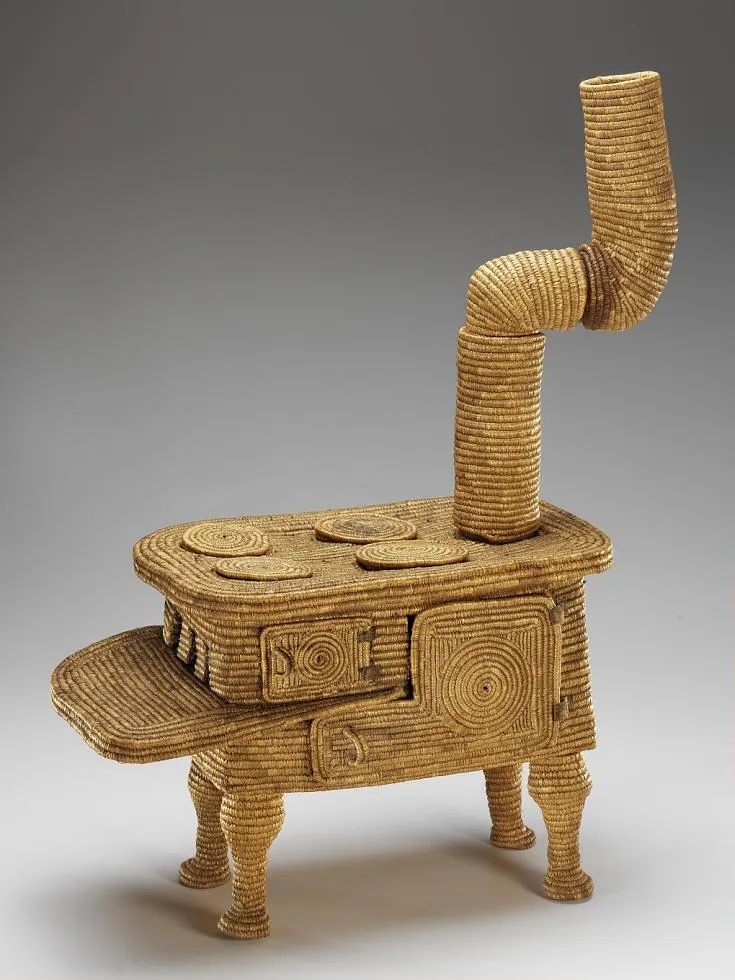
She knew little about the piece when she first came across it. So, she reached out to stove restoration expert Brandon Pineo at the Antique Stove Hospital in Little Compton, Rhode Island, who told her it was based on an appliance made after 1875. Since the piece was acquired in 1908, Montiel was able to pinpoint the full-size stove in old catalogs at the National Museum of American History with the help of library technician Alexia MacClain.
“That’s a really beautiful piece because I think about everybody’s expertise coming together to really tell an amazing story,” Montiel says.
An approachable artform
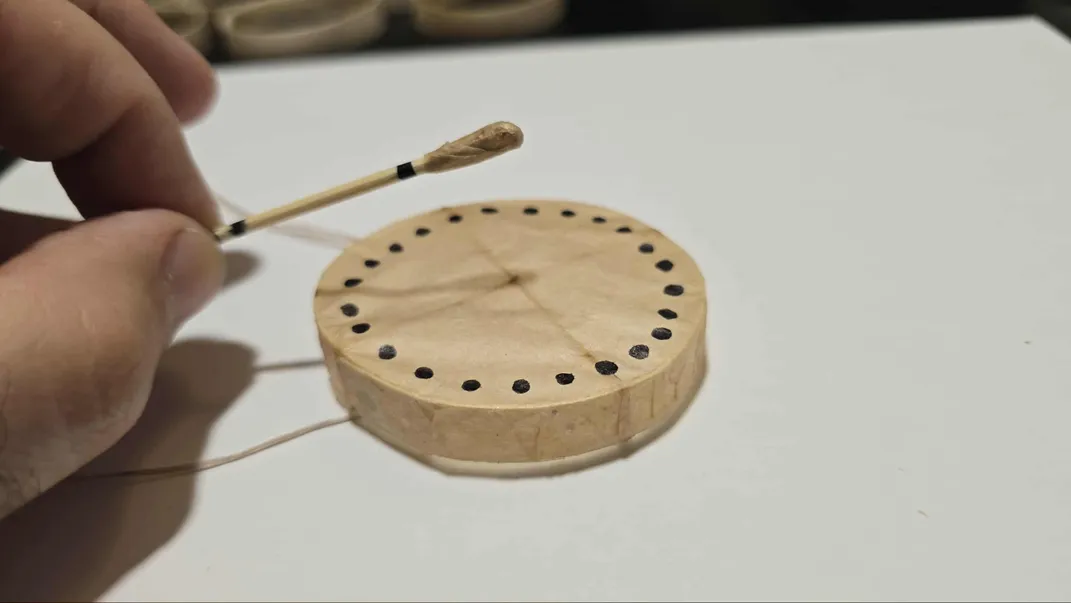
To help kick off the exhibition, the museum will host a workshop on December 12 led by miniaturist Lance Cardinal, who is a member of the Bigstone Cree Nation and based in Alberta. During multiple sessions throughout the day, Cardinal will show visitors how to craft a small version of a traditional hand drum.
Normally, these instruments—which are around one to two feet wide—take about two days to make, Cardinal explains. First, birch wood is steamed and curved into a ring. Deerskin is stretched over it to create the drum head, and a sinew string or ribbons of skin are used to tie everything together. The drum then gets dried over a fire. Workshop attendees will use many traditional elements, including birch strip rings and sinew thread, to make their diminutive drums, he says.
Cardinal’s love of miniatures began in childhood. He undertook his first passion project as an elementary school student in the early 1980s, when he used construction paper to create an operational replica of the carnival that traveled to his tiny town of Calling Lake. Sinking into artistry and imagination provided an escape from difficult circumstances.
Today, that time in his life still inspires him. Many of his miniatures evoke memories of American pop culture, including tiny models of scenes and objects from classic TV programs like “The Muppet Show,” “Sesame Street” and “Mister Rogers’ Neighborhood.” Other pieces are inspired by his Cree culture, including a model of the dog sled his family used when they went trapping and fishing and a replica of the residential school his grandparents were forced to attend.
“When we create something small, we go in close. … We feel safer about it because we feel like we have dominance over it,” Cardinal says. “So that’s why I did it for Indigenous things, for First Nations things, because it lets people feel safe enough to get close to a miniature tepee or to a small miniature drum without feeling scared or intimidated by it. And I think that’s really important.”
Reinventing tradition
Lonewolf, meanwhile, has had a hand in reinventing a traditional artform. Pueblo peoples of the American Southwest have been crafting pottery for some 2,000 years, often making practical items such as water vessels and seed-storage jars, as well as ceremonial pots.
The practice was generally handed down among women, from mother to daughter, as part of their household tasks, Lonewolf explains. It was unusual for her grandpa and dad to learn the skill, and they were sometimes ridiculed and called “sissies” for doing “women’s work,” she says.
But her father, Joseph Lonewolf, helped revolutionize Santa Clara Pueblo pottery, making it contemporary. At the behest of beginner collectors who wanted his artworks but couldn’t afford his roughly ten-inch pieces, he began to shrink his pottery, Lonewolf says. Scaling down some objects made his art a bit more accessible. Joseph also started to depict realistic representations of animals and his experiences as a hunter onto his pieces, rather than just geometric designs. Submitting these works to art shows sometimes resulted in rejection and remarks like, “This isn’t Pueblo pottery.”
Additionally, Joseph began to move traditional elements of pottery so they wouldn’t interfere with the design, such as putting the hole of a pot on the bottom rather than the top. “By taking the traditional use out of a pot, it wasn’t a pot anymore,” Lonewolf says. “When you removed the utilization … it became artwork.”
That created a shift in people’s minds about Pueblo pottery. It didn’t need a specific purpose; people could appreciate it for art’s sake. “Nobody asks a painter, ‘Well, what is this painting for? What am I supposed to do with it?’” Lonewolf says. “He did break the clay ceiling in many ways.”
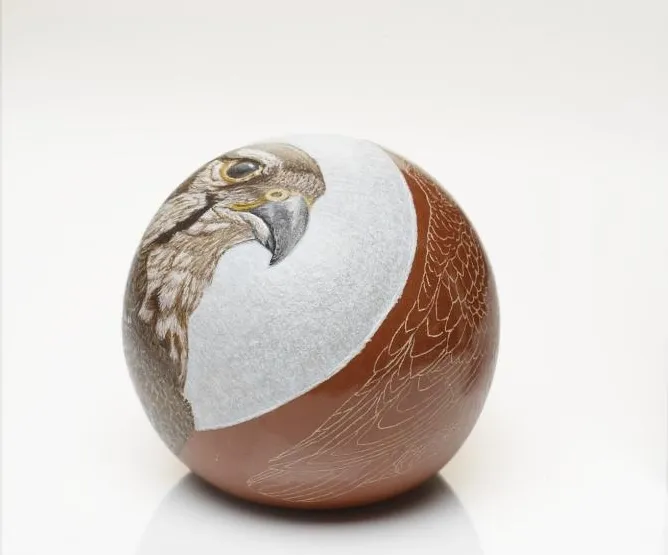
Lonewolf naturally followed in the footsteps of her dad and grandpa, as well as her aunt, the noted potter Grace Medicine Flower. She grew up watching them and other family members creating with clay, eventually being handed her own pieces of squishy earth to sculpt.
Today, she hopes her artworks—small, large and in between—help share her people’s world. For instance, an image of a turtle on a piece can represent so much. The Rio Grande is filled with turtles, so it reflects the region. Turtle shells are also used in cultural dances: They’re strapped to the backs of men’s calves and filled with stones, so they rattle, mimicking the sound of rain.
“It’s not just a turtle; it’s telling the story of a culture, of what this culture and these people value,” Lonewolf says. She urges viewers to “take the time to look at it and ask questions about it, ask the story behind the symbols.”
That’s what Montiel wants the entire “Mighty Miniatures” exhibition to do as well.
“Sometimes you see visitors going into a gallery, and they almost seem afraid to talk,” she says. So, she asked herself, “Can I create a space of joy where you are so excited by what you see that you turn to someone and say, ‘Did you see this? Have you seen that?’”
Montiel adds, “I’m nurturing learning but also a conversation between people.”
