
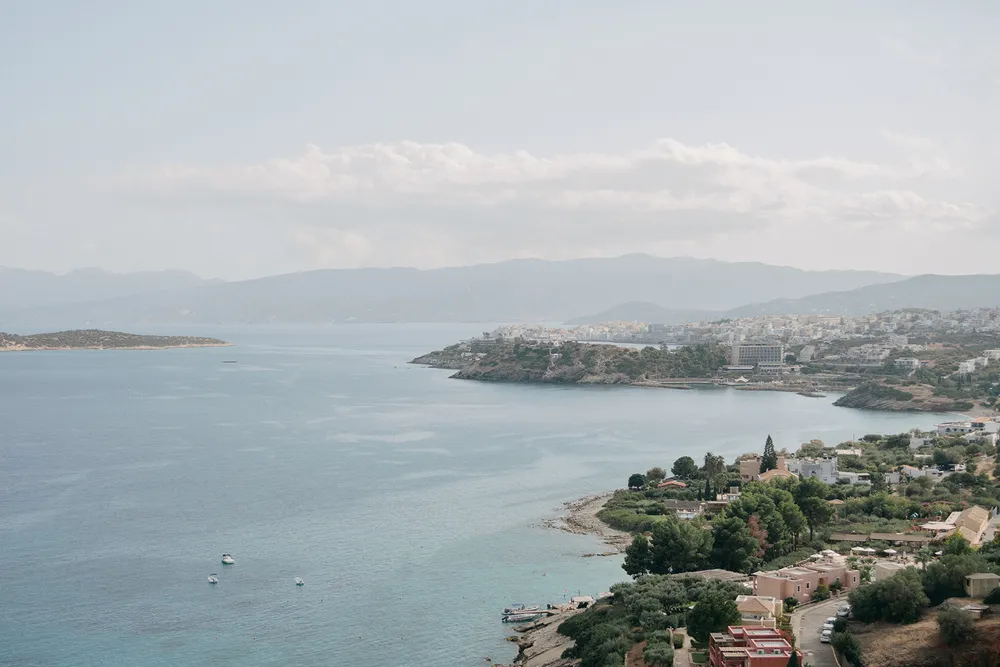
A Drive Along the Coast of the Largest Greek Island Unfurls 2,000 Years of Ancient Culture, Channeling a Bronze Age Tourist
The length of Crete has a lot of stories to tell about the people who lived there and yet still manages to embrace a sense of mystery. Warning: Beware the Minotaur
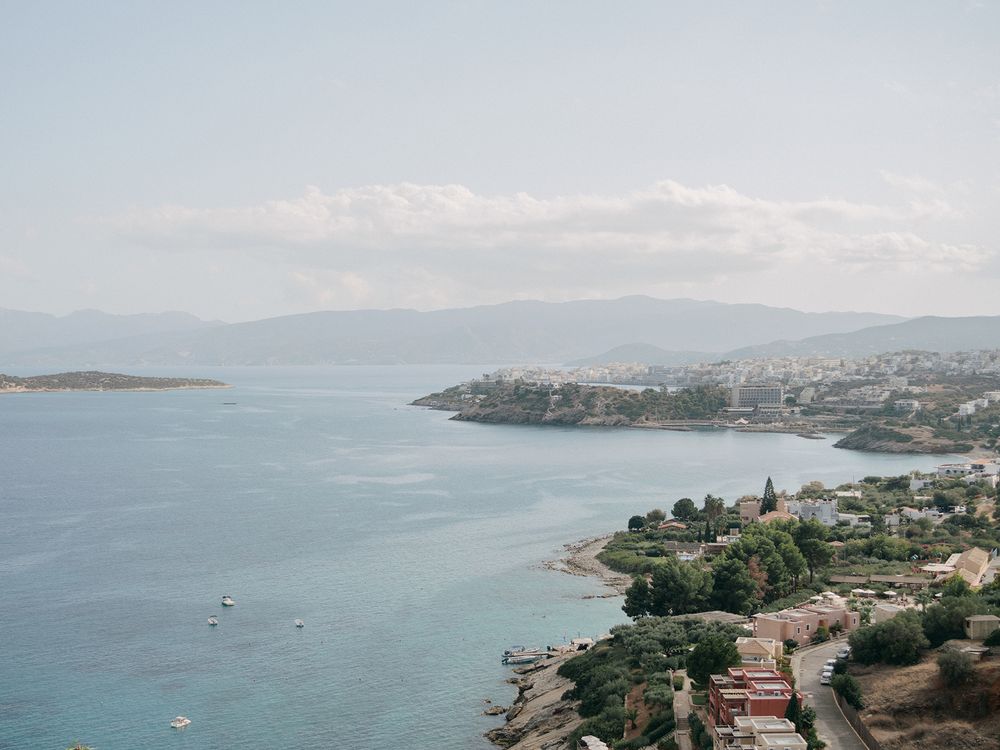
Some of the first great European road trips can be traced back to around 1500 B.C., when a mysterious people we know today as the Minoans built a network of stone-paved highways around Crete, their rugged and beautiful home island. A Bronze Age traveler would likely have headed first to the island’s grandest site: the Palace of Knossos, a wonder of the prehistoric world.
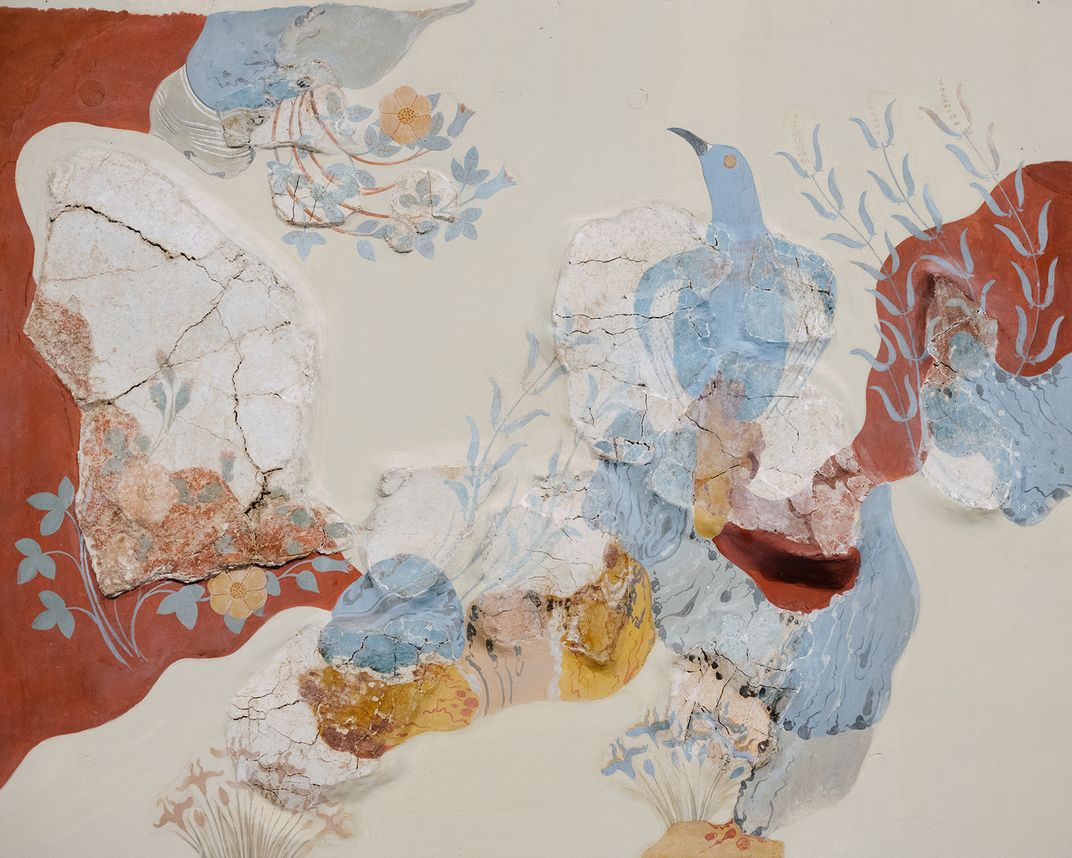
The journey must have been unforgettable. Landing by ship from Egypt, say, at a port on Crete’s southern coast, voyagers would have made their way to the main highway to begin the 30-odd-mile chariot ride through the island’s mountainous interior, past cultivated vineyards, olive groves and fields bursting with flowers. Just south of Knossos, many would have likely paused at a small, elegant structure known today as the Caravanserai—now excavated, the remains of one of the world’s oldest known surviving hostels. There travelers could have stabled their animals, washed away the dust of the road in a shallow pool or enjoyed a full scrub in the adjoining bathhouse, all fed by stone and terra-cotta pipes carrying water from a nearby stream. Travelers would then have repaired to a pleasant adjacent loggia, decorated with colorful frescoes of birds, where fresh meals were served with fine Cretan wine.
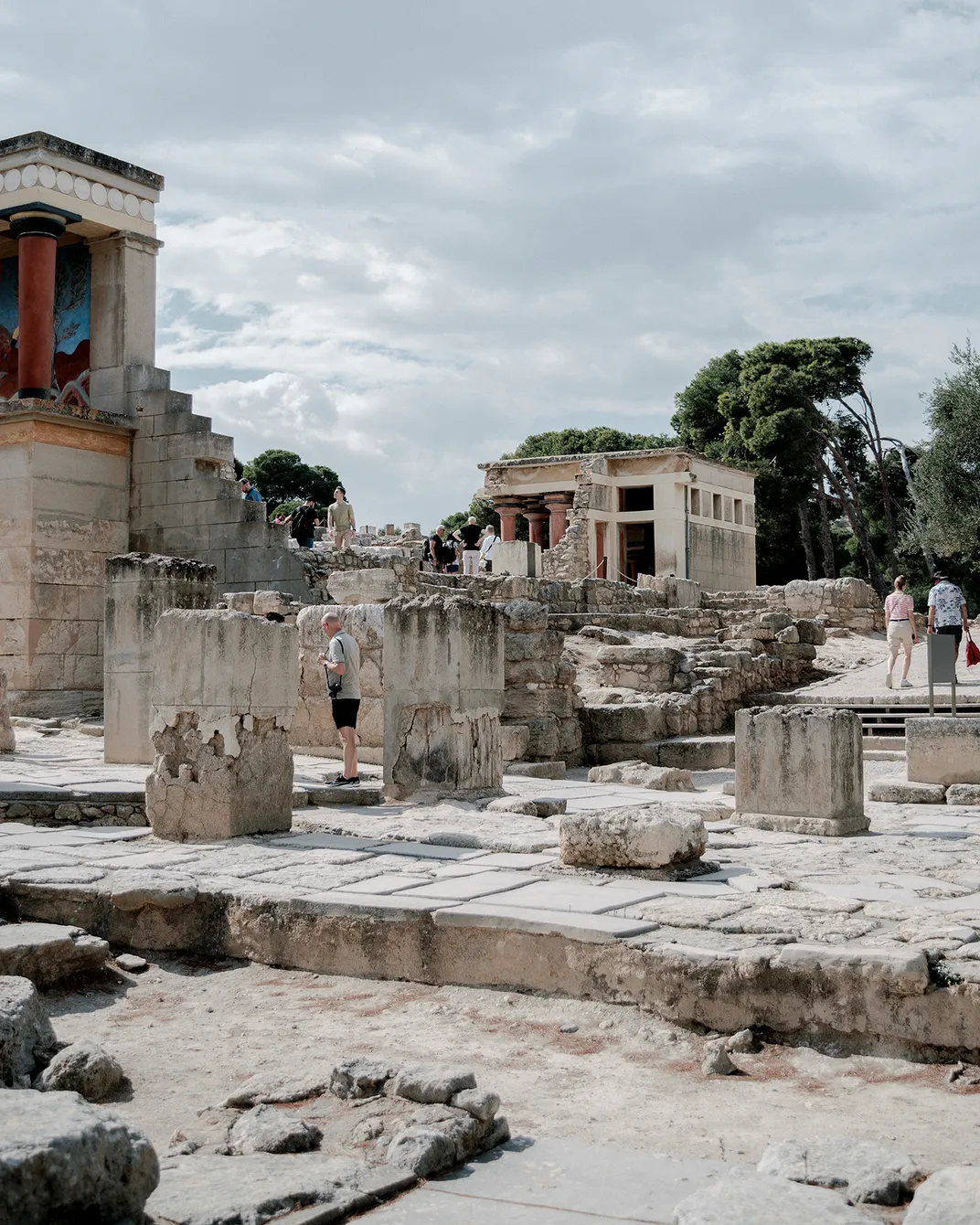
Thus refreshed, these pioneer tourists would have proceeded to the palace itself. “Picture to yourself all the kings’ palaces you ever saw, set side by side and piled on one another,” Mary Renault wrote in her classic 1958 novel, The King Must Die. “It was a palace within whose bounds you could have set a town.” The massive structure consumed an entire ridge and “clung to its downward slopes, terrace after terrace, tier after tier of painted columns, deep glowing red,” with “porticoes and balconies gay with pictured walls.” Although the book is “impressionistic, not scholarly,” said Vassilis Petrakis, a prehistoric archaeologist at the National and Kapodistrian University of Athens, it captures something of the thrill a Bronze Age traveler must have experienced seeing Knossos for the first time. “I read Renault’s description to my students every year to inspire them.”
As summer approached, I made my own pilgrimage to Knossos, although in a rental car instead of a chariot. The stark Aegean landscape was bathed in golden afternoon light, and I could see why modern Greeks regard Crete as one of the most dramatic, colorful and extreme corners of their lovely country. To avoid the crowds, I’d chosen a late hour to visit the palace; few travelers realize that in summer the site is open until 8 p.m., near dusk. I approached the entrance gate and found myself one of the last stray visitors. A drowsy guard waved me into the ruins, where the only sound was now the buzz of cicadas in the olive trees.
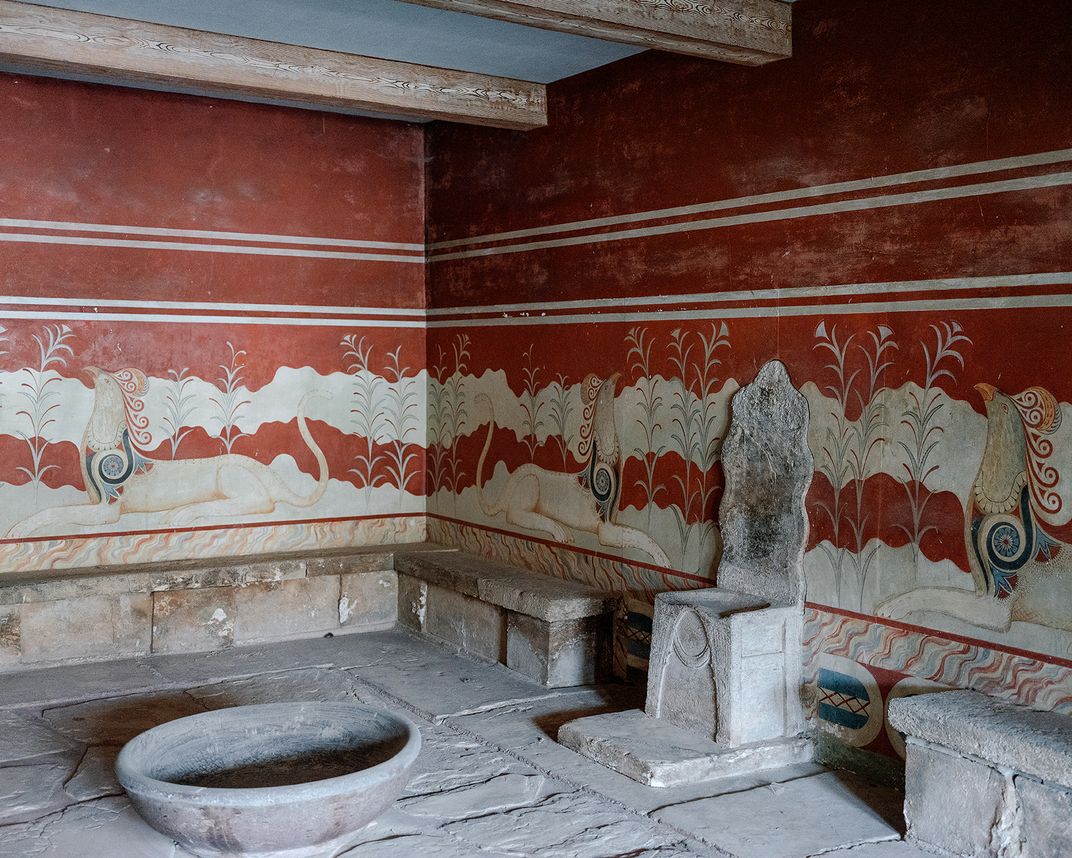
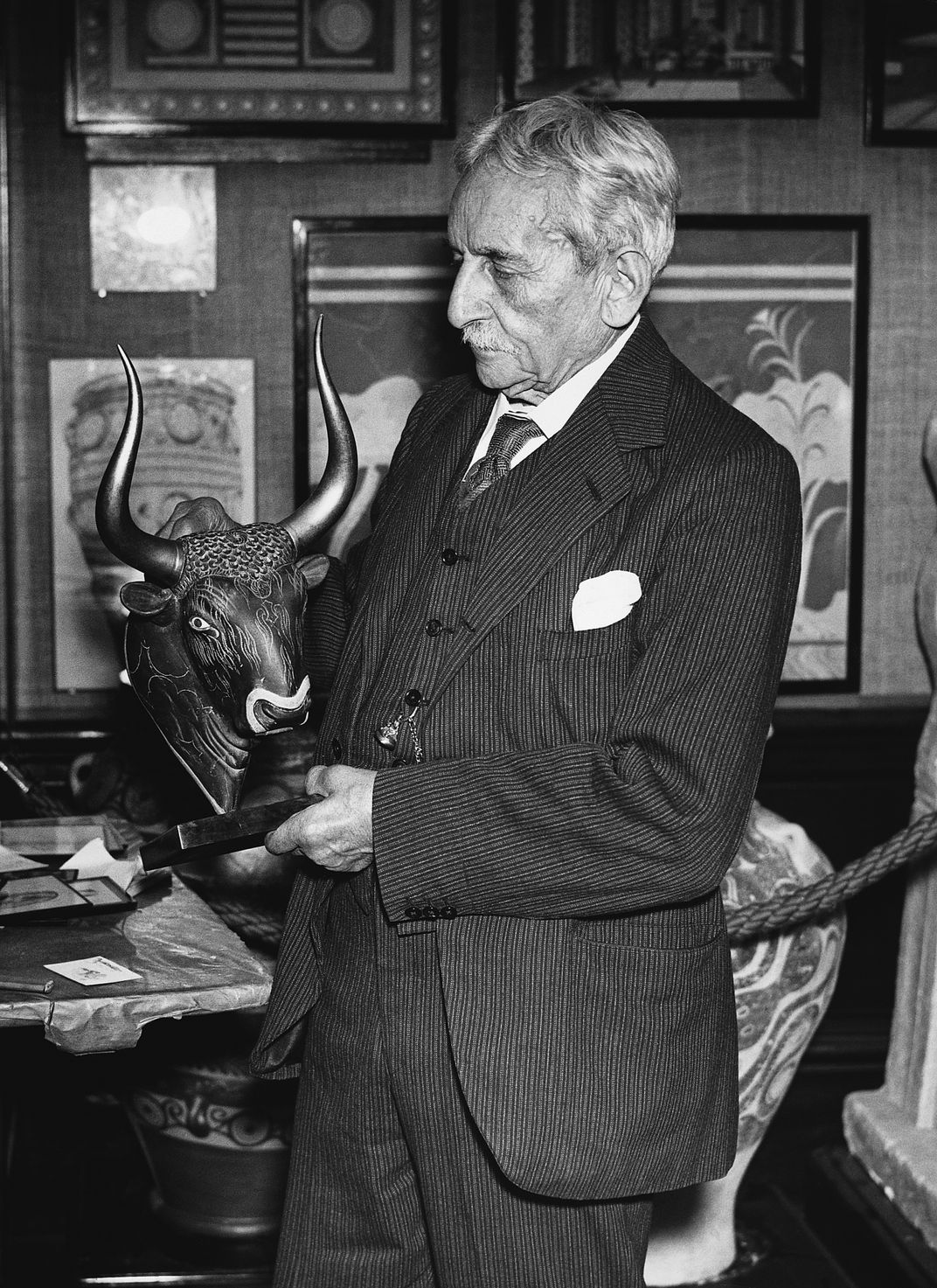
Petrakis had explained that what I would see in Knossos was, in fact, largely the product of imagination—specifically, that of Arthur Evans, the eccentric British aristocrat and archaeologist who rediscovered the site in 1900. It was Evans who had named the palace’s ancient inhabitants “Minoans,” after the King Minos of Greek mythology, and Evans who first evoked an alluring vision of an innocent and Edenic society populated by peaceful and nature-loving people who preferred flower-strewn religious rites, dancing and the sport of “bull-leaping” to the glorification of armed conflict. Evans found that Knossos had no fortifications—its defensive walls were the sea—and that the Minoans left no major military citadels, no images of battle, no graves full of weapons or heroic depictions of warriors. Instead, they filled their frescoes with scenes of idyllic beauty.
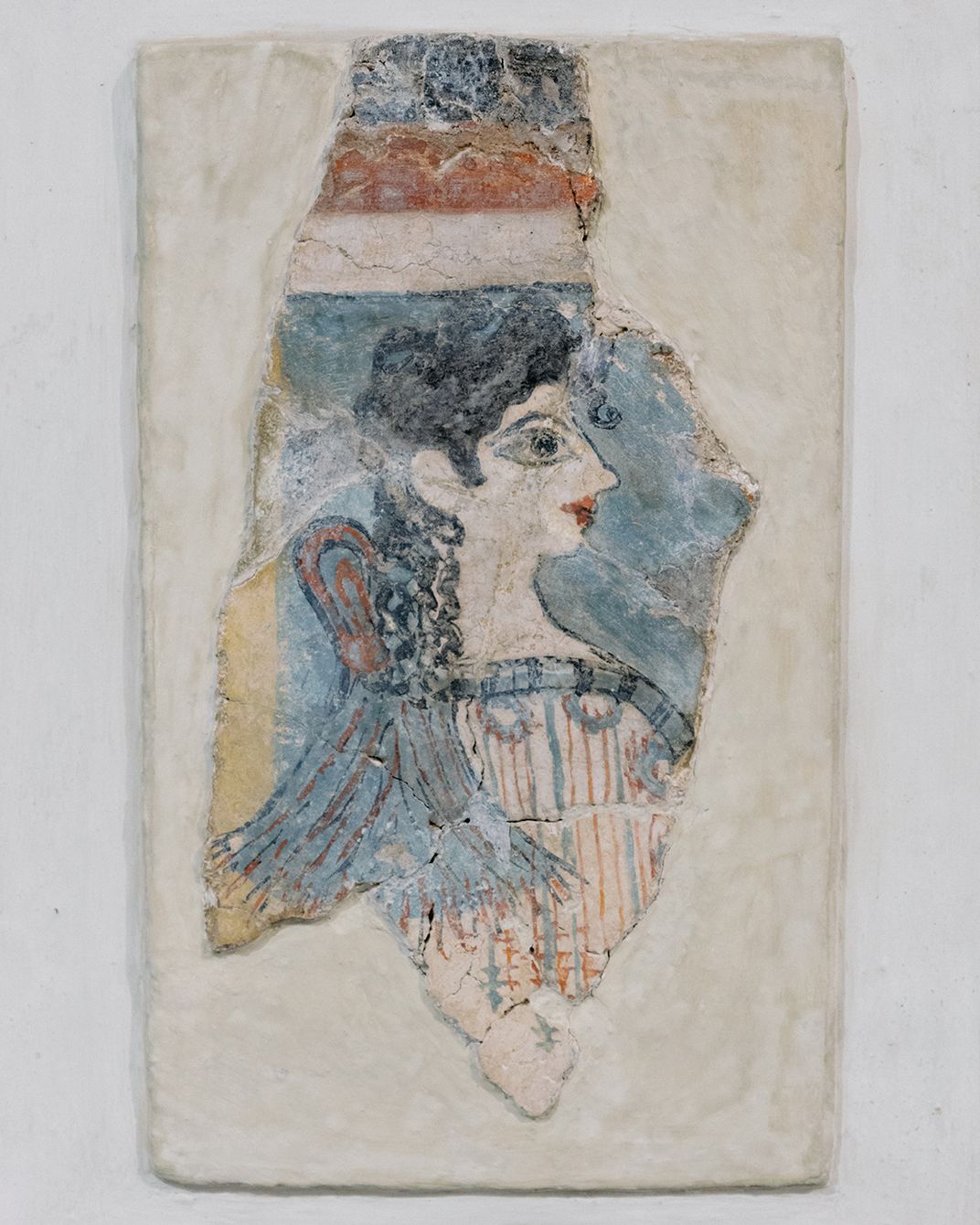
But in excavating and “reconstructing” Knossos, Evans took heavy-handed license, including using modern building techniques like reinforced concrete and iron girders, and enlivening walls and columns with bright paint, methods that Petrakis and other scholars today roundly reject as guesswork that did more harm than good. They have also shown that some of his restored frescoes were cobbled together from fragments to suit his often fanciful theories. The most egregious example depicts a young man known as “the Prince of the Lilies,” who wears a loincloth and a headdress of flowers, which was later found to comprise small sections from at least two separate frescoes. Meanwhile, many Minoan women he reconstructed with the help of Swiss artists suspiciously resemble Art Nouveau fashion models. In recent decades, ongoing excavations around Crete have added yet more nuance—even touches of darkness—to Evans’ idyllic picture.
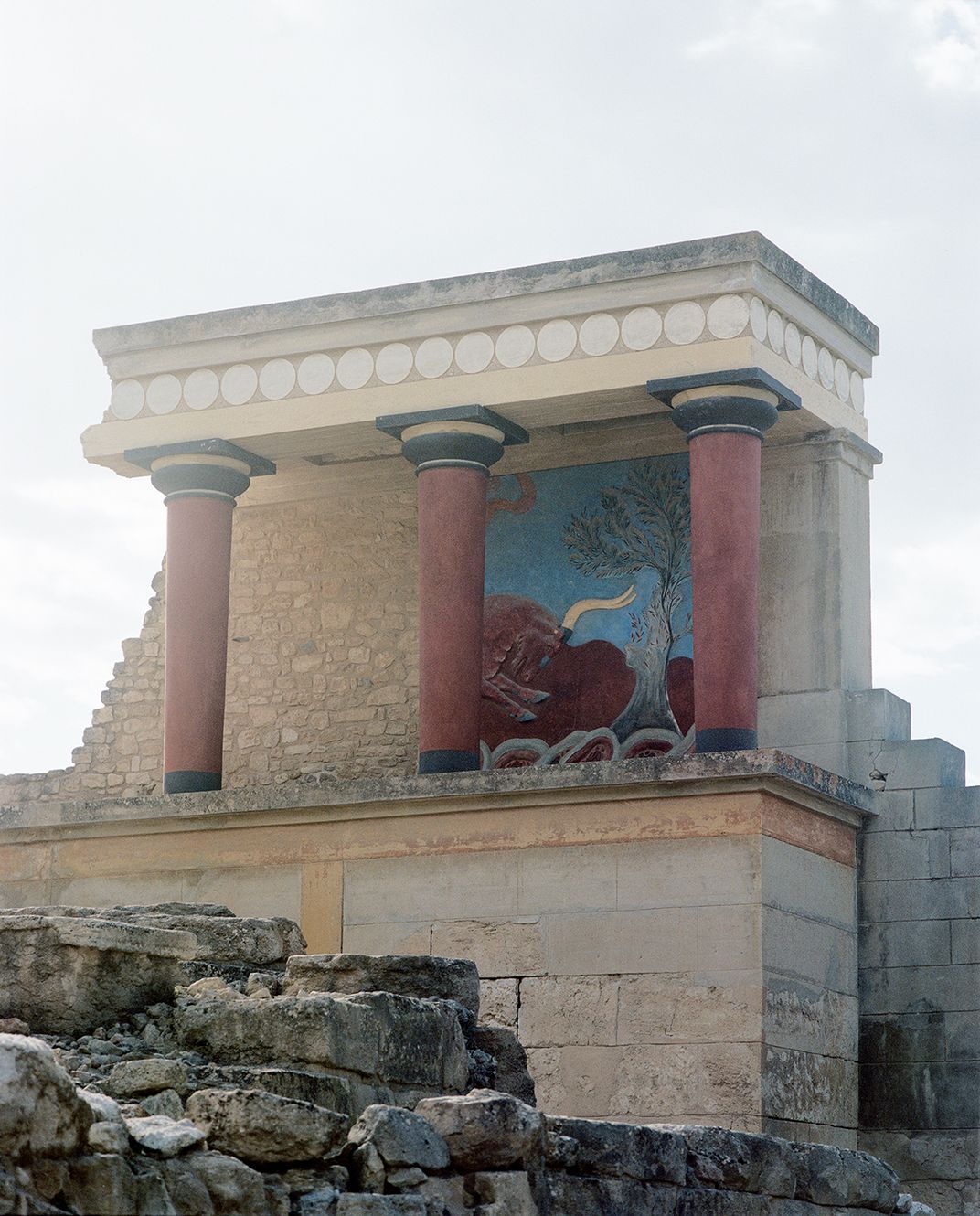
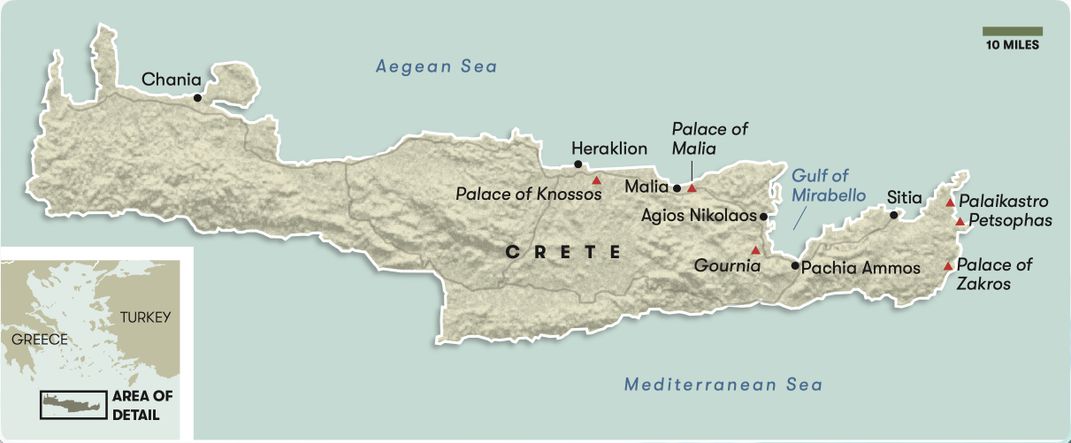
Even so, the classicist Mary Beard argues that Evans’ excavations at Knossos, managed by methodical Scottish field assistant Duncan Mackenzie, who had extensive archaeological experience, were “by the standards of the time, extremely careful.” Evans’ colorful vision of a pacifist, artistic Minoan society still dominates the popular images of Minoans. Because we cannot decipher many written records discovered at Knossos, however, the history and culture of the oldest known civilization in what we now call Europe remains bathed in mystery. Still, Crete is rich in clues about the origins of its prehistoric civilizations, including the Minoan archaeological sites encrusting its northeastern coast and, near the island’s farthest eastern point, an outpost called Palaikastro, where Minoan culture persisted in the mountains despite outside influences. And so to try to untangle the Minoans’ 2,000-year saga, I set out on a Bronze Age road trip, taking what novelist Henry Miller called a “vault into the blue.”
Planning an itinerary was both daunting and alluring. At 160 miles in length and 37 miles north to south, Crete is by far the largest of the Aegean isles, more than 100 times the size of Santorini. Its coastline is scalloped by gold-sand beaches, while its rugged interior contains semi-deserts that evoke North Africa and mountain ranges that are often capped in snow. Adding to the attraction, the island is also overlaid with grandiose relics left by a parade of invaders—Roman temples, Byzantine churches, Venetian fortresses and Ottoman Turk villages.
But the central site is still Knossos, with its alleyways and frescoed halls. Evans described it as a “palace,” though recent research has shown that it was not actually a royal residence but a ceremonial complex for Minoan religious rituals, social gatherings and administration, a bit like Vatican City. It was the grandest of many complexes that dotted Crete in the Bronze Age, ruled by a wanax, or lord. Evans devised the site’s evocative names—“The Room of the Chariot Tablets,” “The Hall of the Double Axes”—which endure today, even though, for example, there is no evidence that a royal ever sat in the “Throne Room.”
Subscribe to Smithsonian magazine now for just $19.99
This article is a selection from the December 2026 issue of Smithsonian magazine
With theatrical flair, Evans linked Knossos to the most beloved Greek myths set in Crete. Most famously, he declared that it was the home of King Minos, who, legend said, demanded tribute from Athens of seven young men and seven young women to be sacrificed in the underground labyrinth to a monstrous half-man, half-bull, the Minotaur. The practice only ended when the Athenian hero Theseus slew the beast with the help of the king’s daughter Ariadne.
It’s easy to see why the labyrinth connection seemed plausible to the first Edwardian tourists who flocked to the site: At its peak around 1500 B.C., the compound spanned nearly 150,000 square feet and had more than 1,000 connected residential areas, storerooms, ceremonial halls and archives for administrative records inscribed on clay tablets. Some structures, made of mortarless stone, were multiple stories high, with roof terraces for hot summer nights. Knossos also houses one of the world’s oldest-known and most elaborate gathering spaces, a rectangular courtyard with tiers of seats for 500 spectators.
The world’s largest collection of Minoan artworks, including most of the original frescoes from Knossos, resides at the Archaeological Museum in Heraklion, Crete’s capital city, some four miles away on the north-central coast. There I learned that Minoan civilization is broken by historians into four broad stages (although arguments continue over dates): the Early Minoan Period, covering the culture’s rise from around 3000 to 1900 B.C.; the Early Palatial Period, from 1900 to 1700, when the first complexes were built and destroyed; the Second Palatial Period, from 1700 to 1450, when a second wave of palaces was built in the golden age of Minoan prosperity; and the Post-Palatial Period from 1450, covering the long decline to its final collapse around 1200.
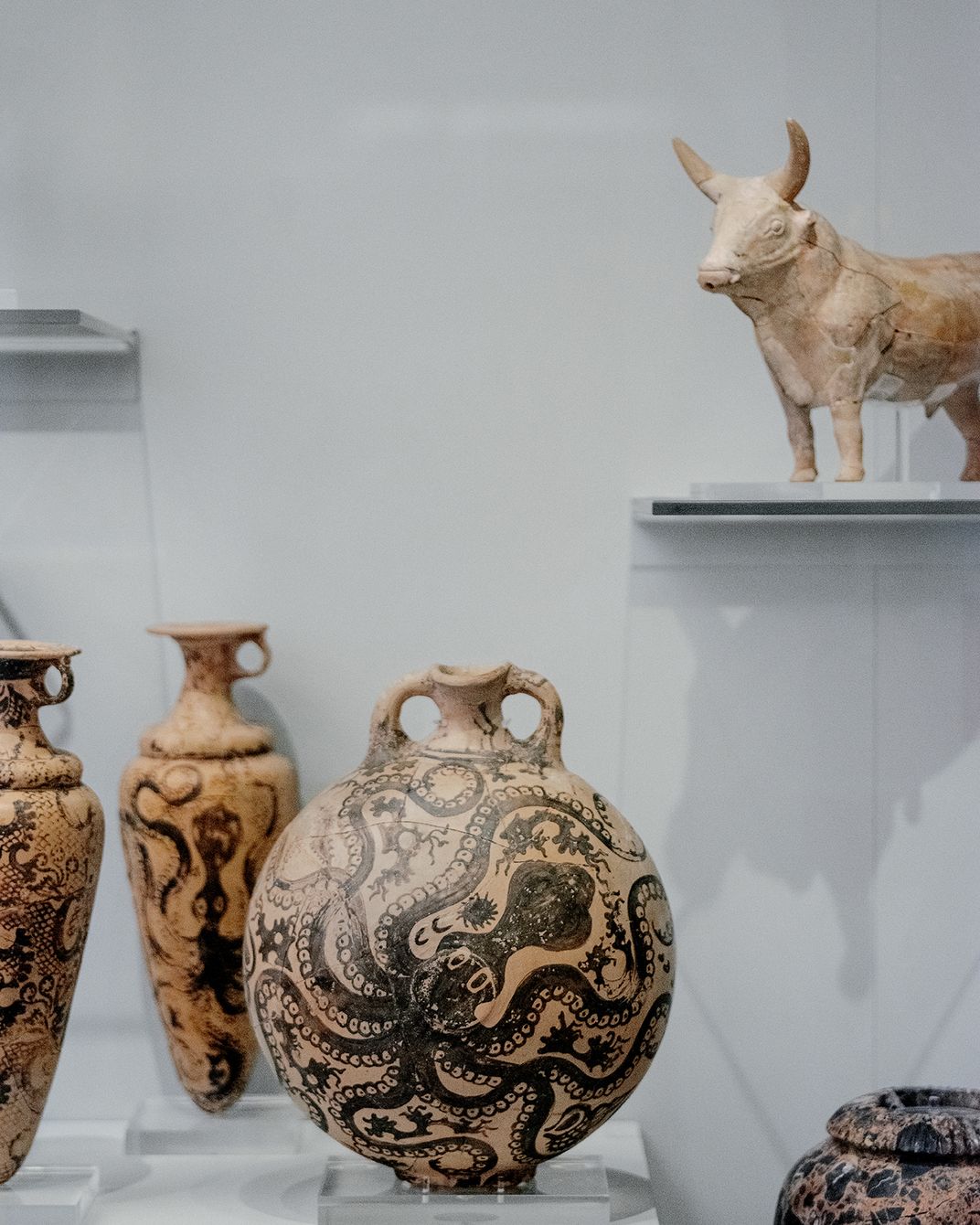
The most alluring artworks date from the cultural apex after 1700 B.C., when the Minoans had unique cultural and political influence over a vast swath of the Aegean. I inspected intricately filigreed gold earrings, brooches in the shape of shells, cups decorated with harmonious geometric patterns and bulbous urns painted with starfish, octopus tentacles and strands of seaweed. There were also many everyday items with refinements that have been compared to those of samurai-era Japan. A board game found in Knossos was lined with gilded ivory and rock crystal cut in a daisy pattern. (We don’t know how it was played.) An oil lamp decorated with lotus designs was crafted from veined red porphyry. Other cases held the inscribed clay tablets of Europe’s oldest written language, separated into two distinct strands dubbed Linear A and Linear B. While Linear B, which recorded the earliest known Greek language, was finally deciphered in 1952, we are still unable to read the older, purely Minoan Linear A. As a result, our knowledge of Minoan culture is formed from the physical remains of settlements across Crete (as well as some in Egypt).
Evans’ belief that the Minoans were a pacifist, sometimes matriarchal society was clearly not without basis. One of the finest Minoan statuettes appears to depict the supreme deity, a mother goddess of fertility who has sacred snakes climbing up her arms and was worshiped by female priests on mountaintops and in grottoes. Unlike in later classical Greece, where free citizen women were sequestered, Minoan women appear to have been strikingly independent, seemingly taking part in public life and “bull-leaping games.” I tracked down the most renowned Minoan artwork of all, the Taureador Fresco, which depicts young acrobats. One girl confronts a charging bull as another waits to help, while a boy somersaults over its back. Imagining these prehistoric bullfights (closer in spirit to bloodless Portuguese touradas than to the lethal Spanish variety), Renault again offers a poetic description: “beauty and pain, skill and glory, fleetness and fear and grace and blood, all that fierce music.”
Just 25 miles east, the Palace of Malia once stood by the sea at the edge of a fertile agricultural region. The shore has shifted so that the site now sits inland, but the palace’s higher sections still offer glimpses of the vibrant Aegean.
Malia was one of five major palace complexes recognized alongside Knossos as UNESCO World Heritage sites in 2025, all built around a distinctive rectangular central court. Observing the similarities between some of these sites, Evans had argued that the Minoans across Crete were ruled from Knossos by a hereditary “priest-king,” but modern scholars disagree, suggesting they were related but separate, a bit like the American Colonies before the United States was formed. “The Minoans were a group of quite separate cultures across Crete,” Petrakis explained. “The palace-states remained independent but traded and cooperated with one another closely. The Minoan elite saw themselves as a community. All of the palaces are connected by a common sense of identity and artistic style.” Judging from the lack of fortifications, discoveries of Minoan artifacts around the eastern Mediterranean and the plethora of imported relics found in Crete, Evans believed that the palace-states at their height also built powerful navies, protecting the island from invasion. This enforced a “Minoan Peace”—sustained more by the threat of retaliation than actual warfare—similar to the later Pax Romana and creating an international trading network across the eastern Mediterranean and beyond. The work of Minoan artists has been found in the far deserts of the Nile, and cylinder seals from Mesopotamia have been unearthed in Crete.
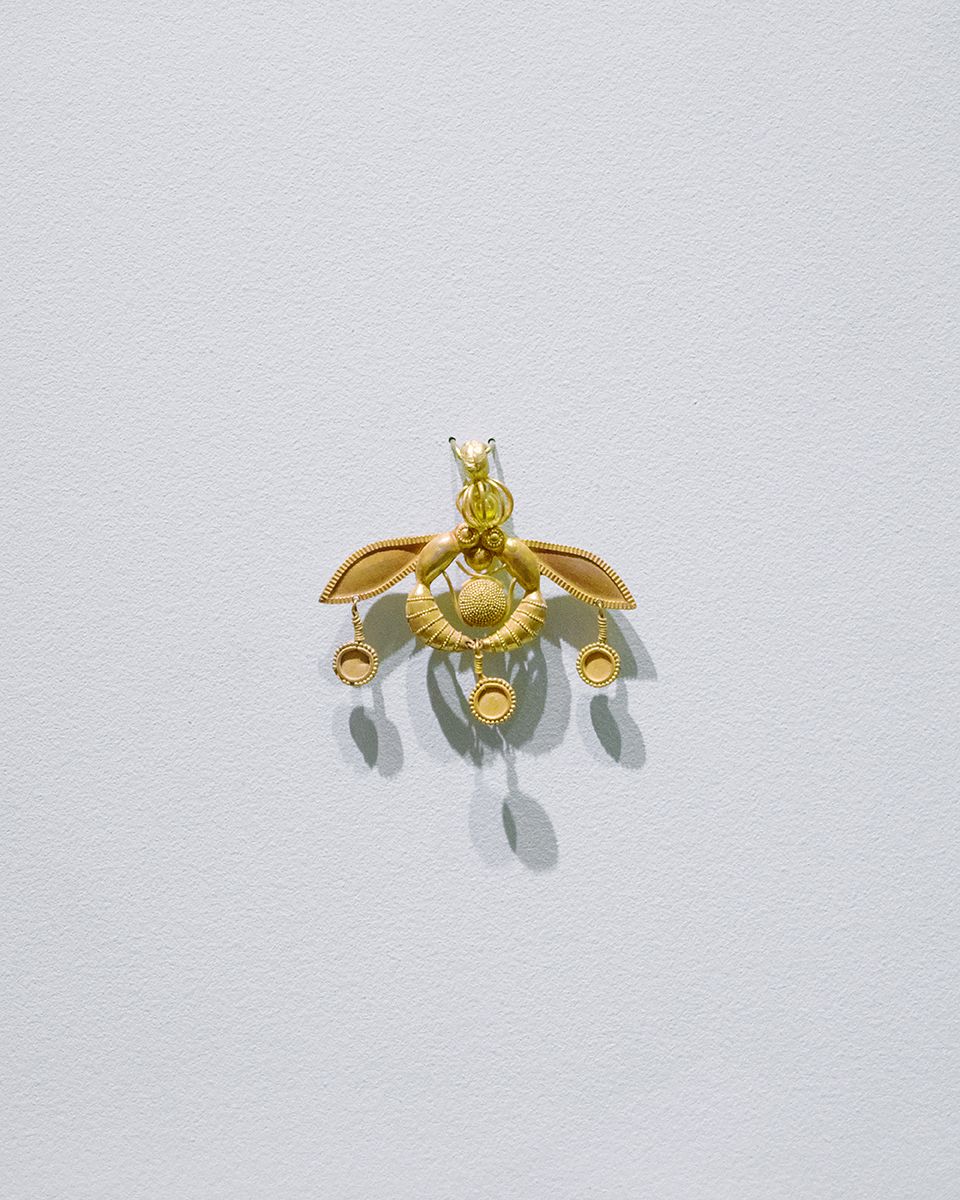
Excavations at Malia’s cemetery, nicknamed the “pit of gold,” have yielded artistic treasures such as a gilt pendant with what looks like two symmetrical bees—an exquisite item now sold in reproduction at chic jewelry stores across Crete. Another discovery threatened to dent the Minoans’ peaceful reputation when what appeared to be defensive walls were found deep in the Malia site, adding to several warlike finds across the island, including long swords, shields emblazoned with images of bulls and helmets adorned with curved boar tusks. “We shouldn’t jump to conclusions,” said Jan Driessen, an emeritus Mediterranean archaeologist at the University of Louvain in Belgium. “I don’t think the Minoans were hippies or flower-lovers, but they weren’t constantly at war either. There is relatively little evidence for violence, and they may have felt remote enough that they didn’t need walls.” Some researchers believe the fortifications date from the Pre-Palatial Period, and Driessen suggested they could have been built because of earlier intercity conflicts. Later, perhaps, the Malians felt safe enough to build over them. Evans’ idyllic image of the Minoans frayed more definitively in 1979, when children’s bones were unearthed at the North House in Knossos and an adult was found nearby at Anemospilia showing signs of knife cuts suggesting human sacrifice and even possible cannibalism. Many Greek scholars initially dismissed the idea of such gruesome practices, but more conclusive evidence was found in 2017, when archaeologist Maria Andreadaki-Vlazaki excavated a site beneath the modern city of Chania called Kastelli Hill. There, she discovered among the bones of more than 40 sheep, goats and other livestock the remains of a teenage girl whose skull had been carefully split by a knife sometime in the 13th century B.C., a clear example of sacrifice. Andreadaki-Vlazaki explained that such ceremonies were fundamental to ancient cosmology: “It seems barbaric and shocking to us today, but it was a ritual offering. The Minoans surrendered the best and most valuable life among them, a young virgin, to placate the chthonic gods”—the deities of the underworld and those who resided in and beneath the earth—“and to ask for protection from disaster and evil.”
Andreadaki-Vlazaki considers the discovery a message from the distant past to add depth to our image of the Minoans. “The site was miraculously intact,” she said. “It was as if the ancients were saying: This is us; please understand us.”
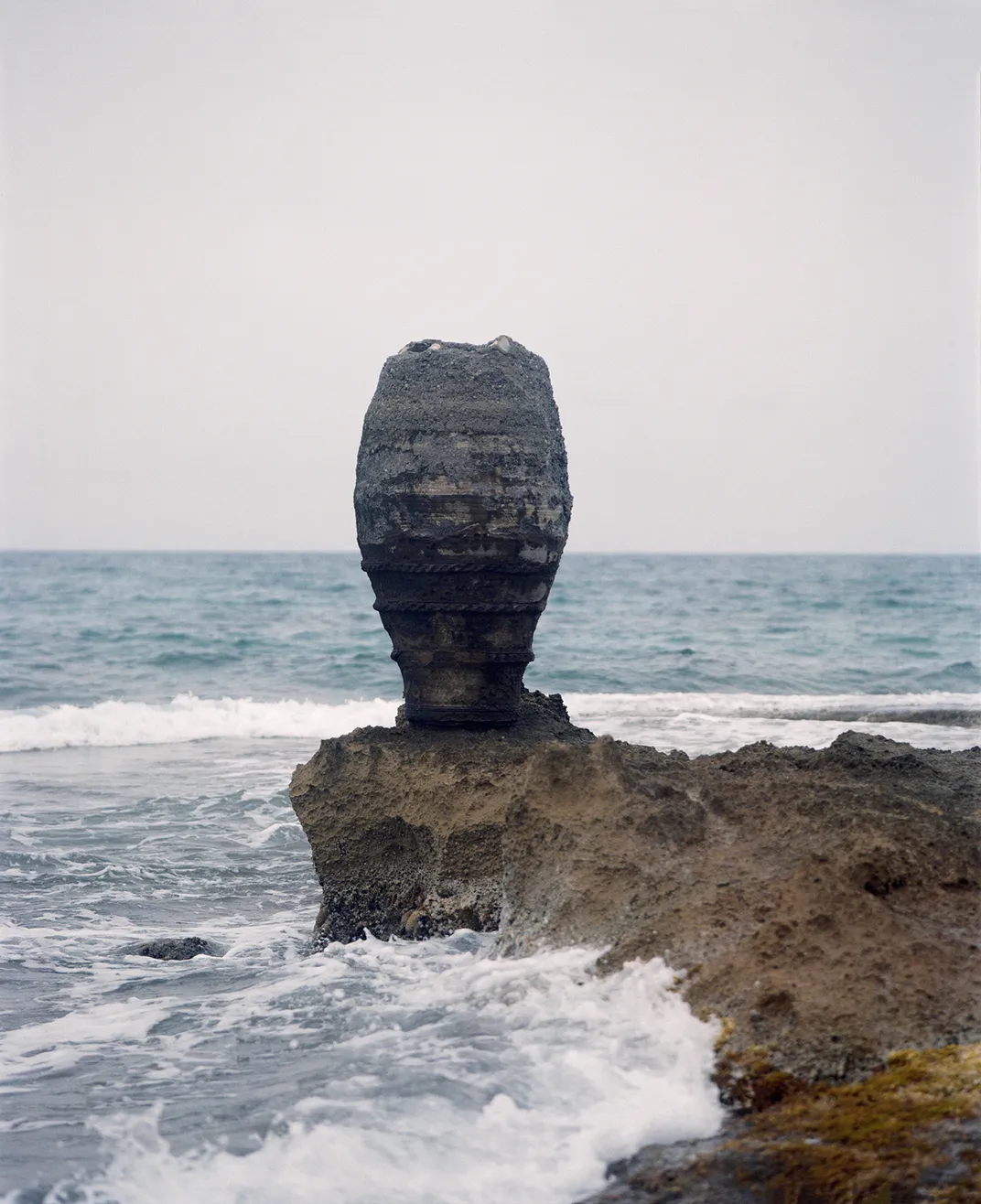
Driving farther east, I entered the serene Cretan landscapes that Miller, who visited in 1939, wrote “can hush the mind.” After 18 miles, I pulled up in Agios Nikolaos (St. Nicholas), a picturesque port that tumbles down a hillside to the Gulf of Mirabello—justly named “Beautiful View” by the Venetians. At first, it seemed a drowsy provincial outpost where blue-and-white tavernas lined the waterfront, so I was surprised to find a gleaming archaeological museum, expanded in 2024, with marble halls, mood lighting and state-of-the-art video presentations. On display were finds from nearby Minoan shipwrecks, including olive oil amphorae, bronze statuettes with surfaces cracked like bark and a carved ivory representation of a crocodile, more evidence of the reach of the Bronze Age trading network.
Modern Cretans’ pride in the Minoans runs far beyond the tourism industry. For 15 years after its liberation from the Ottoman Empire in 1898, the island was an independent country, eventually voting to join Greece in 1913. Its government has always made a point of keeping its heritage intact instead of sending relics to Athens. “To see the finest Minoan artworks,” Petrakis declared, “you have to come to Crete!” The voluble islanders maintain their unique identity in other ways, with their own Greek dialect and pronunciation and unique cultural traditions—distinctive Cretan folk music (often played on a local lute), song (including a cappella verses known as rizitika), dances, embroidery, pottery and jewelry. Crete feels connected to the rest of Greece yet also separate from it.
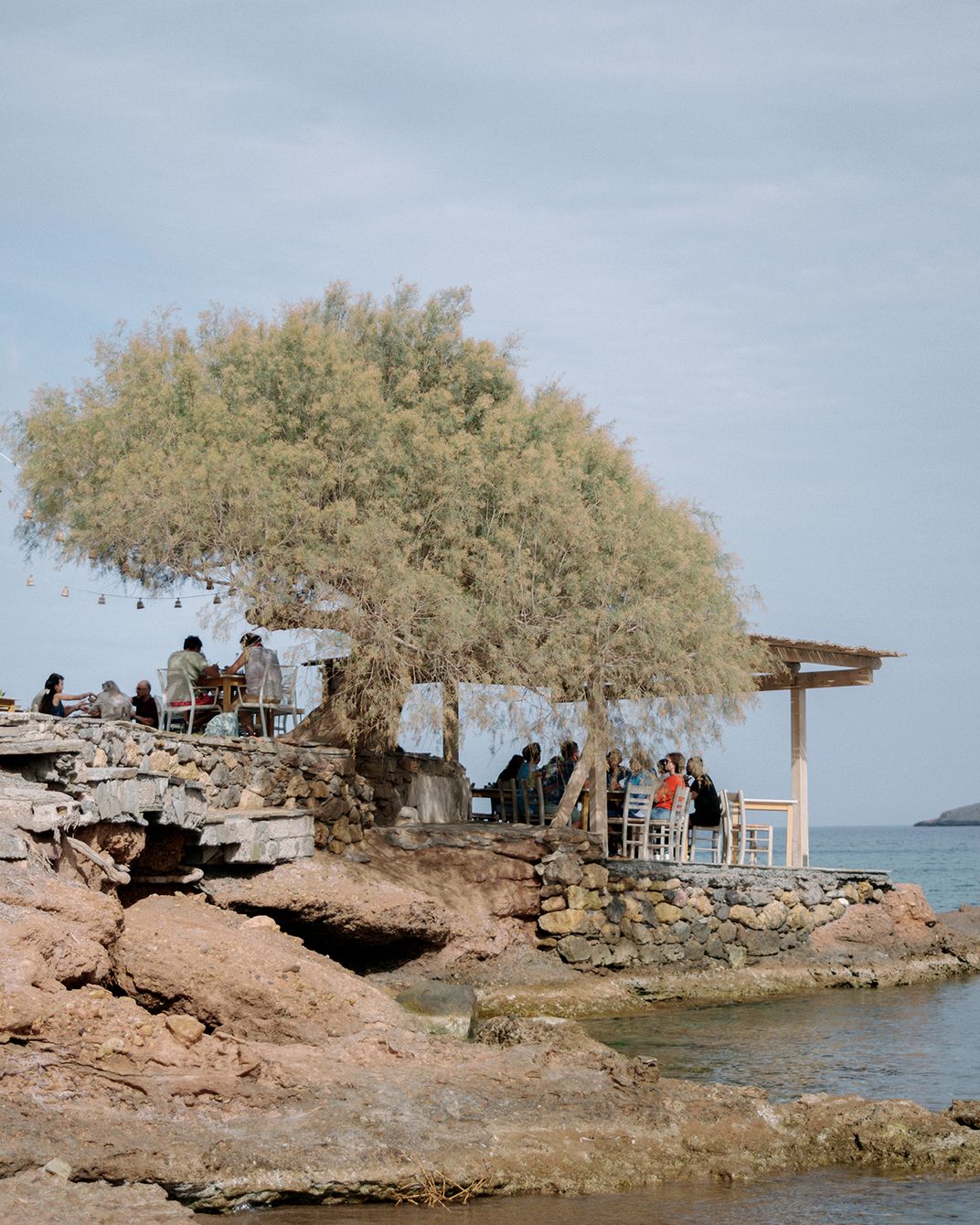
Perhaps the most pleasurable continuity with the Minoan past involves food and wine, as I found after the museum in Agios Nikolaos, when I settled into a Cretan banquet in a taverna located so close to the waves that I could have fished from the table. The cuisine includes ingredients little changed for thousands of years: For example, dakos salata (Cretan salad) uses barley rusks and a soft anthotyro cheese instead of the feta of the classic Greek salad. Minoan-era traders brought garlic from Central Asia and pomegranates, almonds and cumin from the Middle East. And Cretan wine is descended from a viticultural tradition begun at least four millennia ago. Excavators have found wine presses and clay storage jars known as pithoi for fermentation. Aficionados consider it the finest in Greece, with tongue-twisting (for me) varietals like thrapsathiri, kotsifali and mandilari.
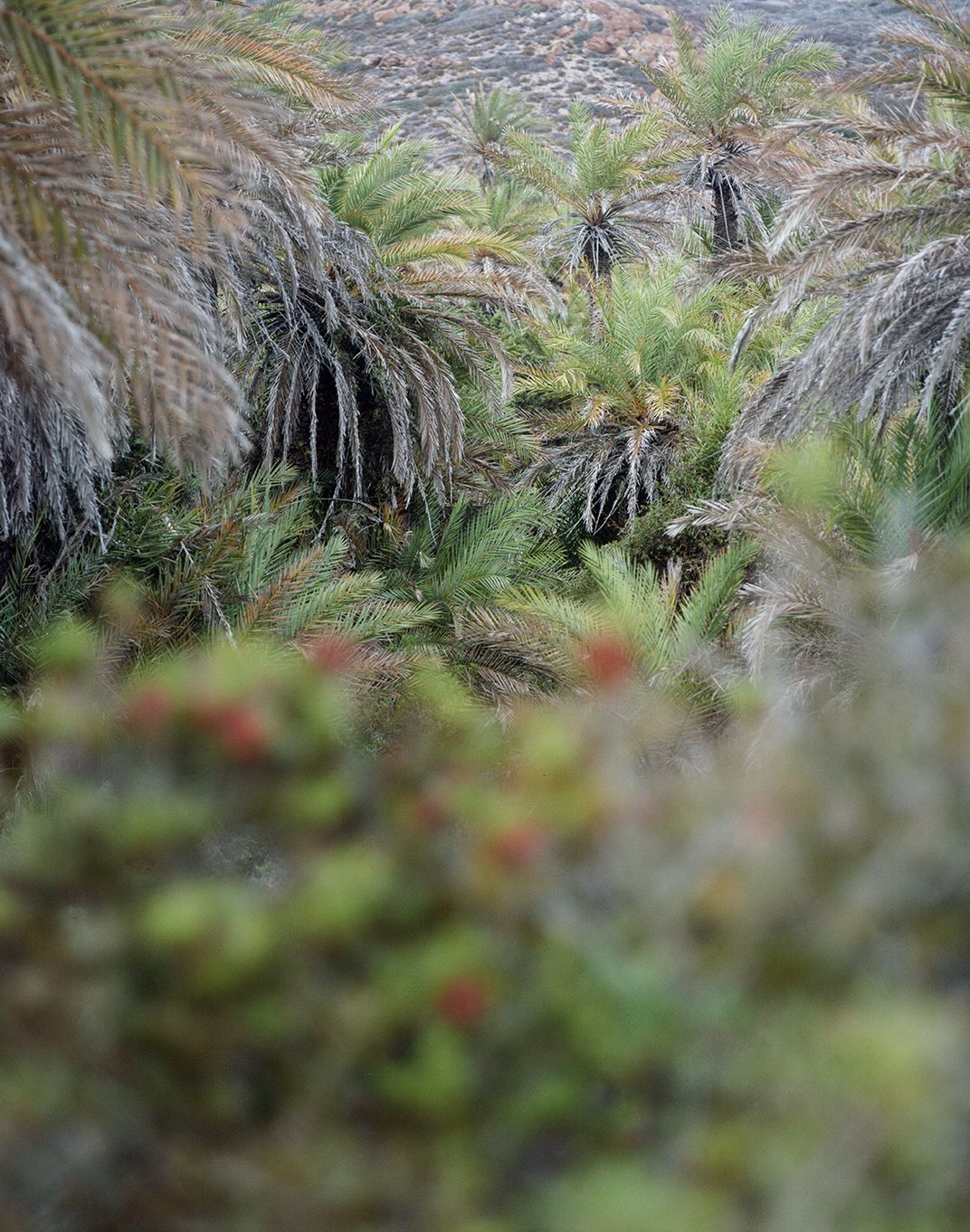
Beyond Agios Nikolaos, the thinly trafficked road became an explosion of color. White oleanders and purple bougainvilleas overflowed from the red soil to create tunnels of brilliant petals. Olive groves stretched across the hills, their leaves shifting in the wind from pale green to silver in shimmering waves as if caressed by a ghostly hand.
This same coastal route was followed more than a century ago by Harriet Boyd, a strong-willed 28-year-old Bostonian heiress and pioneer archaeologist. After arriving in Heraklion in April 1900, Boyd was bitten by the Minoan bug at Knossos and resolved to lead her own dig. On advice from Evans and other archaeologists, she made the difficult muleback journey east along the southern coast to meet with poor farmers who had found artifacts in their fields. While she was excavating in 1901, a peasant led her to a hillside called Gournia. Her small team uncovered a hitherto-unknown Minoan town with a palace at its summit. Increasing her crew to more than 100, Boyd revealed that Gournia was one of the Minoans’ busiest industrial centers, with broad cobbled streets leading to blacksmith forges, carpenters’ workrooms, metalworker shops, olive oil production sites, and factories for dye and perfume. The Philadelphia-based Institute for Aegean Prehistory Study Center for East Crete continues to support excavations in Gournia today.
I hiked up the steep streets to the ruins of the palace, which offer panoramic views over agricultural fields to a bay that was once filled with vessels from around the Aegean. It was a fitting vantage point to ponder a string of disasters that threatened the Minoans’ golden age. Around 1600 B.C., a volcanic eruption on the island of Santorini, 70 miles north, blanketed Crete with ash and pumice and sent a giant tsunami to the coast. From the heights of Gournia it was easy to picture the residents watching puzzled as the sea withdrew, stranding their boats on the sands, and their terror at the approaching tidal wave.
Minoan society was then threatened by a period of upheaval. To understand it, I drove the mile and a half to the fishing village of Pachia Ammos (“Thick Sand”), set in a wineglass-shaped inlet, where an international conclave of academic “Minoanophiles” was ignoring the fine summer’s day and crowding into a former customs house for a conference on 15th-century B.C. Minoan pottery. The dedication of the attendees was impressive. Driessen, the Belgian archaeologist, told me that he fell in love with Crete as a child and had been excavating there since he graduated from college, and I noticed one young PhD student with a Minoan gourd tattooed on his calf.
Still, I feared the conference might be wildly arcane, but I was soon captivated by ceramic shards with inventive patterns and aquatic imagery. “If you look at other cultures around the Mediterranean in this period, there is nothing to compete with Minoan pottery,” said Tom Brogan, the executive director of the Institute for Aegean Prehistory, who is set to begin an appointment as the director of the American School of Classical Studies at Athens in 2027. “It’s like porcelain.” The analysis of even the tiniest fragments reveals surprising amounts about Minoan trade, he added, since, thanks to Crete’s varied geology, the origins of the raw material can be traced. “We don’t have texts we can read from this era, so this is one way to tell the Minoan story.”
Did you know? Washington, D.C. has its own minotaurs
According to Greek mythology, the half-man, half-bull creature was confined to a labyrinth beneath the palace at Knossos. Today, a sculpture of Theseus battling a minotaur is on exhibit at the National Gallery of Art. At the Hirshhorn Museum and Sculpture Garden, Thomas Houseago’s mixed-media Minotaur-Janus stands nearly eight feet tall.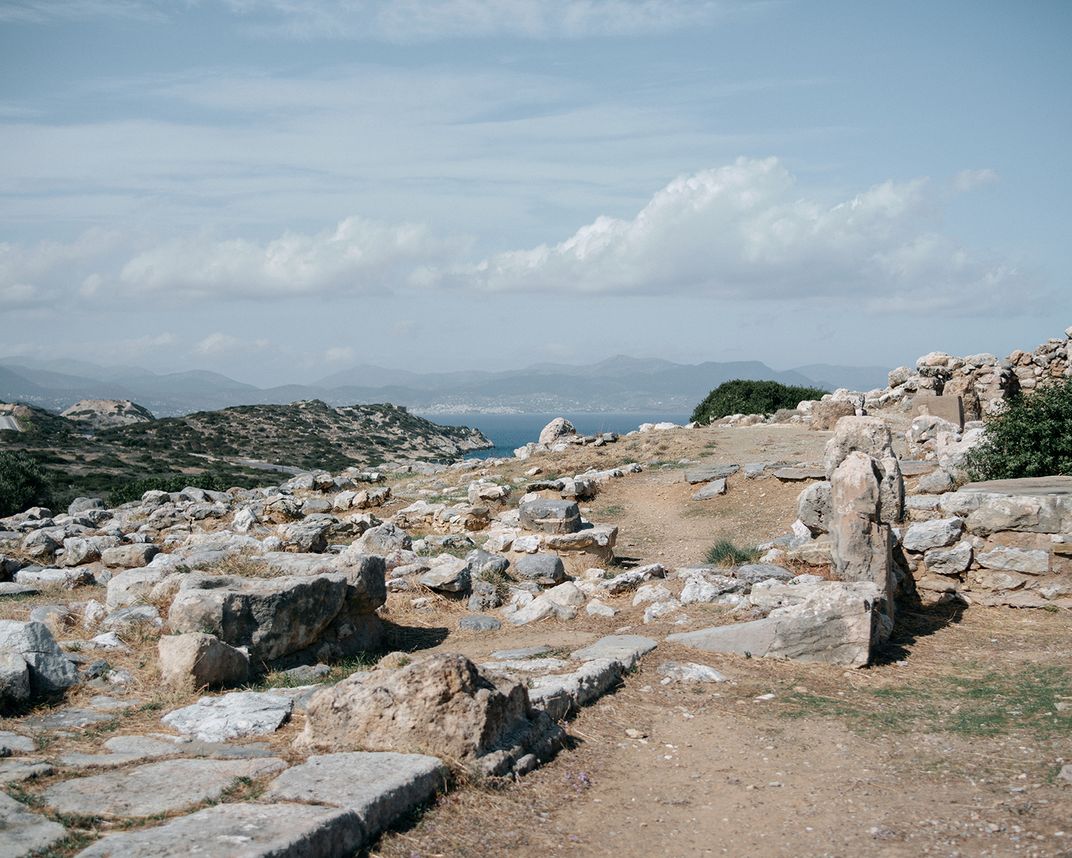
During a break, Driessen repaired with me to a seafront cafe to outline his theory about the 15th-century crisis, first propounded in The Troubled Island, a 1997 book he co-wrote with Colin F. Macdonald of the British School at Athens. “The Minoans had a strict religious system,” Driessen said. “Religion was everywhere! Then suddenly we see evidence of natural disasters—earthquakes, tsunamis, eruptions, weather incidents—which had dire effects on humans, animals and crops. And we start to see a breakdown of the system.” As sea spray wafted over us, Driessen suggested that the Minoan populace lost faith in their leaders, who had presumably angered the gods and lost their favor. “Almost all of the palace complexes were damaged. Cave sanctuaries were abandoned. There was a general wave of destruction that may have been from popular rebellions.” Although the Minoan elite recovered from the burst of anarchy and rebuilt the palaces, they were weakened and failed to erect fortifications when a new threat emerged.
Journeying east of Pachia Ammos felt like falling off the map. A narrow road zigzagged for 60 miles through the tawny Ornon Mountains, then plunged back to beaches with vodka-clear waters and pebbles the size of dinosaur eggs. On a sun-blasted headland, a ragged Greek flag flew above the remains of the Palace of Zakros, a site that filled a museum in the village of Sitia with treasures. It was here that I paid closer attention to the brown clay tablets covered in the Minoans’ two elegant scripts, Europe’s oldest known written languages. The tablets had been housed in the archives of palaces all over Crete and then accidentally fired by conflagrations. Evans had dubbed the older script, dating from 1900 to 1450 B.C., “Linear A.” The second he called “Linear B,” dating from 1450 to 1200 B.C., which he believed was simply another purely Minoan language. When Linear B was deciphered in 1952, 11 years after Evans’ death, the news made world headlines—and revised entirely Evans’ view of the Minoan twilight.
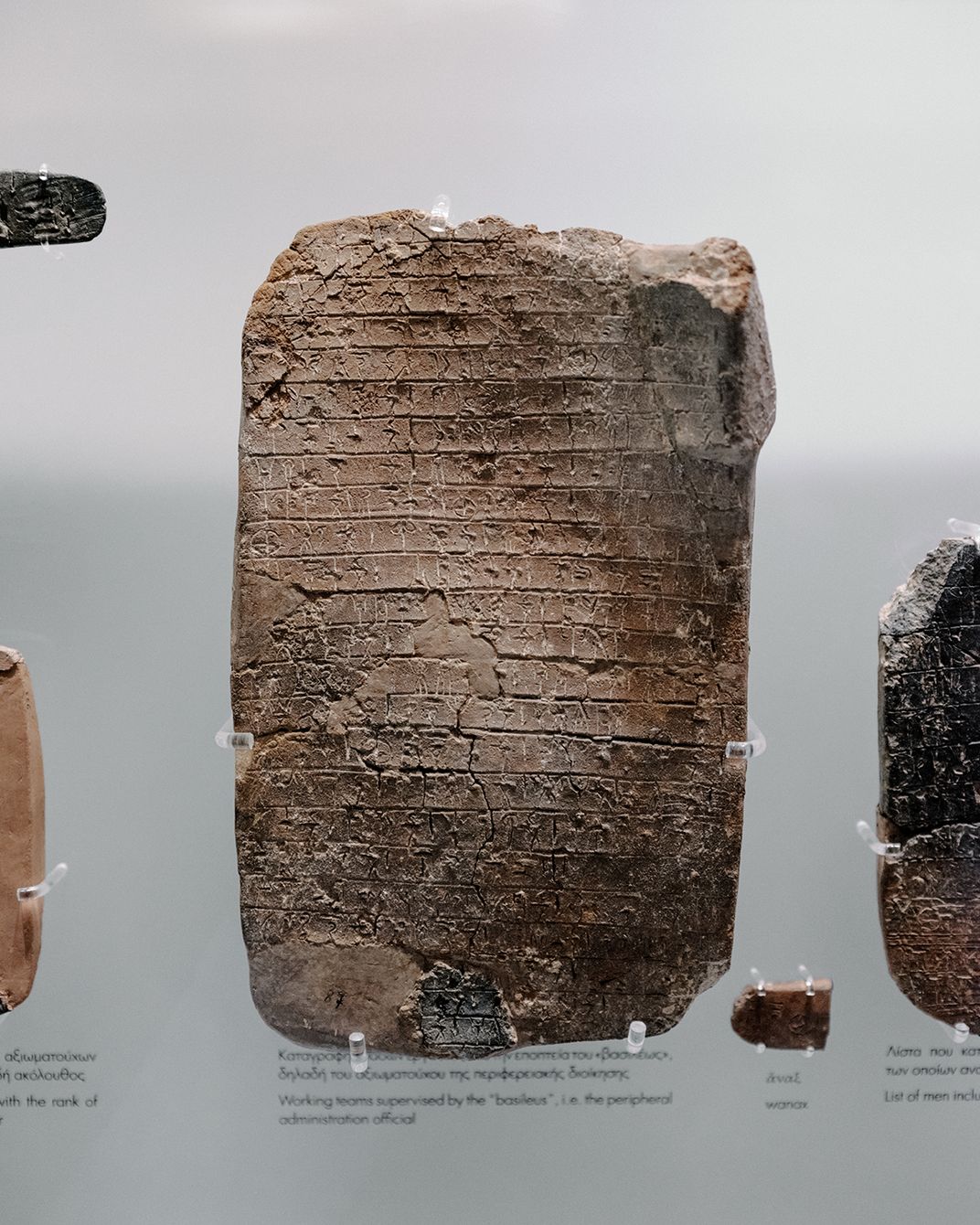
The breakthrough was made by an English autodidact, Michael Ventris, who had become obsessed by the Minoans as a teenager when he heard Evans lecture in London. Although he became an architect, Ventris was also a brilliant cryptologist, and he used grids to cross-reference the characters in place names to discover that Linear B was actually not Minoan but an ancestor of classical Greek, which called into question Evans’ belief that the Minoan Peace had gently faded from history.
Thanks to the linguistic evidence of Linear B and recent excavations that show widespread destruction of palace complexes, many archaeologists have postulated that around 1450 B.C., an invading fleet swept across the Aegean from the state of Mycenae, near the Peloponnese, a southern peninsula of the Greek mainland. “The Mycenaeans were an aggressive, expansionist people,” said Paul Cartledge, an emeritus ancient historian at the University of Cambridge. “They were later responsible for what we call the Trojan War,” featured, of course, in Homer’s The Iliad and The Odyssey. These seasoned warriors easily conquered Crete—“the Minoans were defenseless,” Cartledge said—and the invaders burned all their palaces save Knossos, which they used as a power base. But Crete was too big to dominate solely by force, and they ruled the island in cooperation with their subjects, blending the two cultures. Linear B was a script used by the conquering Mycenaeans, who co-opted Minoans’ writing and administration skills to govern. “In a single stroke, Ventris added 600 years to the history of the Greek language,” Cartledge said.
Today, the older, purely Minoan script remains a mystery. “Deciphering Linear A is the Holy Grail for linguists,” Cartledge said. “We need a Rosetta Stone, with parallel texts in other languages.” Excavations still yield tantalizing clues, most recently an ivory “scepter” unearthed in 2024 near Knossos, with a round ring and handle inscribed with some 119 Linear A symbols, the longest chain of the text ever found. (“Despite the name, the ‘scepter’ wasn’t royal,” said Thomas Palaima, former director of the Program in Aegean Scripts and Prehistory at the University of Texas at Austin, who is participating in a detailed joint study on the relic, expected to be published in 2027. “It was a religious ceremonial piece, so experts just call it ‘the ivory.’”) And this June, an amateur linguist in New York claimed to have used artificial intelligence to interpret 40 symbols from Linear A and compile a 408-word lexicon, although the results have gone no further. Still, Palaima has no faith that A.I. can ever crack the arcane script. “There’s insufficient data,” he said with a shrug; the text cannot be cross-referenced with any other script.
My Minoan road trip ended at Palaikastro (“Old Fort”), hidden at Crete’s easternmost tip. To reach it, I followed an unpaved road around a desolate harbor to modest ruins, which lay beneath a tabletop mountain called Petsophas (“Skin Eater”), known as a peak sanctuary that was once the location of a Minoan shrine. Even this far-flung outpost had a rich past: In 1899, a farmer unearthed two ornate stone molds once used for casting bronze plaques with images of women and double axes. Excavators soon realized that Palaikastro was the site of a strategic Minoan port: One of its villas had more than 20 rooms, and among the treasures unearthed was a now-famous vase painted with a swimming octopus that looks at the viewer with wide, friendly eyes.
The haunting spot was an appropriate place to ponder the ultimate mystery: the reason for the final demise of the blended Mycenaean-Minoan culture. Carbon dating shows that the Palace of Knossos burned for the last time around 1350 B.C. and was abandoned, but we don’t know whether this was the result of warfare, popular revolt or natural disaster. Nor do we know why Crete ended up sliding into a dark age around 1200 B.C. “Then it was all lost!” said Brogan. “We don’t know why. We’re fascinated by how they reached this cultural height and then declined. The rise, the peak and the fall.”
A steep hill near Palaikastro attracted refugees who kept the Minoan culture alive into the early Iron Age. In The Odyssey, which is thought to have taken its final form around the eighth century B.C., Homer notes that a mixture of languages was spoken on Crete and refers to one linguistic group as Eteocretans. Archaeologists have also found a few inscriptions in a non-Greek language dating from the seventh to around the third centuries B.C., at a time when Doric Greek dominated the island. By 100 B.C., evidence of these Eteocretans had disappeared. Some assume that the Eteocretans spoke a language derived from Minoan, but neither Minoan nor the Eteocretan language has been deciphered.
The windswept isolation of this eastern port had a mournful air, prompting meditations on the limits of archaeology and our ability to rescue the distant past. Despite more than 125 years of dedicated research, we know relatively little about these Bronze Age people. I recalled one of Petrakis’ philosophical musings: “We would know even less about the Minoans without their clay tablet records, but those tablets only survived by accident, because their palaces were burned and the clay was hardened. What records would survive from our own civilization if our hard drives were lost and our paper books disintegrated over time?”
And yet, Petrakis added, in a deeper sense, the Minoans are very much with us today. Their palaces vanished, but the Greeks kept a collective memory of a powerful and sophisticated civilization that had thrived in deep antiquity and then vanished, possibly inspiring Plato’s enduring legend of Atlantis. Many Minoan stories were passed on by oral tradition and transmuted into Greek legends. In addition to King Minos, Crete was where the mother goddess Rhea gave birth to Zeus in a cave to hide him from his jealous father, Cronus. Most enduring is the Minotaur, which has inspired Western artists for millennia.
As I began the long drive back to Heraklion, I saw that our ongoing fascination with the Minoans may be fed by their elusive nature. “Every day we get closer to the Minoans,” Driessen had told me in Pachia Ammos. “With every excavation we find more information, but will we ever solve their mysteries? I don’t think we really want to. We’ll never fully know the Minoans, but the mystery is also the attraction.”

Planning Your Next Trip?
Explore great travel deals
A Note to our Readers Smithsonian magazine participates in affiliate link advertising programs. If you purchase an item through these links, we receive a commission.