Why Thanksgiving Football Emerged as an American Tradition in the Aftermath of the Civil War
In 1863, Abraham Lincoln declared Thanksgiving a national holiday in a bid to promote unity. The first Thanksgiving football game took place six years later, and the NFL is still finding ways to expand its role in the annual celebration today
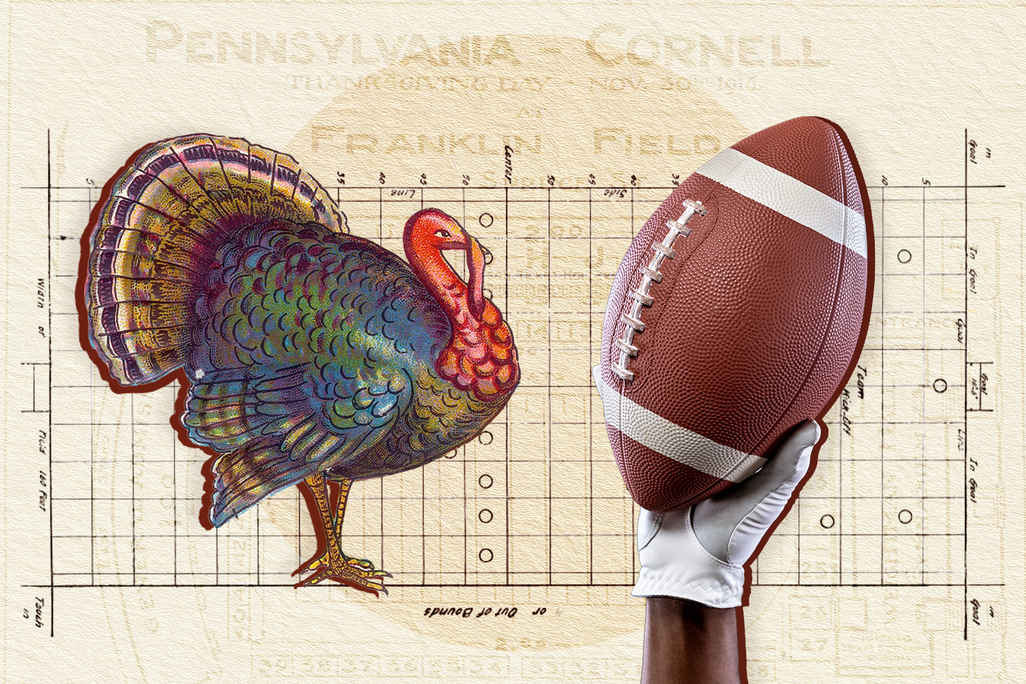
For many Americans, Thanksgiving is all about the three “f’s”: family, food and football.
This year, that final “f” will be more present than ever, thanks to the addition of the National Football League’s first “Thanksgiving Eve” game on Wednesday, November 28. This faceoff, streaming on Netflix, joins the NFL’s three-game Thanksgiving Day lineup and its pick-me-up on Black Friday. It marks the latest in a series of expansions transforming the holiday slate from the dominion of the Detroit Lions—which played their first annual Thanksgiving game in 1934 and have only skipped the tradition six times since—to a three-day affair filled with more football than feasting.
“This is our holiday to overindulge,” says Jared Bahir Browsh, a sports historian at the University of Colorado Boulder. “That overindulgence is not just on the dinner table. It’s also part of our viewing experience with the NFL: football from noon through the night.”
For some fans, this latest serving of Thanksgiving football may be more than they can swallow: The NFL has come under fire for the addition, with fans criticizing the organization’s perceived greed and lamenting the late-season schedule’s oversaturation.


Thanksgiving football has never been more ubiquitous, but even as the sport’s biggest adherents debate the practice, a world without the tradition seems almost inconceivable, Browsh says.
“None of us have grown up in an environment where there wasn’t this close connection between football and Thanksgiving,” the historian argues. “There is a conscious awareness of this American experience.”
Both Thanksgiving and football emerged in the 1860s as efforts to reunite a fractured nation in the aftermath of the Civil War. In the nearly two centuries since, the rituals have evolved in tandem, expanding along with the growing nation and adopting its increasingly consumerist character.
The first football frenzy
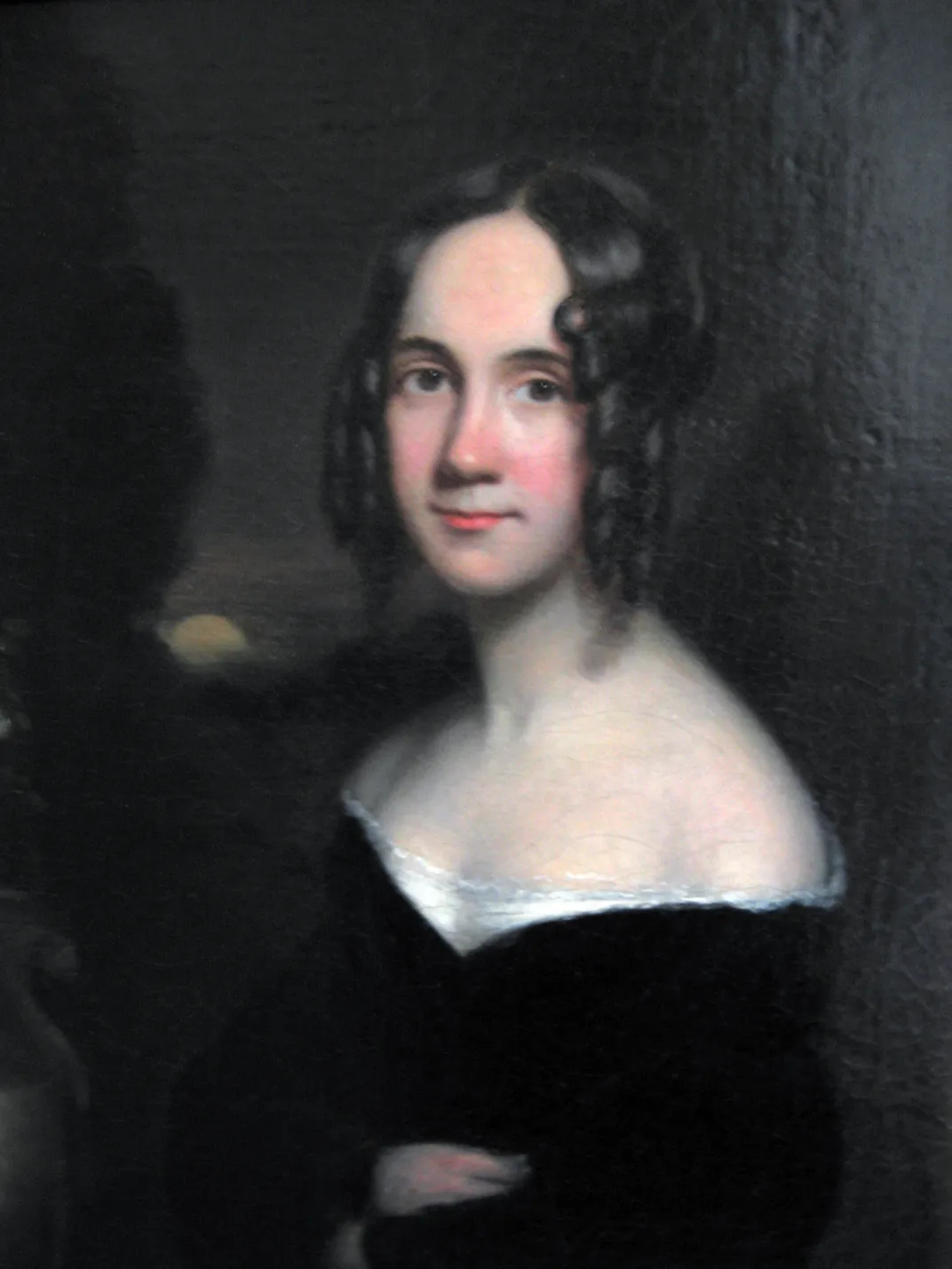
A 1621 feast shared by the Pilgrims and the Wampanoag in what is now Plymouth, Massachusetts, is often cited as the first Thanksgiving. But the gathering is mired in myth, and the holiday as we know it today more accurately traces its roots to 1863. That year, Sarah Josepha Hale, best known as the author of “Mary Had a Little Lamb,” wrote a letter beseeching President Abraham Lincoln to enshrine the holiday. “By the noble example and action of the president of the United States,” the editor and activist wrote, “the permanency and unity of our Great American Festival of Thanksgiving would be forever secured.”
Hale probably wasn’t expecting much from Lincoln. After all, he was the fifth president she had petitioned in her multidecade crusade for the national holiday. But Lincoln, who was managing a divided nation amid a brutal war, saw Thanksgiving as a chance for unification. On October 3, 1863, he proclaimed the last Thursday of November a national “day of Thanksgiving and praise.”
Hale envisioned this national celebration as a day filled with loved ones and food. As the author wrote in her 1827 novel, Northwood, her ideal version of the holiday involved attending church in the morning before enjoying a sumptuous feast “surrounded by a large family.” Hale’s Thanksgiving certainly didn’t involve any football; after all, the sport wasn’t invented until six years after Lincoln’s proclamation.
Did you know? Presidential proclamations
- In 1789, George Washington designated Thursday, November 26, as a national “day of public thanksgiving and prayer.”
- This onetime proclamation didn’t call for annual Thanksgiving celebrations. Thanksgiving became a recurring federal holiday with Lincoln’s 1863 mandate.
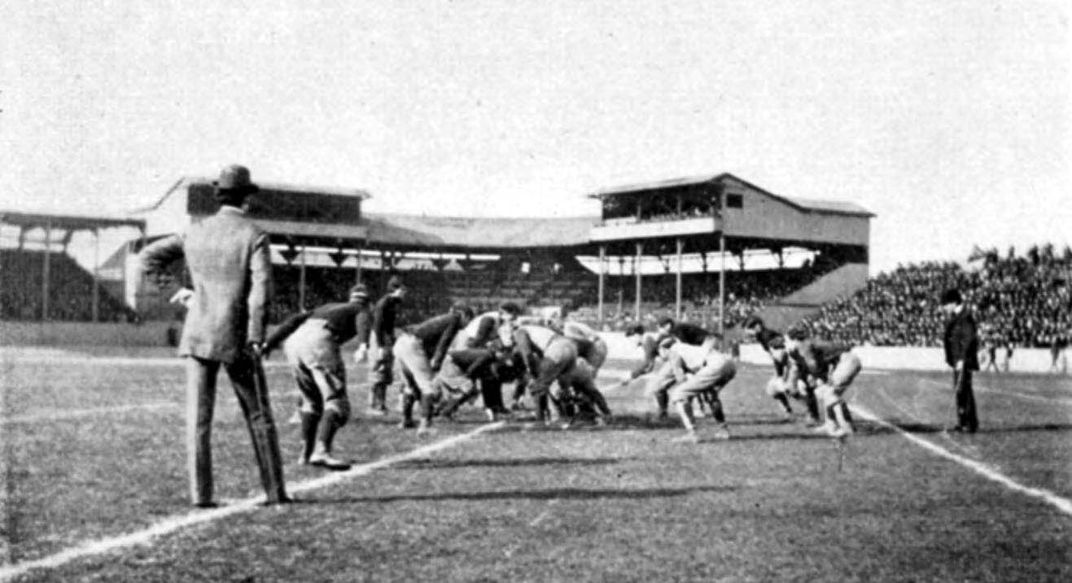
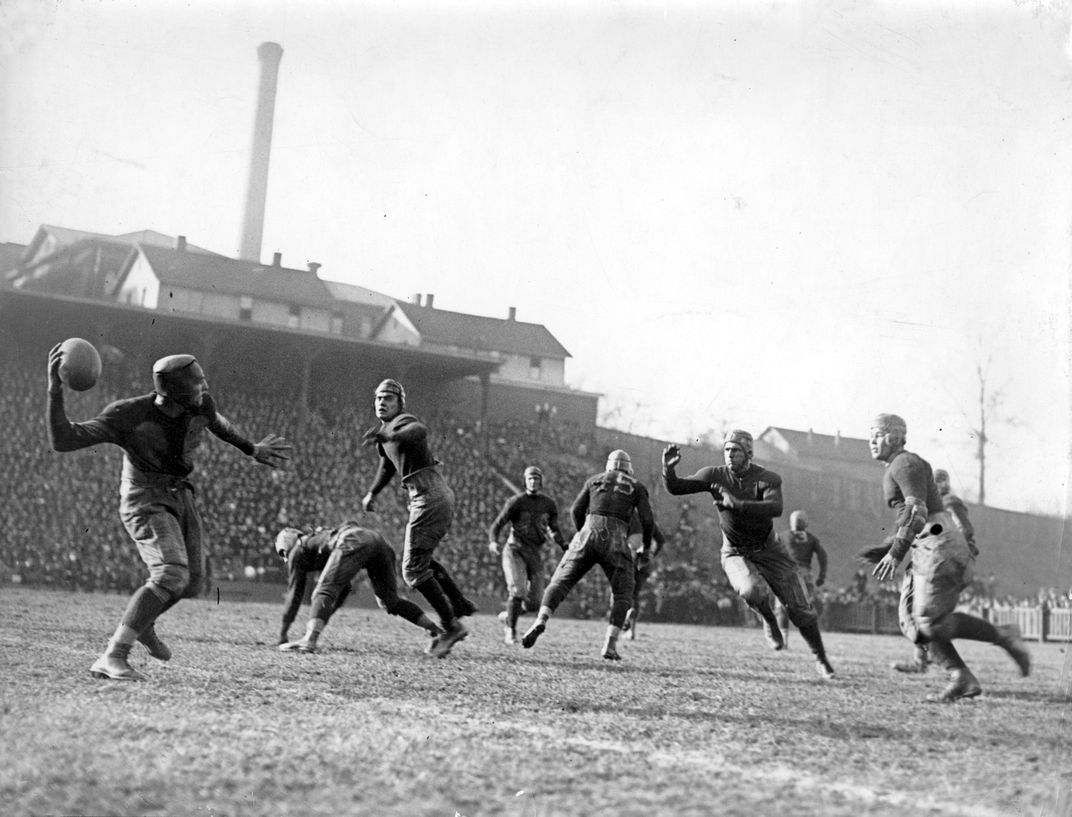
The first widely recognized game of American football took place on November 6, 1869, when students at the College of New Jersey (now Princeton) and Rutgers met on the field in New Brunswick. Although the match drew a modest crowd of around 100 spectators, the sport quickly gained traction: Just 12 days later, two Philadelphia cricket clubs convened for the inaugural Thanksgiving football game. Soon, the pastime was off to the races. Holiday matches exploded in popularity, and by the mid-1890s, at least 5,000 Thanksgiving football games took place annually across the country, from New England to the Midwest to the South.
Brian M. Ingrassia, a sports historian at West Texas A&M University, says that Thanksgiving’s status as a nominally secular day off helped football gain traction. “When people have a day off, they say, ‘Maybe I’m supposed to be paying fealty to the nation or to a religious idea,’” he explains. With Thanksgiving, however, “a lot of people say, ‘No, that’s my day off. I just want to go out and do fun stuff.’”
In 1876, college rivals Princeton and Yale faced off on Thanksgiving in front of fewer than 1,000 spectators at St. George’s cricket ground in Hoboken, New Jersey. The match would quickly become a yearly affair, moving to the Polo Grounds in New York City in 1880. By the 1890s, the spectacle surrounding the Thanksgiving game had started to mirror the environment seen today. Vendors sold food to fans. “People are bringing their flasks and drinking,” Ingrassia says. “There are people perched up on [a nearby] bluff watching the game. There’s gambling, forged tickets, scalpers—all those things.”
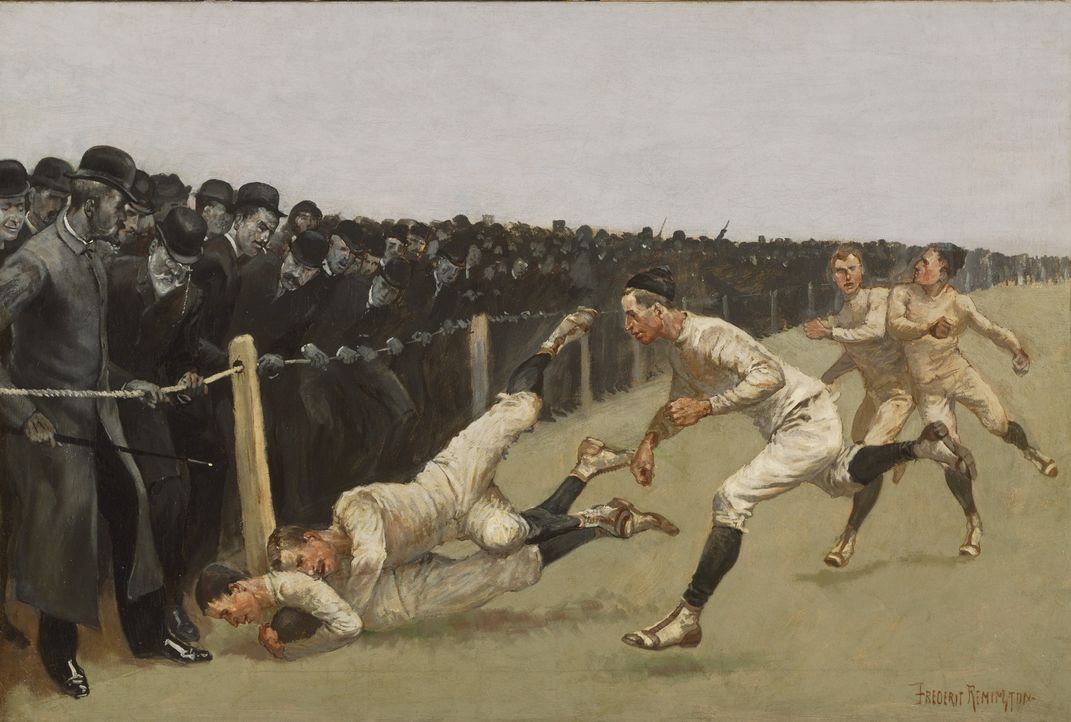
Football had already developed an association with rugged masculinity, says Katie Taylor, a sports historian at Nottingham Trent University in England, but these Thanksgiving matches also became crucial for young New England socialites.
“Those Thanksgiving Day games were absolutely the start of the winter social season for the women from the higher classes,” she says. “They used the sport to gain publicity so that they could be seen and be part of the social set.” In turn, the young women lent the burgeoning sport an air of legitimacy, mitigating concerns that it was too violent.
But the rowdy culture that characterized these Thanksgiving games soon chafed against the social mores of the time. After Princeton ended Yale’s 37-game winning streak on Thanksgiving in 1893, celebrants flooded the city in wild revelry, resulting in the arrests of six Princeton fans. The next day, the New York Herald ran a story proclaiming that “Thanksgiving Day is no longer a solemn festival to God for mercies given. It is a holiday granted by the state and the nation to see a game of football.”
Ahead of the 1906 season, university leaders concerned about mounting injuries and an influx of gambling and vice at football games instituted a series of reforms, including banning a dangerous formation called the “flying wedge” and legalizing the forward pass. These changes followed a push to move matches back to college campuses, where they could be more closely monitored.
With most students at home for Thanksgiving, higher-education institutions eventually relinquished their hold on the holiday, pushing games between longtime rivals to the Saturday after Thanksgiving. By the 1920s, the heyday of Thanksgiving football as a spectator attraction had drawn to a close. It would take a determined personality—and the advent of radio—to revive it.
Detroit’s Thanksgiving gamble
It was 1934 in Detroit, and baseball dominated the city. George A. Richards, the owner of a local NBC radio affiliate, had recently purchased a struggling pro football team from a small town in southern Ohio and moved it to the Motor City. At the time, Detroit—much like the rest of the nation—was grappling with the Great Depression, and the relatively new American Professional Football Association (now the NFL) was hardly the nationally beloved behemoth of today. Success for Richards and his freshly renamed Detroit Lions was hardly guaranteed.
“He needed a gimmick to catch the attention of Detroiters, who were very smitten by baseball and college football,” says journalist Bill Morris, the author of The Lions Finally Roar: The Detroit Lions and the Road to Redemption in the NFL.
Richards borrowed a page from his football forebears. As Morris explains, Thanksgiving provided an ideal opportunity for drawing a crowd: The late-season date arrived after the World Series had wrapped up, on a day when potential audiences were at home with little on the agenda besides eating. Richards struck a deal with the Chicago Bears, bringing them to the University of Detroit’s stadium for the first nationally broadcast pro football game on the radio. A sold-out crowd of around 26,000 fans packed the stadium—and many more tuned in to listen from home. “It was a great success,” Morris says.

The Lions continued to play on Thanksgiving each year, and Americans gradually began to orient their festivities around the big game. “Families scheduled their dinner so that they would be finished eating by the time the football game began,” historian Elizabeth H. Pleck wrote in a 1999 article for the Journal of Social History.
By the late 1930s, the two American traditions were firmly intertwined—so much so that a disruption to one affected the other. In 1939, President Franklin D. Roosevelt moved Thanksgiving up by a week to boost commercial shopping ahead of the holiday season. Republicans protested the change, dubbing the new date “Franksgiving” and urging governors to stick to the original final Thursday in November. The result was a nation divided, with 22 states opting for the penultimate Thursday, 23 others reverting to the week after and 3 simply celebrating on both dates.
This confusion meant that virtually no football games took place on Thanksgiving in 1939. With fans home on different days, teams couldn’t meet for a holiday matchup, save for a single game between the Pennsylvania-based Philadelphia Eagles and the Pittsburgh Steelers. In December 1941, Roosevelt signed a bill fixing Thanksgiving as the fourth Thursday of November.
“We saw how deep that connection [to Thanksgiving] was,” Browsh says. “Since different states had different days for Thanksgiving in those few years, they just didn’t play the game.”
During World War II, food and gasoline rationing transformed Thanksgiving from a feast shared with extended family to a more pared-down affair. With many professional athletes serving overseas, the football radio broadcast went quiet.
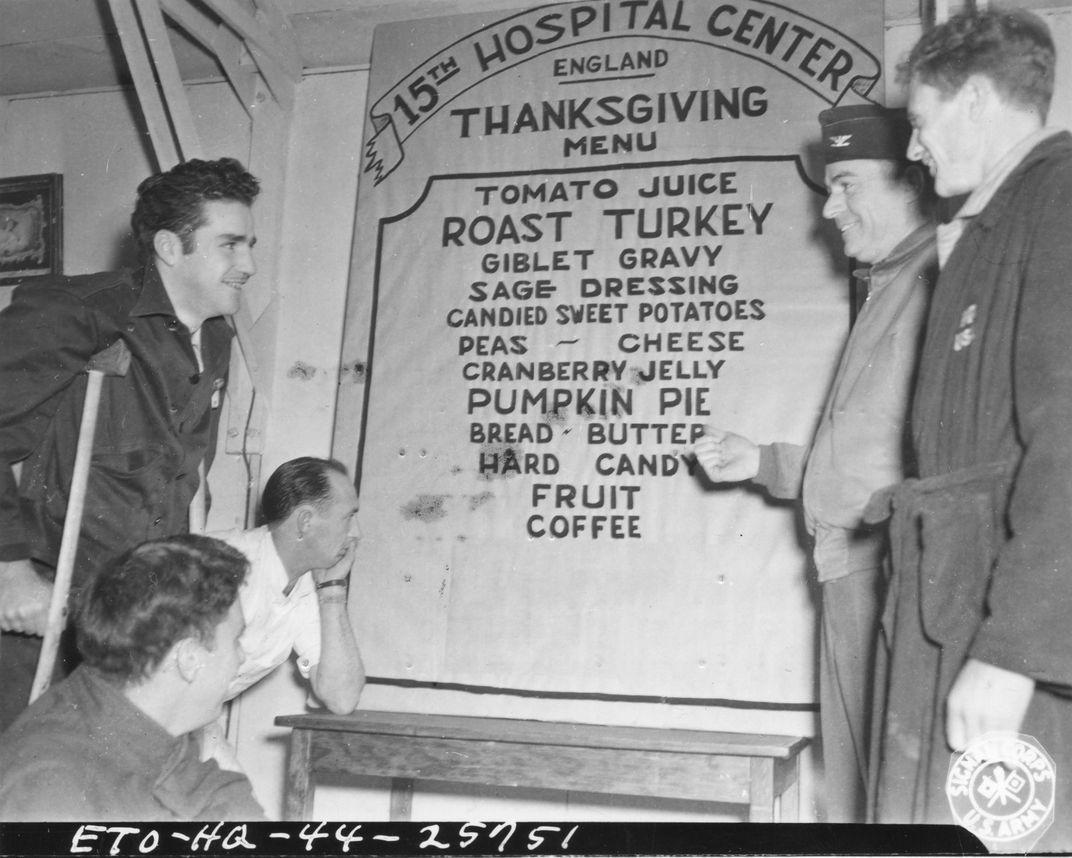
After the war ended, Thanksgiving regained its epicurean character. Americans filled their plates with food, but Morris notes that they still hungered for entertainment. “Everybody’s at home. They’ve got nothing to do,” he says. “They’re like, ‘Let’s watch some football.’” As televisions proliferated in family rooms across the country in the 1950s, the Lions fed this demand. Thanksgiving football “becomes part of the national religion,” Morris adds.
A new religion
While the NFL has long had its adherents, the advent of television saw the league’s popularity skyrocket. “The game is designed for television,” Morris says. “They run a play, they get knocked down, they stop. There’s time for a commercial. It’s a money-making thing. Once television caught up with the game, there was no stopping it.”
With tens of millions tuning in to watch the Lions play football on Thanksgiving each year, other teams decided that they wanted a slice of the pie. In April 1966, television networks lobbied for a second Thanksgiving game. The struggling Dallas Cowboys took the spot, hoping that the holiday would garner the team national publicity. On November 24, 1966, the Cowboys defeated the Cleveland Browns at a stadium filled with more than 80,000 fans, well on their way to becoming “America’s team,” Browsh says.
“It’s the beginning of the NFL establishing themselves as the top sports organization in America because of television,” he adds. “The Cowboys become a big part of that, partly because of their willingness to play on Thanksgiving.”
In 2006, the NFL added a third game to the day’s lineup. Today, record numbers of viewers routinely tune in to the league’s Thanksgiving games. These matches have taken on an increasing air of extravagance, with special jerseys and halftime shows featuring big-name artists.
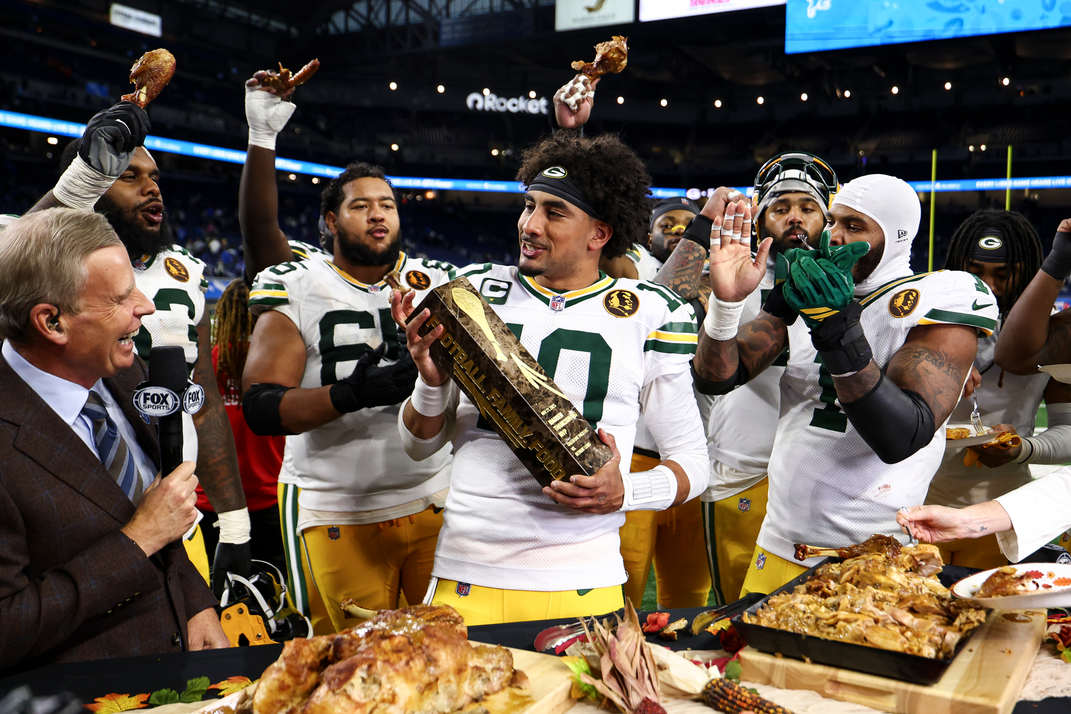
Browsh says this commercial expansion mirrors changes to Thanksgiving itself, which has morphed from a simple family meal to the beginning of the holiday shopping season. Thanksgiving football “fits very much into the consumption culture that is America,” Browsh explains. “Nothing kicks off consumption culture more than the holidays.”
Still, the shared commercial component isn’t the only reason that Thanksgiving and football have become synonymous. At its core, Thanksgiving is a day to gather with loved ones and give thanks. Given the holiday’s proximity to elections, however, the celebration can also dredge up familial tension. Football can be a helpful distraction.
“We can avoid contentious relationships with family members,” Browsh says. “We have this common viewing experience that brings people together and allows us to bask in this complete experience that is Thanksgiving.”
Beyond encouraging congeniality, football often serves as the centerpiece of Thanksgiving.
“We don’t open gifts. We don’t go to church,” Browsh says. “The holiday, the church, is the NFL.”